Reporting for 24x7 Breaking News. A young North Korean defector, living in Seoul, is in a desperate race against time to save his mother from a Chinese prison, fearing she will be forcibly returned to her homeland where she could face execution.
- A Desperate Plea Across Borders
- The Price of Freedom: Forced Marriage and Separation
- A Mother's Imprisonment and the Specter of Repatriation
- Our Editorial Take: A Plea for Compassion in a World of Borders
- Frequently Asked Questions (FAQ)
- What is the risk for North Korean defectors returned from China?
- Why do North Korean women become brides in China?
- What is China's official stance on North Korean refugees?
A Desperate Plea Across Borders
Geumseong, a teenager who risked everything to escape North Korea, is now facing his worst nightmare. His mother, Eunhee, is incarcerated in China after attempting to leave the country to reunite with him in South Korea. This harrowing situation underscores the perilous journey faced by those fleeing the Kim regime and the precarious position of North Koreans seeking refuge in neighboring countries.
The two were separated in June 2019 on the banks of the Yalu River, the heavily fortified border between North Korea and China. Geumseong's perilous trek through Southeast Asia, fraught with surveillance and checkpoints, eventually led him to the relative safety of Seoul. However, the reunion he so desperately sought was delayed for years, with his mother's fate hanging in the balance.
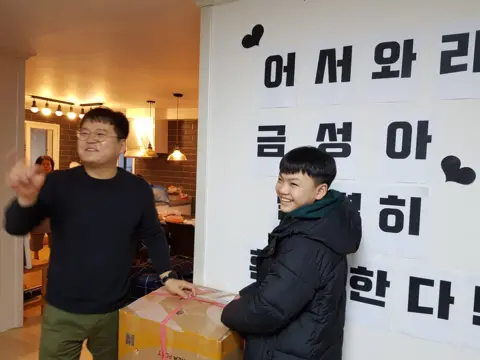
Their first contact after years of silence was a tearful Christmas Eve call in 2020. Geumseong, then 15, shared his new life in Seoul, a stark contrast to the hardship they endured in their North Korean village. He proudly showed his mother his new home, a three-story house with a piano, a world away from their previous existence where they often cried together from exhaustion and struggle.
The Price of Freedom: Forced Marriage and Separation
Eunhee's sacrifice for her son's escape was immense. She agreed to be sold as a bride to a Chinese man, a common fate for tens of thousands of North Korean women since the 1990s. This arrangement facilitated Geumseong's journey, with a broker arranging his passage through China towards Thailand. This network, often operating in the shadows, is the only hope for many seeking to leave North Korea.
The journey Geumseong undertook was arduous, spanning thousands of kilometers and passing through numerous security checkpoints. He recounts collapsing from illness, possibly tuberculosis, and being carried by fellow travelers. This deep dive into the realities of defection highlights the extreme measures individuals take for a chance at a better life, a struggle echoed in other geopolitical tensions, such as the [Strait of Hormuz Blockade: Iran's Grip on Global Oil Flow Sparks Worldwide Economic Jitters](https://24x7-breakingnews.blogspot.com/2026/03/strait-of-hormuz-blockade-irans-grip-on.html).
A Mother's Imprisonment and the Specter of Repatriation
Now, Eunhee is imprisoned in China, having been caught attempting to leave the country to join her son. Geumseong's fear is palpable: his mother could be sent back to North Korea, a fate that often leads to severe punishment, including torture and forced labor in prison camps. Rights groups have reported executions of repatriated individuals, with as many as 1,000 people potentially returned to North Korea from China since October 2023.
The North Korean regime considers defectors as enemies of the state, and their return often means facing the harshest consequences. UN human rights experts have cited instances of executions following repatriation, making Eunhee's situation dire. Geumseong has pleaded with the Chinese government for a chance for his mother to live a normal life, but Beijing maintains its stance on handling illegal immigrants according to domestic and international law, stating such individuals are not refugees.
This situation brings to light the complex international legal and humanitarian challenges surrounding refugees and asylum seekers. The plight of North Korean escapees is a stark reminder of the human cost of political oppression and the systemic issues that force individuals to undertake such dangerous journeys, similar to how [Fatal West Bank Clashes Escalate Amid Surging Settler Violence](https://24x7-breakingnews.blogspot.com/2026/03/fatal-west-bank-clashes-escalate-amid.html) highlights ongoing humanitarian crises.
Our Editorial Take: A Plea for Compassion in a World of Borders
In our assessment, the story of Geumseong and Eunhee is a heart-wrenching testament to the enduring strength of family bonds and the immense courage required to seek freedom. It is a stark reminder that behind the geopolitical headlines are individuals with dreams, hopes, and the profound desire for safety and dignity. The Chinese government's adherence to legal frameworks, while understandable from a state sovereignty perspective, often clashes with urgent humanitarian needs. We believe that in cases where lives are at stake, especially those fleeing severe political persecution, a more compassionate approach is not just warranted but morally imperative.
The international community, including South Korea, has a responsibility to address the root causes of defection and to provide genuine sanctuary for those in need. The fear of deportation to North Korea represents a potential death sentence, a reality that should weigh heavily on the conscience of all nations. We urge for a thorough review of Eunhee's case, considering the extreme risks she faces and the fundamental human right to life and safety.
Frequently Asked Questions (FAQ)
What is the risk for North Korean defectors returned from China?
North Korean defectors repatriated from China face severe punishment, including torture, imprisonment, forced labor, and potentially execution, as they are considered enemies of the state by the North Korean regime.
Why do North Korean women become brides in China?
Many North Korean women are sold as brides in China as a means to escape poverty and political repression in their home country. This often involves brokers who facilitate the journey in exchange for financial or other arrangements.
What is China's official stance on North Korean refugees?
China officially classifies North Koreans apprehended within its borders as illegal immigrants, not refugees. Beijing states it handles such cases according to domestic and international law, often in a manner that leads to repatriation.
Geumseong's desperate plea for his mother's life underscores the critical need for humanitarian considerations in international law and border policies. The fate of North Korean defectors rests precariously between the laws of their host countries and the brutal realities of their homeland.
So here's the real question — in a world increasingly defined by borders and strict legal frameworks, where exactly do we draw the line between national sovereignty and the fundamental human right to seek safety and refuge?
This article was independently researched and written by Hussain for 24x7 Breaking News. We adhere to strict journalistic standards and editorial independence.
Comments
Post a Comment