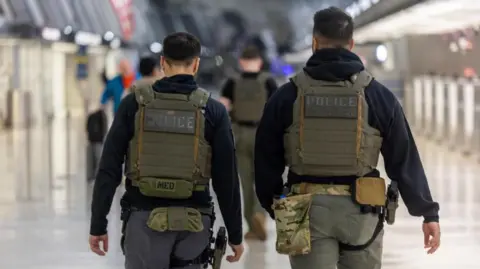
A Major Security Lapse at the Top of the FBI
Reporting for 24x7 Breaking News, we have confirmed that the personal email account of FBI Director Kash Patel has been compromised by an Iran-linked cyber collective. The group, known as the Handala Hack Team, publicly claimed responsibility for the breach on Friday, circulating what they purport to be private photos and professional documents belonging to the director. This incident represents a significant security concern, regardless of the agency's insistence that no classified government intelligence was exposed.
- A Major Security Lapse at the Top of the FBI
- The Digital Battlefield: Handala's Retaliatory Tactics
- Expert Analysis: The Vulnerability of Personal Systems
- THE REAL-WORLD IMPACT: When Privacy Collapses
- A HUMANITARIAN PERSPECTIVE: The Cost of Perpetual Conflict
- Frequently Asked Questions (FAQ)
- What is the Handala Hack Team?
- Was classified information stolen from the FBI?
- How can individuals protect themselves from similar breaches?
- Join the Conversation
The FBI has officially acknowledged the situation, stating that they are aware of malicious actors targeting the personal communications of the director. In a measured response, an agency spokesperson clarified that the compromised data appears to be historical in nature, containing no sensitive government information. Despite this, the U.S. government is not taking the threat lightly, placing a $10 million bounty on information leading to the identification of the individuals behind the Handala collective.
The Digital Battlefield: Handala's Retaliatory Tactics
The timing of this breach is far from coincidental. As we initially observed in our coverage of the ongoing tensions in the Middle East, cyber-warfare has become a primary instrument of state-sponsored aggression. Handala specifically cited the U.S. Department of Justice’s recent seizure of four domain names associated with their propaganda efforts as a catalyst for this retaliatory attack.
According to reports from our partners at the BBC, the domain used to facilitate this hack was registered on March 19, the same day the DOJ announced its crackdown on Iranian-linked websites. This behavior underscores a broader, more dangerous trend. We have previously detailed the instability in the region, including reports regarding the Strait of Hormuz blockade, which illustrates how digital and physical aggression often move in lockstep.
Expert Analysis: The Vulnerability of Personal Systems
While the breach of a high-ranking official's email is undoubtedly headline-grabbing, cybersecurity experts warn that it may be less sophisticated than the group claims. Cynthia Kaiser, senior vice-president at the Halcyon Ransomware Research Center, suggests that the leaked materials are likely dated. "The emails look very old," Kaiser noted, indicating that this might be a recycling of previously obtained data rather than a fresh penetration into active, secured networks.
Dave Schroeder, director of National Security Initiatives at the University of Wisconsin–Madison, echoes this sentiment. He emphasizes that personal email accounts lack the rigorous, multi-layered security protocols inherent in federal government systems. For threat actors, these private accounts serve as low-hanging fruit designed to manufacture a sense of vulnerability and embarrassment for the agency, effectively turning a minor security lapse into a major psychological operation.
THE REAL-WORLD IMPACT: When Privacy Collapses
For the average American, this incident highlights the inescapable reality of the digital age: even those at the highest levels of power are susceptible to intrusions. While most of us aren't being targeted by state-sponsored actors, the risks associated with personal email security remain the same. Using weak passwords, failing to enable multi-factor authentication, or storing sensitive personal photos in unencrypted cloud services can leave anyone vulnerable to identity theft or social engineering.
The weaponization of private life, as seen in the watermarked photos of Director Patel, serves as a reminder that privacy is a commodity. When state-level actors target individuals to score political points, it creates a climate of fear that impacts the digital safety of the public at large. We must ask ourselves if our current digital infrastructure is built to withstand the pressures of modern, state-sanctioned cyber-warfare.
A HUMANITARIAN PERSPECTIVE: The Cost of Perpetual Conflict
We believe that cyber-warfare, much like traditional warfare, ultimately extracts its greatest toll on the vulnerable. Whether it is the disruption of medical technology firms like Stryker, or the psychological warfare waged via propaganda sites, the escalation of digital hostilities rarely stays contained within government silos. Our editorial team remains deeply concerned by the lack of diplomatic avenues to de-escalate these tensions.
Peace is not merely the absence of kinetic war; it is the restoration of security and trust across borders. When we see nations trading cyber-strikes and bounties, we are moving further away from the mutual understanding required to protect human dignity. We advocate for a robust, rules-based international order that treats the sanctity of private information as a human right, rather than a tactical casualty in a larger geopolitical struggle.
Frequently Asked Questions (FAQ)
What is the Handala Hack Team?
- Handala is a group of hacktivists frequently linked to the Iranian Ministry of Intelligence and Security, known for conducting psychological operations and data-wiping attacks against Western targets.
Was classified information stolen from the FBI?
- According to official FBI statements, the information involved in the breach is historical in nature and does not contain any classified government intelligence.
How can individuals protect themselves from similar breaches?
- Security experts recommend using strong, unique passwords for every account, enabling two-factor authentication, and avoiding the storage of sensitive personal photos or documents in non-encrypted cloud storage.
Join the Conversation
The breach of FBI Director Kash Patel's personal email is a stark reminder that in an interconnected world, no one is truly beyond the reach of digital adversaries. As the U.S. government escalates its response to Iranian-linked cyber-warfare, we must reconcile the need for national security with the fundamental right to digital privacy. Is this hack a harmless nuisance, or does it signal a dangerous new vulnerability in the American intelligence apparatus that we are failing to address?
This article was independently researched and written by Hussain for 24x7 Breaking News. We adhere to strict journalistic standards and editorial independence.
Comments
Post a Comment