A Cycle of Violence Deepens in the West Bank
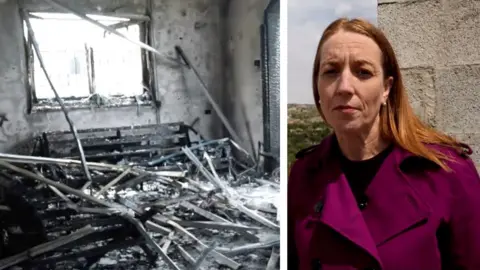
Reporting for 24x7 Breaking News, we are tracking a dangerous escalation in the occupied West Bank that has left one Palestinian man dead and several others seriously injured. Mohammad al-Malhi, identified by his family as the latest victim, was reportedly shot in the head during a confrontation with settlers who had established an unauthorized outpost on ancestral land near Bethlehem.
- A Cycle of Violence Deepens in the West Bank
- The Anatomy of an Escalating Conflict
- Settlement Growth and International Law
- The Real-World Impact: Life in the Crosshairs
- A Humanitarian Perspective: Our Editorial Stance
- Frequently Asked Questions (FAQ)
- What is the difference between a settlement and an outpost?
- How many people live in the West Bank?
- Why has violence increased so significantly recently?
- Join the Conversation
This latest tragedy occurs as the region faces an unprecedented surge in West Bank settler violence, a trend that has accelerated sharply since late February. As we have previously analyzed in our reporting on how Trump faces high-stakes dilemmas as the Iran war stretches beyond initial projections, the regional instability has created a vacuum where local tensions are spiraling out of control.
The Anatomy of an Escalating Conflict
According to local residents and sources cited by the Middle East correspondent Yolande Knell, the recent spike in violence is intrinsically linked to the rapid, unauthorized expansion of settler outposts. These structures, often erected in areas where the Palestinian Authority nominally maintains administrative control, serve as focal points for direct physical confrontation.
The Israel Defense Forces (IDF) have acknowledged the incident involving al-Malhi, characterizing it as a clash between civilian groups that resulted in fatal gunfire. However, local witnesses present a harrowing narrative: they claim that after initial attempts by the military to dismantle the outpost, settlers returned to the site almost immediately, setting the stage for the lethal encounter that followed.
This pattern of rapid construction and confrontation is not isolated. In a separate incident this past Thursday, a 75-year-old man in Tayasir was brutally beaten during a raid on his home. The escalation of this violence follows a broader, worrying trend that has intensified since the onset of the conflict in Gaza in October 2023. While the global community remains focused on the macro-level war, the human cost in the West Bank continues to mount in silence.
Settlement Growth and International Law
The legal and physical landscape of the West Bank is undergoing a transformation that many international observers describe as a systematic effort to preclude a future Palestinian state. Last year marked a record for settlement expansion and planning approvals, according to monitoring data from the United Nations.
While international law views all settlements as illegal, the distinction between government-sanctioned settlements and "unauthorized" outposts has become increasingly blurred. Reports from Israeli media indicate that the government’s security cabinet has moved to retroactively legalize 30 such outposts this week alone. This policy shift effectively signals a permissive stance toward land acquisition that complicates any potential path to peace.
The demographic reality on the ground remains stark. Since 1967, Israel has established approximately 160 settlements housing roughly 700,000 residents, living in proximity to 3.3 million Palestinians. These communities are locked in a fragile, often hostile coexistence that is being pushed to the breaking point by current government policies.
The Real-World Impact: Life in the Crosshairs
For the average Palestinian family, the rise in settler violence means that basic activities—tending to olive groves, traveling between villages, or simply remaining in one’s home—have become high-stakes gambles. When unauthorized outposts appear on private land, the economic and psychological toll is immediate.
Families are often forced to choose between abandoning ancestral lands or risking their lives to defend them. This instability disrupts local agriculture and commerce, further impoverishing communities already struggling under the weight of movement restrictions and regional economic downturns. For those living in the West Bank, the state of constant alert is no longer an occasional hardship; it is the fundamental reality of daily life.
A Humanitarian Perspective: Our Editorial Stance
In our assessment, the current trajectory is unsustainable and deeply tragic. We believe that the preservation of human dignity must take precedence over territorial expansion. When the rule of law is sidelined to allow for the forceful displacement of people, the moral fabric of the entire region suffers.
We see a worrying trend where political rhetoric encourages actions that endanger civilians on both sides. True security cannot be built on the ruins of another community's homes or through the barrel of a gun used against neighbors. It is our view that the international community, particularly the United States, must exert more significant pressure to halt these provocations. Peace is not merely the absence of war; it is the presence of justice and the recognition of the shared humanity of those living side-by-side.
Frequently Asked Questions (FAQ)
What is the difference between a settlement and an outpost?
- Settlements are formally approved by the Israeli government, though they are considered illegal under international law. Outposts are set up by settlers without official government authorization, though they are often later retroactively legalized.
How many people live in the West Bank?
- The region is home to approximately 3.3 million Palestinians and roughly 700,000 Israeli settlers living in settlements and outposts established since the 1967 conflict.
Why has violence increased so significantly recently?
- The surge is attributed to a combination of regional instability following the outbreak of the war in Iran, increased settlement expansion, and a lack of enforcement by authorities against unauthorized settler activity.
Join the Conversation
The situation in the West Bank is a volatile powder keg, and the recent death of Mohammad al-Malhi highlights the lethal consequences of inaction. As settlement growth continues to outpace diplomatic efforts, we must consider the long-term viability of a peaceful coexistence in the region.
If the international community continues to offer only rhetorical condemnation while settlement expansion continues at record levels, what specific leverage remains to stop the slide into full-scale regional anarchy?
This article was independently researched and written by Hussain for 24x7 Breaking News. We adhere to strict journalistic standards and editorial independence.
Comments
Post a Comment