Reporting for 24x7 Breaking News. The Houthi movement in Yemen, a powerful Iranian proxy, has escalated regional conflict by launching a barrage of ballistic missiles and drones targeting Israel, marking a significant new phase in the ongoing war. The group stated these attacks are in solidarity with their allies and will continue until hostilities cease, a move that ratchets up fears of wider economic disruption.
- Houthis Declare Direct Military Intervention Against Israel
- Economic Repercussions and Global Shipping Fears
- The 'Axis of Resistance' Expands its Reach
- A History of Red Sea Disruptions
- Our Take: A Global Economy on Shaky Ground
- Frequently Asked Questions (FAQ)
- What are the Houthis?
- Why are the Houthis attacking Israel?
- How does this affect global shipping?
- What is the 'axis of resistance'?
Houthis Declare Direct Military Intervention Against Israel
In a bold declaration, the Houthi military spokesman announced their hands are "on the trigger for direct military intervention" if any nations joined the U.S.-Israeli strikes or if the Red Sea was utilized for military operations against Iran. Hours later, the group confirmed the launch of "a salvo of ballistic missiles" aimed at what they described as "sensitive Israeli military sites." This direct engagement represents the first time the Houthis have openly attacked Israel since the broader conflict began.
Israel's defense forces reported intercepting two missiles originating from Yemen, underscoring the extended reach of the Houthi arsenal. The group further claimed a second wave of missile and drone attacks later that day, emphasizing their commitment to sustained action until the "aggression against all resistance fronts ceases." This statement appears to be a veiled reference to Israel's intensified operations against Hezbollah in Lebanon.
Economic Repercussions and Global Shipping Fears
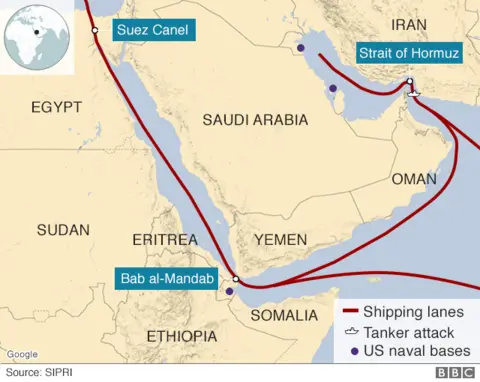
The Houthis' strategic control over Yemen's Red Sea coastline, including the Bab al-Mandab Strait, positions them to disrupt vital global shipping lanes. This strait is a critical chokepoint for vessels traveling between the Indian Ocean and the Red Sea, ultimately leading to the Suez Canal. Approximately 15% of global seaborne trade typically passes through this waterway, and its effective closure by Houthi attacks has already forced major shipping companies to reroute vessels around southern Africa, incurring significant delays and increased costs.
This disruption echoes concerns about broader economic instability, particularly regarding energy markets. The closure of Iran's Strait of Hormuz, another crucial oil transit route, has already caused oil prices to surge. Saudi Arabia, for instance, has been compelled to reroute its oil via a pipeline to its Red Sea coast, with shipments destined for Asia then navigating past Yemen, making the Bab al-Mandab Strait even more critical for these oil flows. The potential for prolonged blockades raises alarms about a severe contraction in global economies, as highlighted in analyses of similar energy market volatility. We've seen how the escalating Iran war has already placed immense pressure on global energy supplies, as explored in our previous report on Can India's Piped Gas Network Survive the Escalating Iran War?
The 'Axis of Resistance' Expands its Reach
The Houthis consider themselves a key component of Iran's "axis of resistance," a network that includes groups like Hezbollah in Lebanon and Hamas in the Gaza Strip. Their military capabilities, bolstered by Iranian backing, are a significant factor in the regional power dynamics. The group's involvement in the wider conflict, while largely anticipated by analysts, formally brings a new, potent actor into direct confrontation with Israel.
Yemen itself has been mired in a devastating civil war for over a decade, a conflict that began when the Houthis seized control of the country's northwest. A Saudi-led coalition, supported by the U.S., intervened in an effort to restore the internationally recognized government. This internal conflict has created a complex humanitarian crisis, with millions displaced and in need of aid, a situation that draws parallels to other devastating conflicts like the one unfolding in South Sudan on the Brink: Civilian Toll Mounts in Renewed Conflict.
A History of Red Sea Disruptions
The Houthi threat to maritime traffic is not new. From November 2023 to early 2025, the group launched nearly 200 attacks on ships in the Red Sea, damaging over 30 vessels and hijacking at least one. These actions prompted retaliatory airstrikes by the U.S. and UK on Houthi targets in Yemen in January 2024 and again in March 2025.
While Israel has a strong record of intercepting missiles, even those launched from considerable distances, the sustained nature of Houthi attacks and their capacity to disrupt global trade present a complex geopolitical and economic challenge. The Houthis' willingness to engage directly with Israel underscores the widening scope of the conflict, driven by a complex web of alliances and animosities.
Our Take: A Global Economy on Shaky Ground
In our view, the Houthi missile launches represent more than just a regional escalation; they are a stark warning about the fragility of the global economy. The interconnectedness of modern trade means that conflict in one strategically vital waterway can send shockwaves across continents, impacting everything from the price of gasoline at the pump to the availability of consumer goods. What's deeply concerning is how these proxy actions, fueled by larger geopolitical rivalries, disproportionately affect ordinary people and developing nations who have the least capacity to absorb such shocks. We've seen how the ongoing instability related to the Iran war has already had significant economic ripple effects, and this latest development only amplifies those concerns. The very real possibility of further supply chain disruptions and energy price spikes demands a global response that prioritizes de-escalation and diplomatic solutions, rather than allowing proxy conflicts to dictate the economic well-being of millions.
Frequently Asked Questions (FAQ)
What are the Houthis?
The Houthis are an Iran-backed Zaidi Shia political and military organization based in Yemen. They have been involved in a civil war in Yemen since 2014 and control significant parts of the country, including its Red Sea coastline.
Why are the Houthis attacking Israel?
The Houthis state their attacks are in solidarity with Palestinian resistance groups and to protest Israel's military operations in Gaza. They consider themselves part of Iran's "axis of resistance" against Israel and its allies.
How does this affect global shipping?
The Houthis' attacks on ships in the Red Sea and Bab al-Mandab Strait force shipping companies to take longer, more expensive routes around Africa, disrupting global supply chains and increasing shipping costs. This also impacts the flow of oil and other critical commodities.
What is the 'axis of resistance'?
The 'axis of resistance' is a term used to describe a coalition of Iran-backed groups and governments in the Middle East that oppose Israel and Western influence in the region. Key members include Hezbollah in Lebanon, Hamas in Gaza, and the Houthis in Yemen.
The Houthi missile strikes against Israel mark a perilous new chapter in the escalating regional conflict, threatening to further destabilize global trade and economies. As the conflict expands, what is the international community's responsibility to protect vital shipping lanes and mitigate the cascading economic consequences for everyday people worldwide?
This article was independently researched and written by Hussain for 24x7 Breaking News. We adhere to strict journalistic standards and editorial independence.
Comments
Post a Comment