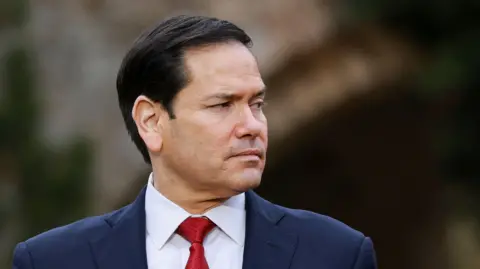
Reporting for 24x7 Breaking News, Vienna, Austria — In a landmark decision signaling a profound shift in European digital policy, Austria's conservative-led coalition government has unveiled plans to impose a sweeping ban on social media access for children under the age of 14. This bold initiative, following arduous internal negotiations, directly confronts the pervasive influence of platforms leveraging **addictive algorithms**, aiming to safeguard the mental health and developmental well-being of the nation's youngest citizens.
- A Growing European Consensus on Digital Safeguards
- The Real-World Impact on Families and Digital Citizenship
- Editorial Perspective: A Necessary Reckoning for Big Tech
- Frequently Asked Questions (FAQ)
- What is the primary goal of Austria's social media ban for under-14s?
- How will age verification work for the proposed ban?
- Which other European countries are considering similar social media restrictions?
- What are the main arguments against such a ban?
Vice-Chancellor Andreas Babler of the Social Democrats articulated the government's unwavering stance, declaring that politicians cannot idly observe as social media renders children "addicted and also often ill." He drew a stark parallel between digital platforms and traditional vices like alcohol or tobacco, emphasizing the imperative for "clear rules in the digital world too" to protect minors from potentially harmful content and exploitative design.
A Growing European Consensus on Digital Safeguards
Austria's proposed **under-14s online safety** measure places it at the forefront of a burgeoning European movement to regulate children's digital engagement. Other nations are grappling with similar concerns, reflecting a broader societal anxiety about the unchecked proliferation of online content and its impact on developing minds. We've seen parallel efforts across the continent, signaling a new era of digital accountability.
France's lower house notably approved a ban for under-15s in January, while Australia set a precedent last December with a ban for under-16s. French President Emmanuel Macron swiftly took to X, formerly Twitter, to commend Austria for "joining the movement," underscoring the growing international collaboration on this critical issue. The sheer momentum behind these legislative efforts is undeniable, driven by increasing public pressure.
Further demonstrating this trend, the United Kingdom government has initiated a consultation on banning social media for under-16s. Denmark and Greece are considering restrictions for under-15s, while Spain and Ireland are exploring bans for under-16s. This patchwork of regulations across the EU highlights a shared concern, even if the specific age limits vary, about the profound societal implications of pervasive digital exposure.
The urgency behind these European actions is amplified by legal precedents, such as a landmark case in the United States this past Wednesday. A jury found two prominent social media giants had deliberately engineered their platforms with addictive algorithms, directly contributing to severe harm to young people's **children's mental health**. This ruling serves as a stark warning, reinforcing the need for governmental intervention rather than relying solely on industry self-regulation.
Social media companies typically assert that their terms of service already prohibit users under 13 from joining, and they offer parental controls for younger audiences. However, critical questions persist regarding the strictness of enforcement and the true efficacy of these measures. Our editorial team believes that placing the onus entirely on parents, without robust systemic protections, is an abdication of corporate responsibility.
The Real-World Impact on Families and Digital Citizenship
For everyday families, this proposed ban in Austria could mean a significant paradigm shift in household dynamics and how children interact with technology. Parents, many of whom struggle to monitor their children's online activity, often feel overwhelmed by the sheer volume of content and the sophisticated design of platforms engineered for maximum engagement. This move offers a much-needed layer of governmental support.
The Education Minister, Christoph Wiederkehr of the liberal Neos party, underscored the inherently "harmful" nature of social media, while also stressing that "people need to learn how to use it responsibly." This sentiment echoes the complex tightrope parents walk daily: balancing the undeniable educational and social benefits of connectivity with the insidious risks of exposure to inappropriate content and cyberbullying.
The ban's implementation hinges on a draft bill, expected by the end of June, according to Alexander Pröll, the state secretary for digitalisation from the conservative ÖVP. This legislation will detail the crucial technical mechanisms required for **age verification technology** to effectively restrict access. Whether Austria will leverage an existing EU system or develop a bespoke national plan remains a key logistical challenge.
While the proposal enjoys considerable public support, it has not been without detractors. Christian Hafenecker, the general secretary of the far-right opposition Freedom Party, vehemently condemned the plans as "a direct attack on young people's freedom of expression and freedom of information." This highlights the inherent tension between state protection and individual liberties, a debate that demands careful consideration, especially for minors.
Editorial Perspective: A Necessary Reckoning for Big Tech
In our view, Austria’s move to ban social media for under-14s is not merely a political maneuver; it represents a critical reckoning with the unchecked power of digital platforms. For too long, tech giants have operated with minimal accountability, profiting from engagement models that intentionally exploit developmental vulnerabilities in children. We believe that safeguarding the mental health of our youth is a moral imperative that transcends mere economic considerations or debates about **freedom of expression digital** for minors.
What concerns us most is the insidious nature of algorithmic addiction, often likened to gambling or substance abuse, yet marketed as benign entertainment. The long-term societal costs of a generation growing up with impaired attention spans, increased anxiety, and distorted self-perception are staggering. Governments, like Austria's, are finally stepping up to protect children where corporations have demonstrably failed to prioritize well-being over profit.
While arguments about freedom of expression hold weight for adults, we must question whether a child's right to access potentially harmful content outweighs their fundamental right to a healthy, unimpeded development. This is not about censorship, but about creating a safe digital environment, akin to age restrictions on R-rated movies or alcohol. It's about recognizing that children lack the cognitive maturity to navigate these complex digital landscapes safely. This initiative, alongside other educational reforms in Austria like increased democracy and AI lessons, suggests a holistic approach to preparing young people for a complex future.
Moreover, the popularity of such bans, even across party lines, as noted by Austrian political analyst Thomas Hofer to the BBC, suggests a broad public appetite for stricter digital regulation. Hofer observed that "the government is trying to evoke the feeling that, in turbulent times, they have at least something under control." Indeed, in a world grappling with profound instability, from escalating conflicts to economic uncertainties, providing tangible protections for children offers a powerful sense of agency. This sentiment resonates across borders, much like the challenging geopolitical landscape we've explored in reports such as our coverage of fatal West Bank clashes.
Frequently Asked Questions (FAQ)
What is the primary goal of Austria's social media ban for under-14s?
- The ban primarily aims to protect children from addictive algorithms and harmful content, addressing concerns about their mental health and promoting responsible digital engagement.
How will age verification work for the proposed ban?
- The upcoming draft bill, expected by the end of June, will outline technical details for an agreed mechanism to verify users' ages, potentially utilizing an existing EU system or a national plan.
Which other European countries are considering similar social media restrictions?
- France, the UK, Denmark, Greece, Spain, and Ireland are all exploring or implementing similar age-based restrictions on social media access, with varying age limits.
What are the main arguments against such a ban?
- Opponents, like Austria's Freedom Party, argue that the ban infringes upon young people's **freedom of expression** and access to information, raising concerns about governmental overreach in the digital sphere.
This bold move by Austria underscores a growing global consensus that the era of unchecked digital platforms impacting our children must end, pivoting towards a future where **European digital regulations** prioritize youth well-being. But where exactly do we draw the line between protecting children and infringing upon their nascent digital rights and autonomy?
This article was independently researched and written by Hussain for 24x7 Breaking News. We adhere to strict journalistic standards and editorial independence.
Comments
Post a Comment