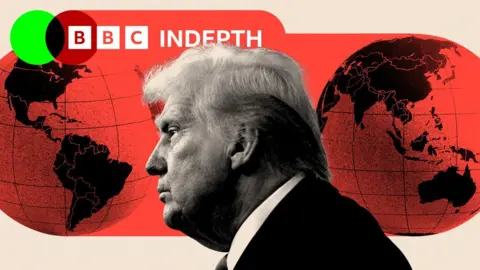
Reporting for 24x7 Breaking News — The very foundation of International Law and the Iran War is currently being dismantled in real-time as the world watches a terrifying shift in how global powers conduct modern warfare. What was once a system governed by the post-WWII rules-based order has devolved into a volatile arena where energy grids, civilian infrastructure, and economic lifelines are now considered fair game in the crosshairs of superpower diplomacy.
- The Legal Erosion: When Infrastructure Becomes a Battlefield
- Military Necessity vs. Human Suffering: The White House Defense
- A Humanitarian Perspective: The Dark Cost of a Grid-Down War
- Editorial Perspective: The Fragile Thread of Global Order
- Frequently Asked Questions (FAQ)
- Is targeting a power plant considered a war crime?
- Does the U.S. recognize the International Criminal Court?
- What happens if the Strait of Hormuz is closed?
- Why is Iran attacking its Gulf neighbors?
We have observed with growing alarm as the escalating US-Israeli strikes against Iranian targets, coupled with Tehran’s aggressive posturing toward its Gulf neighbors, signal a permanent rupture in international norms. According to reports from Reuters and the BBC, the rhetoric emanating from the White House has moved beyond traditional military deterrence into a territory that legal experts describe as a direct assault on the rules-based international order.
President Donald Trump has doubled down on threats to utilize "overwhelming force" against Iran’s critical energy sectors, specifically targeting the South Pars gas field. In a series of recent statements, the President warned he would "massively blow up" these facilities if Tehran continued to retaliate against Qatari energy sites, later adding that the U.S. would "obliterate" various power plants if the Strait of Hormuz remained a point of contention. This strategic pivot toward targeting infrastructure marks a departure from decades of military doctrine designed to shield civilian-dependent systems from the horrors of active combat.
The Legal Erosion: When Infrastructure Becomes a Battlefield
The implications of these threats extend far beyond the immediate tactical advantage; they strike at the heart of the Rome Statute and the legal definitions of war crimes. Luis Moreno Ocampo, the founding chief prosecutor of the International Criminal Court (ICC), told the BBC that the current trajectory of the war on Iran increasingly resembles a "crime of aggression" under international law. In our analysis of his statements, Moreno Ocampo highlights a terrifying trend where the "rule of the man" is rapidly replacing the established legal frameworks that have prevented total global chaos for eighty years.
Moreno Ocampo pointed out that the deliberate targeting of power plants—systems that provide the basic necessities of life for millions—is not a legitimate military objective under the current global framework. He drew a direct and chilling parallel to the ICC war crimes investigations currently surrounding Russian attacks on energy sites in Ukraine. "The use of armed forces by a state against the sovereignty, territorial integrity, or political independence of another state is a crime of aggression," Moreno Ocampo noted, warning that we are entering a world where personal executive decisions override the collective safety of the global community.
This shift comes at a time when global markets are already on edge, as seen in previous reports regarding how China Slashes Fuel Price Hikes to Shield Drivers amidst exploding oil prices. If the energy infrastructure attacks continue to escalate, the resulting vacuum in the global rules-based order could lead to an era of "might makes right" that the world hasn't seen since the early 20th century. The White House, however, remains undeterred, dismissing the ICC’s concerns as "ridiculous" and framing the strikes as "bold action" against a "rogue, terrorist regime."
Military Necessity vs. Human Suffering: The White House Defense
U.S. Ambassador to the United Nations Mike Waltz recently defended the administration's stance, arguing that when a regime uses its critical infrastructure to repress its people or threaten neighbors, those sites lose their civilian protection. Speaking to CBS News, Waltz contended that Iran's march toward a nuclear weapon makes its power plants legitimate targets. This argument, however, is being met with fierce resistance from human rights organizations and former government officials alike.
Brian Finucane, a former State Department lawyer, expressed deep skepticism regarding the legality of these operations. We find his assessment particularly troubling: "It's hard to see how any such attack would be lawful," Finucane told the BBC, noting that the administration seems ready to strike objectives that have no clear military utility. This unprecedented strain on the legal order is further complicated by the fact that the U.S., Israel, and Iran are not members of the ICC, and the Trump administration has previously sanctioned the court’s judges to prevent investigations into American or Israeli actions.
The physical reality on the ground is already becoming catastrophic. Israeli airstrikes have reportedly targeted fuel depots in and around Tehran, resulting in massive fireballs and thick columns of smoke that can be seen for miles. As missiles land dangerously close to nuclear facilities in both Iran and Israel, the World Health Organization has declared the conflict to be at a "perilous stage." The world is currently teetering on the edge of a conflict that ignores the Geneva Convention protections for civilian life, potentially setting a precedent that every nation on earth will eventually regret.
A Humanitarian Perspective: The Dark Cost of a Grid-Down War
In our view, the most heartbreaking element of this escalation is the complete disregard for the human element. When a power plant is "obliterated," it isn't just a government building that disappears; it is the electricity required to pump clean water into the homes of families, the power needed to keep hospital respirators running, and the heat required to survive the winter. We believe that using the basic survival of a civilian population as a bargaining chip in a geopolitical chess match is a moral failure of the highest order.
The people of Iran are already suffering from systemic power outages and economic instability. To intentionally target the very systems that keep them alive is to wage war not just on a regime, but on a population of eighty million people. This strategy of civilian collateral damage as an intentional byproduct of war creates a cycle of hatred and radicalization that will haunt the Middle East for generations. We must ask ourselves: what kind of "victory" is achieved when the cost is the total destruction of a society's life-support systems?
Furthermore, the environmental impact of striking gas fields like South Pars is nearly immeasurable. We are looking at potential ecological disasters that could dwarf previous oil spills, occurring at a time when the UN Issues Global Red Alert regarding the earth's energy imbalance. The intersection of military aggression and environmental negligence in this conflict represents a new, darker chapter in human history where the planet itself becomes a casualty of war.
Editorial Perspective: The Fragile Thread of Global Order
At 24x7 Breaking News, we have spent years tracking the slow erosion of international norms, but what we are seeing today feels like a final breaking point. In our assessment, the move toward targeting energy infrastructure is not a sign of strength, but a sign of a decaying global imagination. When leaders decide that the only way to resolve conflict is to "bomb our little hearts out," as the current rhetoric suggests, they are admitting that diplomacy, law, and human dignity have no place in their worldview.
We are deeply concerned that this "rule of the man" philosophy will embolden other nations to follow suit. If the United States and Israel can ignore the ICC and target power grids with impunity, why wouldn't every other regional power do the same? We are witnessing the birth of a world where International Law and the Iran War are mutually exclusive terms, and that is a world where no one is truly safe. We believe that the preservation of the rules-based order is not just a legal necessity, but a humanitarian imperative that must be defended at all costs.
Frequently Asked Questions (FAQ)
Is targeting a power plant considered a war crime?
- Under the Rome Statute, intentionally directing attacks at civilian objects that are not military objectives is defined as a war crime. While a site can lose protection if used for military purposes, the attack must still minimize civilian harm and be proportionate to the military gain.
Does the U.S. recognize the International Criminal Court?
- No, the United States is not a member of the ICC and has historically resisted its jurisdiction, even going as far as to sanction its judges to prevent investigations into U.S. or allied personnel.
What happens if the Strait of Hormuz is closed?
- The Strait is the world's most important oil transit point; a closure would likely cause global energy prices to skyrocket, potentially leading to a worldwide economic recession and severe fuel shortages.
Why is Iran attacking its Gulf neighbors?
- Tehran has threatened to strike the energy and water systems of neighboring countries like Qatar and Saudi Arabia as a form of "asymmetric retaliation" for U.S. and Israeli strikes on Iranian soil.
As the drums of war beat louder, the very concept of International Law and the Iran War seems to be fading into the smoke of Tehran’s burning fuel depots. If we allow the rules of war to be rewritten by whoever has the biggest bombs, what hope is there for the future of human civilization?
This article was independently researched and written by Hussain for 24x7 Breaking News. We adhere to strict journalistic standards and editorial independence.
Comments
Post a Comment