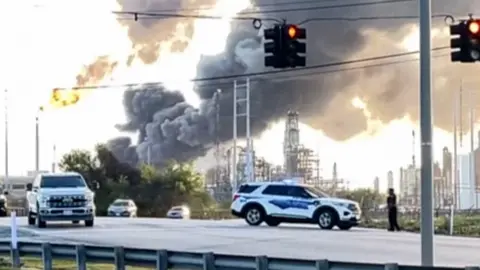
Reporting for 24x7 Breaking News — The silence of a late-night descent into New York City was shattered at 23:40 local time on Sunday when Air Canada flight AC8646 collided with an airport fire truck on a LaGuardia runway, a catastrophic impact that literally "cut the plane in half" and claimed the lives of both pilots. The LaGuardia runway collision has sent shockwaves through the aviation industry, leaving 41 others injured and raising urgent questions about ground traffic safety protocols at one of the nation's most congested transit hubs. As first reported by the BBC and confirmed by the Port Authority, the fire truck involved was reportedly responding to a separate odor-related issue on another aircraft when it crossed paths with the arriving Montreal flight.
- 'Truck One, Stop, Stop, Stop!': The Final Seconds of AC8646
- A Systemic Crisis on the Tarmac
- Our Editorial Perspective: Why Pilot Safety is a Labor Rights Issue
- Frequently Asked Questions (FAQ)
- What caused the Air Canada crash at LaGuardia?
- Who were the pilots killed in the LaGuardia collision?
- Is LaGuardia Airport still closed?
- How many people were injured in the flight AC8646 accident?
For the passengers aboard AC8646, what began as a routine one-hour hop from Montreal turned into a scene of visceral terror. Survivor Rebecca Liquori described a "loud boom" that echoed through the cabin just seconds after a rough landing characterized by heavy turbulence. "Everyone felt it. It was like the plane jolted and you heard the pilot try to brake trying to prevent the collision," Liquori told News12 Long Island, describing the frantic moments before passengers were forced to slide down a wing to safety. This incident marks a grim addition to a year already marred by aviation loss, drawing somber parallels to the 66 dead in the Colombian military plane crash earlier this month, emphasizing a global need for renewed focus on flight safety.
'Truck One, Stop, Stop, Stop!': The Final Seconds of AC8646
The technical investigation into the NTSB crash investigation is now centered on harrowing air traffic control audio that captures the final, desperate commands from the tower. In the recordings, a controller can be heard screaming, "Truck One, stop, stop, stop!" just moments before the impact occurred. This suggests a potential breakdown in communication or a breach of runway incursions protocols that the National Transportation Safety Board (NTSB) is currently working to deconstruct. NTSB Chairwoman Jennifer Homendy, who arrived on-site at 03:00 local time, confirmed that her team is analyzing the cockpit voice recorder and flight data recorder, both of which were recovered intact from the wreckage.
The human cost of this commercial flight ground incursion is centered on two young lives. Québec native Antoine Forest, 30, has been identified by Canadian media as one of the pilots killed in the cockpit. FAA Administrator Bran Bedford characterized the loss as an "absolute tragedy," noting that both men were at the very beginning of their professional journeys. While 40 of the injured have been treated and many released, two individuals within the fire engine remain hospitalized, highlighting the sheer force of the collision that left debris scattered across a wide radius of the tarmac.
We've closely monitored the response from federal officials, including U.S. Transportation Secretary Sean Duffy, who visited the site on Monday. Duffy emphasized that the use of seatbelts likely prevented a much higher death toll among the passengers. However, for those like 23-year-old Leo Medina—who watched the crash from another plane and then spent 12 hours sleeping on the airport floor—the trauma of seeing a fuselage severed in two is not something that a seatbelt can mitigate. The psychological toll on the survivors and the witnesses on the tarmac remains a primary concern for local support services.
A Systemic Crisis on the Tarmac
This disaster at LaGuardia isn't just an isolated accident; it is a symptoms of a broader, systemic pressure cooker within American aviation infrastructure. As we've analyzed in our coverage of Trump’s federal priorities, the tension between rapid transit demands and aging safety systems often leads to these "near-miss" scenarios finally turning into fatal hits. The fire truck, designated as "Truck One," was responding to a non-emergency odor report—a routine task that, due to a likely sequence of communication errors, placed it directly in the path of a landing regional jet.
The aviation safety protocols currently in place are designed to prevent exactly this type of intersection. Every vehicle on the movement area must be in constant contact with ground control, and runway crossings require explicit clearance. The fact that a fire truck was in the path of a landing aircraft suggests a failure that could be mechanical, human, or digital. The NTSB's "walking inspection" of the runway has already identified a "tremendous amount of debris," which investigators must meticulously map to determine the exact point of impact and the speed of both vehicles at the time of the crash.
Ground incursions have been on the NTSB's "Most Wanted" list of safety improvements for years. Despite the implementation of automated alerting systems at many major airports, the human element remains the most significant variable. When a controller’s voice cracks as they yell "Stop, stop, stop," it is a sign that the technology has already failed, and only a miracle can prevent a tragedy. In this case, for Antoine Forest and his co-pilot, the miracle never came.
Our Editorial Perspective: Why Pilot Safety is a Labor Rights Issue
In our view at 24x7 Breaking News, we cannot look at the Air Canada pilot tragedy without questioning the immense pressure placed on flight crews and ground support staff in the current economic climate. While the NTSB will focus on the "how," we must focus on the "why." Why are our airports so crowded that a routine fire response becomes a death trap? Why is the margin for error so razor-thin that a single misunderstood radio transmission results in a plane being "cut in half"? We believe it is high time to stop treating these events as statistical anomalies and start seeing them as the inevitable result of an overstretched aviation system.
The loss of two young pilots is not just a tragedy for their families; it is a blow to a profession already struggling with recruitment and retention. We must advocate for a humanitarian approach to aviation that prioritizes the lives of the workers over the efficiency of the schedule. If LaGuardia—a crown jewel of New York infrastructure—cannot guarantee that a runway is clear for a landing aircraft, then the system is fundamentally broken. We demand more than just an investigation; we demand a radical reinvestment in the technology and the people who keep our skies safe. Anything less is an insult to the memory of those lost on Runway 4.
Frequently Asked Questions (FAQ)
What caused the Air Canada crash at LaGuardia?
- The crash was caused by a collision between Air Canada flight AC8646 and a Port Authority fire truck that was responding to a separate incident on the runway. The NTSB is currently investigating why the truck was in the landing path of the aircraft.
Who were the pilots killed in the LaGuardia collision?
- One of the pilots has been identified as 30-year-old Antoine Forest, a native of Québec. The identity of the second pilot has not yet been officially released pending family notification.
Is LaGuardia Airport still closed?
- The airport was shut down immediately following the 23:40 Sunday crash and remained closed until Monday afternoon. Some runways remain restricted as the NTSB continues to collect evidence and debris.
How many people were injured in the flight AC8646 accident?
- A total of 41 people were taken to local hospitals with various injuries. Most have been released, though two individuals from the fire truck remain in serious condition.
The LaGuardia runway collision serves as a harrowing reminder that even the most routine flights are governed by a fragile web of communication and safety protocols. As the investigation continues, the aviation community must grapple with the reality that our current systems may no longer be enough to protect those in the cockpit and the cabin alike. So here's the real question — in an era of automated safety, how did a simple fire truck response end in a double fatality on one of the world's most famous runways?
This article was independently researched and written by Hussain for 24x7 Breaking News. We adhere to strict journalistic standards and editorial independence.
Comments
Post a Comment