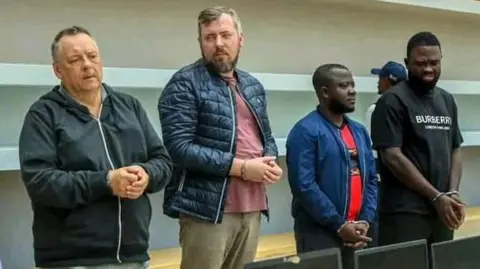
In the sweltering humidity of Luanda, a trial is beginning that could redefine the geopolitical map of Southern Africa. Two Russian nationals, Igor Ratchin and Lev Lakshtanov, stand accused of orchestrating a sophisticated Russian influence operation in Angola designed to ignite anti-government protests and hijack the 2026 presidential elections. Reporting for 24x7 Breaking News, we’ve tracked the fallout of these arrests, which have sent shockwaves through the oil-rich capital and exposed the jagged edges of Moscow's fading grip on its former Cold War allies.
- The Ghost of Wagner: Africa Politology and the New Disinformation Frontier
- The Mechanics of Subversion: Fake News and Paid Protests
- The Human Reality: Angolans as Pawns in a Proxy War
- Our Perspective: The Desperation of a Fading Empire
- Frequently Asked Questions (FAQ)
- What is 'Africa Politology' and how is it linked to Wagner?
- What are the specific charges against the Russians in Angola?
- Why is Angola moving away from Russia?
- How much were local journalists allegedly paid for disinformation?
The stakes couldn't be higher for the administration of President João Lourenço. Since taking power, Lourenço has executed a daring strategic pivot toward Washington and Brussels, distancing himself from the Kremlin—a move that has clearly rattled Moscow. According to an indictment obtained by the BBC, Ratchin, a political consultant, and Lakshtanov, his translator, are facing 11 harrowing charges, including terrorism, espionage, and influence peddling. They have been languishing in an Angolan prison for eight months, awaiting their day in court while the international community watches with bated breath.
The Ghost of Wagner: Africa Politology and the New Disinformation Frontier
Our investigation into the source material reveals that the prosecution believes these men weren't acting alone. They are allegedly part of "Africa Politology," a shadowy successor network to the late Yevgeny Prigozhin’s infamous Wagner Group. While Prigozhin’s 2023 plane crash was supposed to signal the end of his private empire, the machinery of disinformation campaigns in Africa appears to have simply rebranded. This network is accused of using the same playbook seen in Mali and the Central African Republic: find a local grievance, pour digital gasoline on it, and wait for the explosion.
The indictment claims the Russians arrived in Luanda under the guise of opening a "Russian House" cultural center—a project that never actually materialized. Instead, they allegedly began recruiting local talent, including sports journalist Amor Carlos Tomé and political activist Francisco Oliveira. These local operatives were reportedly paid over $24,000 to disseminate propaganda intended to undermine trust in Western partners and portray Lourenço’s foreign policy as a betrayal of the Angolan people. This type of covert interference mirrors the systemic concerns we've seen globally, such as when the FCC Bans New Foreign Routers Over Espionage Fears to protect domestic infrastructure.
As Alex Vines, the Africa programme director at the European Council on Foreign Relations, noted to the BBC, this operation is a clear sign of "Russian anxiety" over Angola’s westward drift. The loss of Russian diamond giant Alrosa and VTB Bank from the Angolan market due to Ukraine-related sanctions has hit Moscow’s wallet, and they are seemingly fighting back with the only tools they have left: chaos and digital subversion. It’s a desperate attempt to regain a foothold in a country that is moving on from its Soviet-era dependencies.
The Mechanics of Subversion: Fake News and Paid Protests
How do you actually trigger a protest from a laptop in a Luanda hotel room? According to the prosecution, it starts with the co-opting of the local media. The Russians allegedly funneled thousands of dollars to journalists to plant stories that painted the government as a puppet of Western imperialists. This wasn't just about traditional news; it involved a sophisticated social media operation. One Facebook page cited in the trial reportedly imitated local grassroots movements to call for street actions, preying on the very real economic frustrations of the Angolan youth.
The humanitarian risk here is profound. By manufacturing dissent, these operatives aren't just playing a game of Risk; they are putting real lives on the line. In a country with a history of brutal civil war, the threat of anti-government protests turning violent is a kitchen-table reality for families in Luanda’s suburbs. We’ve seen how quickly political instability can spiral out of control, much like the chaos recently documented when Kenya’s Raphael Tuju was arrested amid fears of staged disappearances and political warfare.
Interestingly, even some of Prigozhin's former associates have criticized this specific operation as "amateurish." One political strategist told the BBC that the 2025 team was composed of "complete idiots" who seemed to have been recruited from Moscow street markets. Yet, even amateurish disinformation can be lethal when it targets a fragile democracy. The defense team, of course, maintains that their clients are mere cultural workers, victims of a geopolitical misunderstanding. They argue the indictment lacks "concrete and objective facts," but the paper trail of payments says otherwise.
The Human Reality: Angolans as Pawns in a Proxy War
Beyond the high-level espionage charges lies the reality of the Angolan people. For the average citizen in Luanda, the price of bread and the availability of jobs are the primary concerns. When foreign powers like Russia intervene to manipulate these grievances, they aren't helping the people; they are using them as expendable pawns. The two Angolan defendants, Tomé and Oliveira, face charges of espionage and terrorism that could see them spend decades behind bars. Whether they were true believers or simply desperate for the cash the Russians offered, their lives are now effectively over.
This case highlights a disturbing trend across the Global South. As the West and Russia engage in a new Cold War, the battlefields are no longer just physical territories, but the hearts and minds of people in emerging economies. The strategic position of Angola, as a top oil and diamond producer, makes it a prize Moscow is unwilling to lose without a fight. But at what cost? When a foreign power funds disinformation campaigns to destabilize a sovereign nation, they are attacking the very foundation of self-determination.
Our Perspective: The Desperation of a Fading Empire
In our view at 24x7 Breaking News, the Luanda trial isn't just about two men in a dock; it’s a post-mortem of Russia’s influence in Africa. For decades, Moscow leaned on its history of supporting anti-colonial movements to maintain ties. But today’s Russia isn't the Soviet Union of the 1970s. It is a sanctioned, isolated power trying to maintain relevance through influence peddling and digital arson. What concerns us most is the cynical nature of this operation. It purports to be "anti-imperialist" while using the most imperialist tactic in the book: subverting the will of the local population for the benefit of a distant capital.
We believe the Lourenço administration is right to take this threat seriously, though we must also caution against using "foreign interference" as a blanket excuse to suppress legitimate domestic dissent. There is a fine line between protecting national security and silencing the opposition. However, the evidence of Russian influence operation in Angola—from the payments to the fake social media accounts—suggests a coordinated effort to manufacture a crisis where one might not have otherwise boiled over. The international community must support Angola's right to choose its own path, free from the shadow of Kremlin-funded agitators.
Ultimately, this trial serves as a warning to other African nations. The Wagner Group may be gone in name, but its methods are alive and well. As long as there are grievances to exploit and journalists willing to take a paycheck, the threat of disinformation will remain a primary weapon in the Kremlin's arsenal. We must ask ourselves: how many more "Russian Houses" are being built across the continent, housing not books and culture, but servers and subversion?
Frequently Asked Questions (FAQ)
What is 'Africa Politology' and how is it linked to Wagner?
- Africa Politology is described by prosecutors as a network of operatives that emerged from the remnants of the Wagner Group after Yevgeny Prigozhin's death.
- It focuses on political consulting and disinformation rather than just paramilitary activity, aiming to keep Russian influence alive across the continent.
What are the specific charges against the Russians in Angola?
- Igor Ratchin and Lev Lakshtanov face 11 charges, including terrorism, espionage, and influence peddling.
- The prosecution alleges they attempted to trigger anti-government protests and interfere with the upcoming presidential elections.
Why is Angola moving away from Russia?
- Under President João Lourenço, Angola has pivoted toward the West to attract investment and escape the economic drag of Russian sanctions.
- Key Russian companies like Alrosa have been forced out, and Lourenço hasn't met with Vladimir Putin since 2019.
How much were local journalists allegedly paid for disinformation?
- The indictment suggests that over $24,000 was distributed to local journalists and activists to spread pro-Russian and anti-government propaganda.
The trial in Luanda will likely be a landmark case for the continent, exposing the hidden plumbing of modern Russian influence operation in Angola. As the world watches, the real question remains: Can a burgeoning democracy ever truly protect itself when the world's masters of disinformation decide to make it their next target?
This article was independently researched and written by Hussain for 24x7 Breaking News. We adhere to strict journalistic standards and editorial independence.
Comments
Post a Comment