Reporting for 24x7 Breaking News.
- Asia's Vulnerability Exposed
- Refinery Roadblocks: A Matter of Chemistry
- The Ripple Effect on Daily Life
- Government Interventions and Strategic Reserves
- Frequently Asked Questions (FAQ)
- What is the Strait of Hormuz and why is it important?
- How does the conflict with Iran affect global oil prices?
- Why is Asia particularly vulnerable to these disruptions?
- What measures are countries taking to mitigate the crisis?
- How does the Ukraine war relate to current energy dependencies?
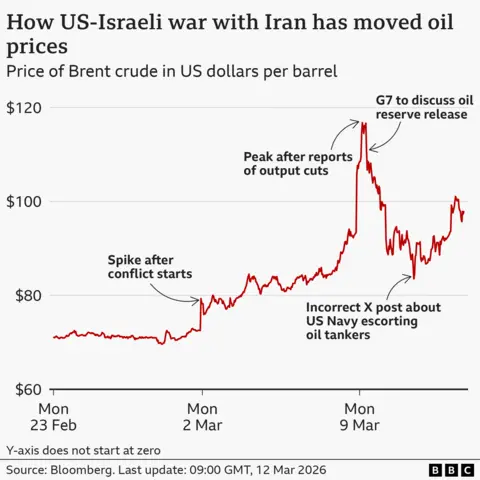
The escalating conflict involving Iran has starkly illuminated the world's profound dependence on oil and gas flowing from the Persian Gulf. Since hostilities intensified, global oil prices have surged by over a third, now trading above $100 a barrel. This dramatic increase is a direct consequence of aerial attacks on shipping and energy infrastructure, alongside the effective closure of the Strait of Hormuz, a critical artery that transports one-fifth of the world's oil supply.
Asia's Vulnerability Exposed
Nowhere are the repercussions of this burgeoning energy crisis felt more acutely than in Asia. Last year, a staggering 90% of all oil and gas transiting the Strait of Hormuz was destined for the region. This energy is not merely a convenience; it is the lifeblood for heating homes, powering vehicles, and generating electricity for hundreds of millions.
The region's vast manufacturing base, a cornerstone of the global economy, also relies heavily on these energy imports. Southeast Asia, in particular, finds itself precariously exposed to disruptions in the Persian Gulf. Even nations that possess their own oil production, such as Malaysia and Indonesia, have seen their domestic output dwindle over the past decade, forcing a greater reliance on imports.
Refinery Roadblocks: A Matter of Chemistry
Adding another layer to this vulnerability is the specific type of crude oil predominantly sourced from the Middle East. Jane Nakano, a senior fellow at the Center for Strategic and International Studies, explains that Middle Eastern crude is typically characterized as 'heavy sour' or 'medium sour.' "Southeast Asian refineries were specifically designed to process this type of crude oil," Nakano stated.
This specialized infrastructure means that simply switching to alternative suppliers, such as those in the United States, is not a straightforward solution. "It would require significant investment to alter refinery specifications," Nakano elaborated, underscoring the intricate technical challenges involved in rerouting supply chains.
The Ripple Effect on Daily Life
This predicament places many nations in a difficult bind. The Philippines, for instance, imports approximately 95% of its crude oil from the Middle East. In response to the crisis, the nation's president has already urged public workers to adopt a four-day work week to conserve fuel, a measure echoed by other governments encouraging remote work arrangements.
Thailand's energy minister announced on Tuesday that public offices would raise air conditioner temperatures to 26°C (79°F) as a fuel-saving measure. The impact extends beyond transportation and energy, significantly influencing food prices. Singapore imports 90% of its food, while Indonesia relies entirely on external sources for its wheat supply.
Consequently, rising transportation costs, driven by soaring fuel prices, have a direct and palpable effect on the cost of groceries and essential goods. Last week, the price of jet fuel climbed by nearly 60%, with diesel prices in Vietnam jumping by a similar margin since last month. This has led to scenes of panic-buying at petrol stations, with long queues of moped riders in cities like Hanoi and Ho Chi Minh City.
Similar scenes have unfolded in Bangladesh, where consumers face mounting pressure at the pump. While price increases are felt globally, Asia's surge is particularly pronounced. In the United States, average gasoline prices have risen by 23% in the past month, with diesel up by a third. In the United Kingdom, diesel prices have increased by 9%.
Government Interventions and Strategic Reserves
Governments worldwide are closely monitoring the situation. South Korea has implemented a temporary cap on fuel prices to alleviate public anxiety. Japan has announced subsidies for oil wholesalers aimed at stabilizing retail prices, while France's TotalEnergies committed to capping petrol and diesel prices at its service stations through the end of the month.
The United Kingdom is reviewing a planned fuel duty increase scheduled for September. Asia's economic powerhouse, China, appears best positioned to weather the storm, having built substantial oil reserves capable of sustaining the nation for several months. Unofficially, China also continues to procure Iranian oil, circumventing U.S. sanctions, with vessel-tracking data indicating ongoing, albeit covert, deliveries.
Furthermore, over 46 million barrels of Iranian crude oil are reportedly in floating storage in the South China Sea, according to trade analytics group Kpler. China's relatively lower reliance on oil for electricity generation—primarily coal-powered—and a third of new car sales being electric vehicles, insulate it somewhat from the price hikes impacting other Asian economies.
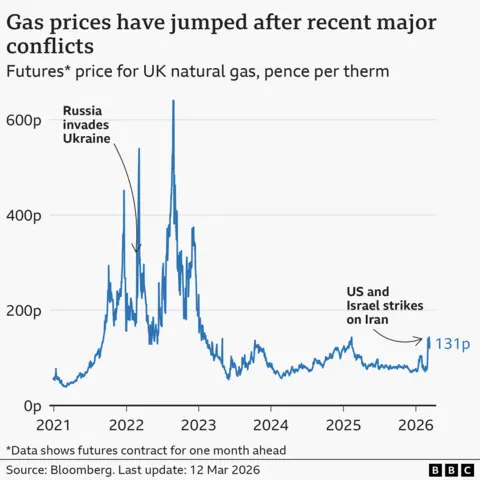
Japan and South Korea, along with other major economies, have agreed to release millions of barrels from their national strategic petroleum reserves, following an International Energy Agency (IEA) announcement. However, both nations' dependence on Middle Eastern energy has paradoxically increased since they reduced their intake of Russian oil and gas following the 2022 invasion of Ukraine. The complex geopolitical landscape, where one crisis inadvertently exacerbates another, continues to shape global energy markets, echoing the broader strains seen in international relations, as evidenced by ongoing discussions surrounding Iran's regional actions.
Frequently Asked Questions (FAQ)
What is the Strait of Hormuz and why is it important?
The Strait of Hormuz is a narrow waterway connecting the Persian Gulf to the Gulf of Oman and the open sea. It is a critical chokepoint for global oil transportation, with approximately one-fifth of the world's total oil consumption passing through it annually.
How does the conflict with Iran affect global oil prices?
Military actions, threats of blockade, and disruptions to shipping and energy infrastructure in and around the Strait of Hormuz create uncertainty and fear of supply shortages, driving up oil prices. Traders and investors factor in the perceived risk of further escalation, leading to higher market prices.
Why is Asia particularly vulnerable to these disruptions?
Asia imports a vast majority of its energy, with a significant portion passing through the Strait of Hormuz. Many Asian refineries are also specifically equipped to process Middle Eastern crude, making it difficult to quickly switch to alternative oil types or suppliers. The economic and social consequences of fuel shortages are therefore more immediate and severe.
What measures are countries taking to mitigate the crisis?
Governments are implementing various strategies, including releasing oil from strategic reserves, providing subsidies to energy companies, capping fuel prices, encouraging fuel conservation measures like reduced work weeks or higher thermostat settings, and exploring diversification of energy sources.
How does the Ukraine war relate to current energy dependencies?
The ongoing war in Ukraine led many European and Asian countries to reduce their reliance on Russian oil and gas. This shift often meant increasing their dependence on energy supplies from the Middle East, thereby amplifying their vulnerability to any instability in that region, including the current conflict involving Iran.
The global energy landscape remains precariously balanced, highlighting a systemic reliance on a volatile region for essential resources. As tensions persist, the ripple effects on economies and daily lives worldwide are undeniable, prompting a critical re-evaluation of energy security strategies.
Given the recurring nature of these geopolitical disruptions, is it time for a radical global shift away from fossil fuels, or should nations prioritize securing existing supply chains, even at the risk of conflict?





This article was independently researched and written by Hussain for 24x7 Breaking News. We adhere to strict journalistic standards and editorial independence.
Comments
Post a Comment