
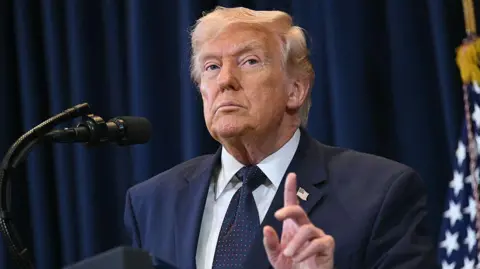
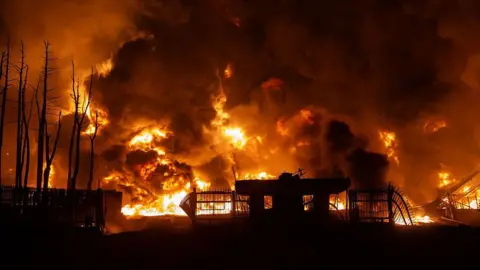
Reporting for 24x7 Breaking News. Nearly two weeks after the United States launched strikes against Iran, a palpable unease has settled across America, fueling a national debate that cuts across party lines. While President Trump touts "major strides," conflicting administration statements and the specter of prolonged military engagement have left many voters grappling with profound questions about the nation's direction and the true cost of intervention.
- A Nation Divided: Echoes of Past Conflicts
- The Shadow of 'Forever War' Looms
- Economic Anxieties and Shifting Priorities
- The Human Cost of Geopolitical Strife
- Frequently Asked Questions (FAQ)
- What are the stated goals of the US strikes against Iran?
- How are Americans reacting to the potential for a prolonged conflict?
- What are the economic concerns associated with the strikes?
A Nation Divided: Echoes of Past Conflicts
The current military action marks a significant pivot for an administration that campaigned heavily on ending American involvement in overseas conflicts. This departure from the "America First" platform has left even staunch supporters bewildered. As one Republican voter shared with the BBC, the intervention feels out of step with the president's core promises.
"I'm not interested in this war. I didn't want this war," he stated, reflecting a sentiment echoed by many of his peers. "One of the big things in his first term was not starting any wars, and that was a big thing for me." His primary concern centers on the potential loss of American lives and the economic repercussions, fearing that rising gas and oil prices could destabilize the economy he believed was on the cusp of a boom.
However, a contrasting perspective emerged from another Republican voter who views the increased energy costs as a necessary sacrifice for a greater cause. "Finally, someone's doing something to stop terrorism," she asserted, commending the president for taking decisive action where others have faltered.
She highlighted the ongoing human rights abuses within Iran, urging fellow citizens not to forget the struggles of the Iranian people. "We live in a country where we have freedom to speak out. Thousands of people were killed in Iran when they were trying to have their own protests. I think people are forgetting what has happened in Iran in the last 30 years," she added, framing the conflict as a fight for the freedom of millions.
The Shadow of 'Forever War' Looms
For many, the immediate concern is not just the present conflict, but its potential to escalate into an open-ended engagement. A Democratic teacher expressed deep apprehension about the long-term implications for her students and her family's safety.
"What if this turns into a forever war? What's that going to mean for my students long term?" she questioned, her voice tinged with worry. The perceived lack of a clear exit strategy fuels anxieties about potential retaliation stateside, leading to a chilling reassessment of everyday activities like summer travel to major cities.
This sentiment of uncertainty was amplified by a Republican voter wrestling with the ambiguity of America's role in global regime change. While supportive of the potential removal of the current Iranian regime, the method and commitment involved raise significant questions about legislative oversight and national priorities.
"You're taking us into a war and a real commitment – where is the participation of the legislative branch, the people's representatives?" he asked, pondering the broader implications of such interventions. "I don't know if this is the business the United States should be in, changing regimes that we don't like."
Economic Anxieties and Shifting Priorities
The economic fallout from the strikes is a tangible concern for many Americans. Rising fuel costs are not just an abstract economic indicator but a direct hit to household budgets, forcing difficult choices for families already navigating inflation. This financial strain intersects with a broader feeling that critical domestic issues are being overshadowed by foreign policy crises.
One Democrat voiced frustration that the focus has shifted away from important domestic matters, such as the ongoing revelations surrounding the Epstein files. "If you see what's going on in Iran right now, the [American] people are not really focused on the Epstein files anymore. They're focused on Iran, because it's a bigger issue," she observed, lamenting the diversion of national attention and resources.
The lack of a clearly defined objective for the military action adds to the public's disquiet. "Are they going to stop? It doesn't seem like it. Are they going to exit? It doesn't seem like it," she added, projecting the current chaos into a grim future. The rapid escalation in just over a week has many bracing for prolonged instability.
Another Democrat expressed profound dismay, hating the war and its immediate impact on prices. "Prices of everything are insane. I have to think about gas prices since they've jumped up," she said, her primary concern being the potential for **escalation**. The administration's tendency to engage in multiple smaller conflicts simultaneously, from Venezuela to Iran, raises fears of a wider, more global conflagration.
The Human Cost of Geopolitical Strife
Beyond the economic and strategic debates, the underlying human cost of conflict remains a central point of anxiety. The fear of American soldiers being placed in harm's way is a recurring theme, as is the broader impact on global stability. The current situation in the Gulf, where shipping lanes are increasingly perilous due to drone and missile threats, underscores the wider regional instability, echoing concerns raised previously by the UAE Minister demanding Iran halt regional strikes.
The narrative of intervention, often framed in terms of freedom and counter-terrorism, is increasingly being scrutinized through the lens of potential unintended consequences. As the international community grapples with ongoing conflicts and unrest, such as the harsh anti-gay laws recently passed in Senegal, the complex interplay of global politics and human rights becomes ever more apparent.
The specter of war also raises anxieties about potential threats closer to home. While the immediate focus is on Iran, the possibility of retaliatory actions or a heightened state of alert can impact daily life, making ordinary citizens question their safety in public spaces and travel plans.
Frequently Asked Questions (FAQ)
What are the stated goals of the US strikes against Iran?
The Trump administration has offered conflicting statements regarding the precise objectives, with some officials citing deterrence and others implying broader aims related to Iranian regional activities and internal policies. President Trump has broadly stated that the U.S. is achieving "major strides."
How are Americans reacting to the potential for a prolonged conflict?
Reactions are mixed, with some supporting decisive action against perceived threats, while others express deep concern about the potential for a "forever war," economic repercussions, and the loss of American lives. Polling suggests support largely divides along party lines, but complexity exists within each party.
What are the economic concerns associated with the strikes?
Concerns include potential increases in gas and oil prices, which could negatively impact the economy, and the broader financial strain on American households due to inflation. Some also worry about a potential draft if the conflict escalates significantly.
The ongoing military actions in Iran present a complex geopolitical challenge, forcing a national conversation about America's role in the world, the acceptable costs of foreign policy, and the very definition of national security. The administration's messaging remains a point of contention, leaving many Americans to ponder the ultimate trajectory of this escalating tension.
So, considering the deeply divided opinions and the potential for long-term entanglements, is the current U.S. military engagement in Iran a necessary step for national security, or a dangerous gamble that risks dragging America into another protracted conflict?




This article was independently researched and written by Hussain for 24x7 Breaking News. We adhere to strict journalistic standards and editorial independence.
Comments
Post a Comment