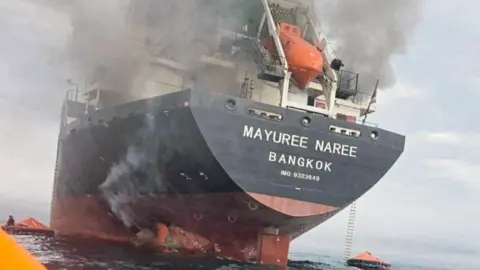
Reporting for 24x7 Breaking News. Thousands of sailors are trapped in a perilous limbo across the Gulf region, caught in the crossfire of escalating regional tensions. Vessels laden with vital cargo are navigating increasingly hostile waters, with Iranian threats to target shipping lanes following US and Israeli military actions. The situation has transformed normally routine voyages into a terrifying ordeal, leaving crews facing the constant threat of drone strikes, missile attacks, and aerial skirmishes.
- The Strait of Hormuz: A Global Lifeline Under Siege
- A Growing Humanitarian Crisis at Sea
- Families Plunge into Anguish Amidst Communication Blackouts
- Navigational Nightmares: GPS Jamming and Uncertainty
- Frequently Asked Questions (FAQ)
- What is the primary threat to ships in the Gulf?
- How many sailors are estimated to be stranded?
- What are the navigational challenges faced by ships?
- How are families affected by this crisis?
The Strait of Hormuz: A Global Lifeline Under Siege
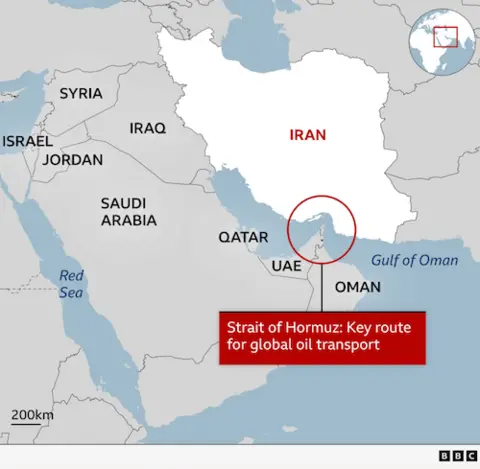
The Strait of Hormuz, a critical chokepoint for global energy supplies and general cargo, has become a flashpoint. Iran has issued stark warnings, vowing to open fire on any vessels attempting to transit the waterway in retaliation for perceived aggressions. This has effectively marooned countless ships and their crews, turning the sea into a vast, unpredictable war zone.
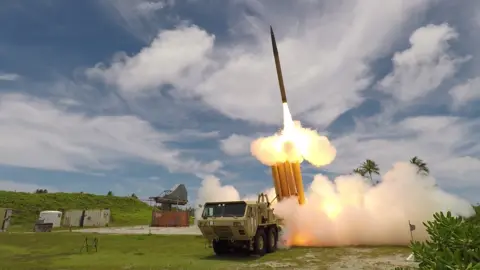
Amir, a Pakistani sailor aboard an oil tanker off the coast of the UAE, recounted his harrowing experiences. "I have seen Iranian drones and cruise missiles flying at low altitude," he stated, his voice strained. "I also hear the sound of fighter jets, but we can't identify which country they belong to." The paramount fear for him and his fellow crew members is the catastrophic possibility of a stray drone or missile impacting their vessel.
Hein, a mariner from Myanmar, witnesses the escalating conflict daily. "Just this morning, two fighter jets fired at each other while we were still working," he reported. "There's no specific hiding place on the ship for this, and we just had to run inside." The anonymity of the involved parties only amplifies the pervasive sense of dread.
A Growing Humanitarian Crisis at Sea
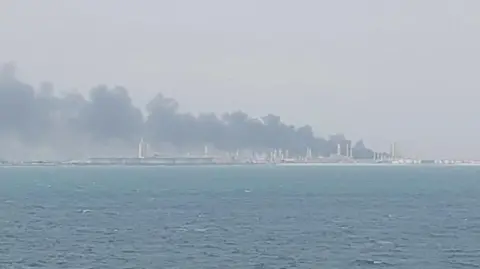
While exact figures are elusive, Captain Anam Chowdhury, president of the Bangladesh Merchant Marine Officers' Association, estimates that approximately 20,000 sailors are currently stranded. This includes those at sea and those confined to ports, with Chowdhury noting that neither position offers guaranteed safety. "Inside the port, people might think it's safe, but there have been ships which have been bombarded when they were anchored," he explained.
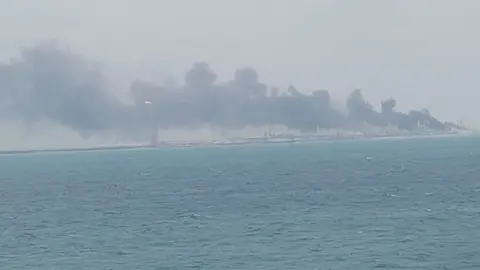
His organization has documented at least seven vessels damaged by projectiles since the conflict intensified. A tragic incident on March 1st saw a sailor killed aboard the Skylark, a tanker registered to the Republic of Palau. The surviving crew were left deeply traumatized after the engine room caught fire, forcing an evacuation.
Captain M Mansoor Saeed, who navigates oil tankers, shares the grim reality. "If they want to target my ship they will target it," he said, underscoring the limited agency crews possess in avoiding attacks. He noted that while larger vessels might have more maneuverability in open seas, the threat remains constant regardless of location.
Families Plunge into Anguish Amidst Communication Blackouts
The psychological toll extends far beyond the ships. Families onshore are consumed by worry, exacerbated by intermittent internet and phone blackouts in Iran, which authorities have implemented. This deliberate disruption leaves loved ones in agonizing uncertainty about the safety and whereabouts of their seafarer relatives.
Ali Abbas described the constant anxiety for his son, who is docked at an Iranian port near the Strait of Hormuz. He last spoke to his son days ago, just after his son narrowly escaped a missile attack that wounded an Indian sailor. "I have hidden this from my wife and daughter-in-law," he confessed, his voice breaking with emotion.
Another severe attack on the port on Tuesday night has severed communication again, leaving Ali in despair. "For God's sake, please help me," he pleaded, overwhelmed by the inability to confirm his son's well-being. The failure of communication systems becomes another layer of torment for families already facing unimaginable stress.
Navigational Nightmares: GPS Jamming and Uncertainty
Beyond the immediate threat of bombardment, seafarers face increasingly dangerous navigational challenges. Seo-jun, a captain with a multinational crew, reported significant degradation in satellite navigation systems. "Since the war began, GPS interference has occurred intermittently, but it has become much worse over the past three or four days," he stated.
His vessel recently had to navigate into Dubai without GPS, a feat he likened to a quote from a Korean proverb: "'like a blind person feeling for a door knob.'" This reliance on outdated or rudimentary navigation methods, coupled with the constant threat of conflict, highlights the extreme risks faced by those ensuring global trade continues.
The situation underscores the vulnerability of global supply chains and the human cost of geopolitical instability. As tensions simmer, the lives of these mariners hang precariously in the balance, a stark reminder of the real-world consequences of international conflict. The echoes of past conflicts in the region, such as those detailed in our report on the 'Mission Accomplished' ghost haunting today's Iran standoff, serve as a grim historical parallel.
Frequently Asked Questions (FAQ)
What is the primary threat to ships in the Gulf?
The primary threats include drone attacks, cruise missiles, and fighter jet engagements, stemming from Iran's stated intention to target vessels transiting the Strait of Hormuz in response to US-Israeli actions.
How many sailors are estimated to be stranded?
Captain Anam Chowdhury of the Bangladesh Merchant Marine Officers' Association estimates approximately 20,000 sailors are stranded, both at sea and in port.
What are the navigational challenges faced by ships?
Sailors are experiencing severe GPS interference and navigation system breakdowns, forcing them to rely on less reliable methods, increasing the risk of accidents.
How are families affected by this crisis?
Families are experiencing extreme anxiety due to the constant threat to their loved ones and intermittent communication blackouts, leaving them in prolonged states of uncertainty.
The plight of these stranded sailors is a stark illustration of how geopolitical conflicts directly imperil the lives of ordinary workers who form the backbone of global commerce. Their isolation and fear are a profound human tragedy unfolding on the world's most critical maritime routes. The ongoing instability in the region, which has seen ministers like the UAE's demanding Iran halt strikes, highlights the urgent need for de-escalation.
So here's the real question — in an era of escalating global tensions, how can the international community ensure the safety and well-being of the civilian mariners who are increasingly caught in the crossfire?



This article was independently researched and written by Hussain for 24x7 Breaking News. We adhere to strict journalistic standards and editorial independence.
Comments
Post a Comment