
Reporting for 24x7 Breaking News. The United Arab Emirates has unequivocally called on Iran to cease its missile and drone attacks targeting nations across the region, with UAE Minister of State Lana Nusseibeh asserting that her country will "bounce back" from the escalating conflict. Speaking to the BBC from Abu Dhabi, Nusseibeh revealed the sheer scale of the aggression, stating that over 1,800 projectiles have been directed at the UAE since the current hostilities began, a figure that came as a "shock" to the nation.
- Economic Ramifications and Infrastructure Damage
- Strategic Posture and the Right to Self-Defense
- Regional Destabilization and Information Control
- The Human Cost of Escalation
- Frequently Asked Questions (FAQ)
- What are the main concerns for the UAE regarding Iran's actions?
- Has the UAE indicated it will retaliate militarily?
- How is the UAE economy projected to fare amidst these attacks?
- The Path Forward
Economic Ramifications and Infrastructure Damage
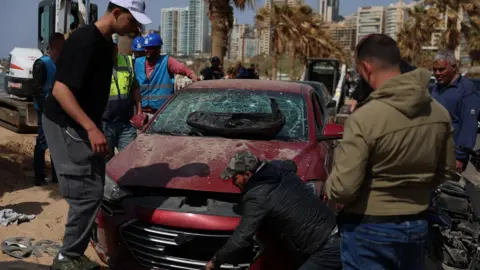
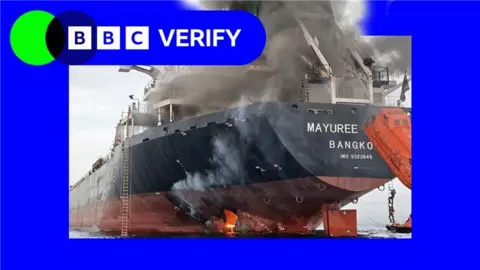
The impact of these attacks has been palpable, with some of the UAE's most recognizable landmarks, including the Fairmont The Palm hotel and the iconic Burj Al Arab, sustaining damage. Drones have been detected in close proximity to Dubai International Airport, a critical hub for global travel, leading to the cancellation of thousands of flights. The trade flowing through Jebel Ali port, the Middle East's largest, has also been significantly disrupted, mirroring the broader impact on shipping through the vital Strait of Hormuz.
Nusseibeh emphasized that Iran bears direct responsibility for the damage inflicted upon civilian infrastructure, hotels, and vital ports. However, she projected an image of national resilience, citing the UAE's robust economic growth of 5.1% last year as evidence of its capacity to recover. "You will see our economy bounce back," she stated with confidence, projecting an image of stability amidst the turmoil.
Strategic Posture and the Right to Self-Defense
When pressed about the possibility of military retaliation against Iran, Nusseibeh remained measured, refusing to be drawn into definitive statements. She reiterated the UAE's prior stance: "We were clear prior to the start of this escalation that the UAE would not allow its territory or airspace to be used in any attacks against Iran."
On the question of retaliatory strikes, her response invoked international law. "We will reserve the right for collective self defence under international law," she stated, leaving the door open for potential future actions while adhering to global frameworks. This strategic ambiguity underscores the delicate geopolitical balance in the region.
Regional Destabilization and Information Control
The UAE is not alone in facing Iranian aggression; other Gulf states, including Qatar, Saudi Arabia, Bahrain, Kuwait, and Oman, have also been targeted as Iran retaliates against perceived attacks from the United States and Israel. This wider regional instability echoes concerns seen in other volatile geopolitical situations, such as the lingering questions surrounding past military engagements. Echoes of Iraq: How the 'Mission Accomplished' Ghost Haunts Today's Iran Standoff
Dubai, a city renowned for its allure to expatriates seeking business and lifestyle opportunities, now finds itself navigating the realities of regional conflict. Nusseibeh acknowledged the tense atmosphere, stating, "In order for everyone to feel safe, it is very important at this time, that the information is credible and the sources are reliable." This statement comes as the UAE government exercises strict control over information flow, a practice that has drawn criticism from human rights organizations.
Amnesty International has documented the UAE's ongoing criminalization of freedom of expression, noting the punishment of perceived critics. Nusseibeh, however, advised citizens and residents to adhere to government guidelines for their safety and protection, framing the current legislation as a necessary measure during a tense period. She declined to comment on the specific case of a British national charged under cyber-crime laws for allegedly filming missiles, stating she was "not aware of all the details."
The Human Cost of Escalation
While officials focus on national resilience and strategic posturing, the human cost of this conflict is profound. Thousands of flights canceled means families separated, business travelers stranded, and essential supplies potentially delayed. The disruption to trade through Jebel Ali port not only impacts global commerce but also the livelihoods of countless workers who depend on its operations.
The very fabric of life in cosmopolitan hubs like Dubai is being tested. The sense of security, so crucial for attracting international talent and investment, is under scrutiny. The government's emphasis on credible information, while understandable in a crisis, also raises questions about transparency and the public's right to know, particularly when faced with direct threats. This situation draws parallels to discussions surrounding information control in other nations facing internal and external pressures, much like the debates seen in France's evolving political landscape. France's Electoral Earthquake: Paris Mayor Race Tests Nation's Deepening Divide
The directive to follow official guidelines for safety, while practical, underscores the underlying fear that conflict can bring. It highlights the vulnerability of civilian populations caught in the crossfire of geopolitical rivalries. The UAE's assertion of its right to collective self-defense, while legally framed, carries the potential for further escalation and the exacerbation of human suffering.
Frequently Asked Questions (FAQ)
What are the main concerns for the UAE regarding Iran's actions?
The primary concerns include direct attacks on its territory, damage to critical infrastructure such as airports and ports, and the broader destabilization of the region.
Has the UAE indicated it will retaliate militarily?
The UAE has not explicitly committed to military retaliation but reserves the right to collective self-defense under international law.
How is the UAE economy projected to fare amidst these attacks?
Despite the damage, the UAE anticipates economic resilience, citing strong past growth and projecting a recovery, though trade disruptions are a significant concern.
The Path Forward
The UAE Minister's call for Iran to end its strikes underscores the urgent need for de-escalation in the Middle East. The nation is projecting strength and resolve, emphasizing its economic recovery and its commitment to security. Yet, the underlying threat of further conflict and the human implications remain significant. The question of how to achieve lasting peace in a region fraught with complex rivalries continues to loom large.
So here's the real question — can diplomatic solutions prevail when both sides are reserving their right to armed response?
This article was independently researched and written by Hussain for 24x7 Breaking News. We adhere to strict journalistic standards and editorial independence.
Comments
Post a Comment