
A High-Stakes Political Maneuver in Ottawa
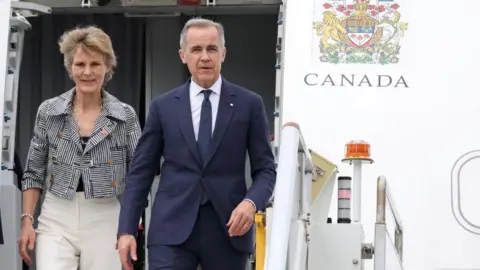
Reporting for 24x7 Breaking News, we can confirm that Canadian Prime Minister Mark Carney has officially triggered three critical by-elections scheduled for April 13. This move represents a calculated gamble to secure a parliamentary majority, a feat that has eluded his administration since taking office. With the Liberal Party currently holding 169 seats, the government sits just three seats away from the 172-seat threshold required for a full majority in the House of Commons.
- A High-Stakes Political Maneuver in Ottawa
- The Geography of the Liberal Strategy
- The Human Cost of Political Realignment
- Frequently Asked Questions (FAQ)
- Why are these by-elections being held now?
- How does this impact the Liberal government's power?
- What is the controversy regarding Conservative defections?
- A Humanitarian Perspective on Governance
The upcoming contests are not merely routine administrative procedures; they are a pivotal test of the Prime Minister's mandate. Securing these seats would grant the Liberals the stability to legislate without the constant threat of a confidence vote, effectively insulating the government from a snap election for the next three years. As the political landscape shifts, analysts are keeping a close eye on the broader implications of these races, much like how global observers track economic volatility in reports such as Global Energy Markets Rocked as G7 Weighs Strategic Oil Reserve Release.
The Geography of the Liberal Strategy
Two of the three by-elections will take place in Toronto, specifically in the ridings of University-Rosedale and Scarborough Southwest. These constituencies were vacated by former cabinet heavyweights Chrystia Freeland and Bill Blair. Freeland stepped down to assume a critical advisory role for Ukrainian President Volodymyr Zelenskyy, while Blair accepted a diplomatic appointment as Canada’s envoy to the United Kingdom. Historically, these ridings have been Liberal bastions since 2015, providing a strong safety net for the party’s majority ambitions.
The third race, located in the Montreal suburb of Terrebonne, serves as the true wildcard. This seat was held by the Bloc Québécois until 2025, when a razor-thin margin of just one vote flipped it to the Liberals. A subsequent Supreme Court of Canada ruling mandated a re-run of the election following reports of a misprinted mail-in ballot that disenfranchised a voter. Candidate Tatiana Auguste will face off against the Bloc’s Nathalie Sinclair-Desgagné in what is shaping up to be one of the most intense local campaigns in recent memory.
The Human Cost of Political Realignment
While the corridors of power in Ottawa focus on seat counts and legislative math, the reality for everyday Canadians is far more personal. Politics, at its core, is about the delivery of services, from healthcare infrastructure to the affordability of daily essentials. When high-level political shifts occur, they often distract from the urgent needs of the populace, ranging from the necessity of modern technology as discussed in Ultra-Budget Smartphones Promise Connectivity for All, But Cost Hurdles Remain, to broader societal concerns.
The Liberal Party’s recent success in drawing three former Conservative members of parliament into their caucus has sparked heated debate. Opposition leaders have characterized these defections as "undemocratic" and have leveled accusations of political pressure tactics. For the average voter, these theatrics can feel disconnected from their kitchen-table concerns, such as the rising cost of living or the ongoing challenges of regional economic stability. Empathy for the electorate is paramount; voters deserve transparency and a process that prioritizes public service over party consolidation.
Frequently Asked Questions (FAQ)
Why are these by-elections being held now?
The by-elections are required to fill vacant seats left by the departures of Chrystia Freeland and Bill Blair, alongside a court-ordered re-run in Terrebonne due to documented voting irregularities.
How does this impact the Liberal government's power?
If the Liberals win all three seats, they will secure a majority government, allowing them to pass legislation without relying on the support of opposition parties.
What is the controversy regarding Conservative defections?
Opposition parties have accused the Liberals of using aggressive tactics to poach Conservative MPs, calling the practice undemocratic and a distortion of the electoral results that put those members in office.
A Humanitarian Perspective on Governance
As we watch these campaigns unfold, it is essential to remember that the strength of a democracy is not measured by the number of seats a party holds, but by the dignity and respect it affords its citizens. Regardless of the electoral outcome, the path forward must be one of mutual understanding and a commitment to the common good. Whether we are discussing local politics or international shifts in power, such as the transition explored in Iran's New Supreme Leader: Who is Mojtaba Khamenei, the Shadowy Heir?, the human element remains the most vital component of any political system.
We hope that the upcoming campaign season in Toronto and Terrebonne focuses on substantive policy debates rather than partisan sniping. A government that is secure in its power has a unique responsibility to listen more closely to those who may disagree with it. Only through such dialogue can we ensure that our political institutions truly serve the diverse needs of all citizens.
As Mark Carney pushes for a definitive parliamentary majority, the future of Canadian governance hangs in the balance. The result of these three contests will determine the legislative trajectory of the country for years to come. So here is the real question: Is the pursuit of a majority government truly in the public interest, or does it stifle the essential checks and balances that a healthy democracy requires to function properly?



This article was independently researched and written by Hussain for 24x7 Breaking News. We adhere to strict journalistic standards and editorial independence.
Comments
Post a Comment