
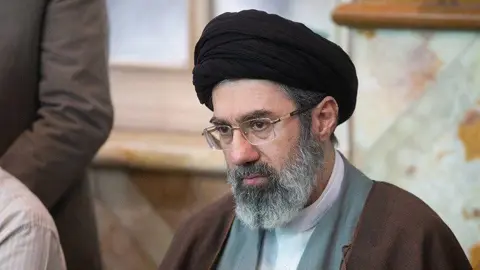
Reporting for 24x7 Breaking News, the Islamic Republic of Iran has entered a new era with the selection of Mojtaba Khamenei as its next Supreme Leader. The 56-year-old cleric, son of the late Ayatollah Ali Khamenei, is widely expected to continue his father's staunchly hardline policies, ushering in a period of continuity rather than radical change. His ascent marks a significant moment, given his largely behind-the-scenes role and the unique hereditary implications for a system founded on religious merit.
- The Unveiling of a Quiet Power Broker
- A Question of Legitimacy and Heredity
- From Mashhad to Qom: The Early Years
- Navigating the Clerical Ranks
- Whispers of Influence and Electoral Battles
- The Path Ahead: Continuity and Uncertainty
- Frequently Asked Questions (FAQ)
- Who is Mojtaba Khamenei?
- What is Mojtaba Khamenei's background?
- What are the challenges facing Mojtaba Khamenei?
- What is the significance of his religious title?
The Unveiling of a Quiet Power Broker
For years, Mojtaba Khamenei remained a figure of considerable speculation, a name whispered in diplomatic circles and Iranian political discourse. Unlike his father, who was a prominent public figure, Mojtaba has largely shied away from the spotlight. He has never held a formal government position, nor has he publicly addressed the nation or granted interviews, making a definitive public persona elusive.
However, leaked U.S. diplomatic cables from the late 2000s, published by WikiLeaks, offered a glimpse into his perceived influence. These cables, as reported by the Associated Press, described him as "the power behind the robes," a capable and forceful individual deeply embedded within the regime's inner workings. This perception of behind-the-scenes influence has now crystallized into the nation's highest religious and political office.
A Question of Legitimacy and Heredity
Mojtaba Khamenei's selection, while anticipated by some, immediately raises questions about the foundational principles of the Islamic Republic. Established in 1979 after the overthrow of the monarchy, the system's ideology emphasizes that the Supreme Leader should be chosen based on profound religious standing and proven leadership abilities, not inherited succession.
This inherent tension between hereditary succession and revolutionary ideology could prove to be a significant challenge. While Ali Khamenei himself had spoken only in general terms about future leadership, reports suggest he may have once opposed the idea of his son's candidacy. This internal debate, even if unvoiced publicly by the former Supreme Leader, highlights the potential for controversy surrounding Mojtaba's appointment.
From Mashhad to Qom: The Early Years
Born on September 8, 1969, in Mashhad, a major Shia pilgrimage city, Mojtaba is the second of Ayatollah Ali Khamenei's six children. His early education took place at the Alavi School in Tehran. During the Iran-Iraq War, which deeply shaped the regime's anti-Western sentiment, he reportedly served brief stints in the military.
His path took a more theological turn in 1999 when he moved to Qom, the spiritual heartland of Shia Islam in Iran, to pursue religious studies. Notably, he began his seminary education at the age of 30, without wearing clerical attire, a decision that deviates from the typical progression and has led to speculation about its timing and motivation.
Navigating the Clerical Ranks
Mojtaba Khamenei currently holds the rank of a mid-level cleric, a position that some observers believe could present an obstacle to his seamless acceptance as the Supreme Leader. The seminary system typically requires a high level of religious scholarship, often indicated by the title of "Ayatollah" and the ability to teach advanced classes, to qualify for leadership.
However, there is precedent for rapid elevation. His father, Ali Khamenei, was quickly promoted to "Ayatollah" shortly after becoming the second Supreme Leader in 1989. In the lead-up to his selection, media outlets and officials connected to power centers in Iran began referring to Mojtaba as "Ayatollah," suggesting a deliberate effort to bolster his religious credentials and present him as a fitting successor.
Whispers of Influence and Electoral Battles
Mojtaba Khamenei first entered the public consciousness during the tumultuous 2005 presidential election, which saw the hardline populist Mahmoud Ahmadinejad emerge victorious. Reformist candidate Mehdi Karroubi directly accused Mojtaba of interfering in the electoral process, alleging that elements within the Islamic Revolutionary Guard Corps (IRGC) and the Basij militia had channeled funds to religious groups to ensure Ahmadinejad's win.
This accusation resurfaced four years later during the widely contested 2009 re-election of Ahmadinejad. The ensuing Green Movement protests saw widespread public dissent, with some demonstrators explicitly opposing the idea of Mojtaba succeeding his father. Mostafa Tajzadeh, then deputy interior minister, decried the election results as an "electoral coup."
Tajzadeh himself was later imprisoned for seven years, attributing his incarceration directly to the "wish of Mojtaba Khamenei." The two leading reformist candidates from that election, Mir-Hossein Mousavi and Mehdi Karroubi, were placed under house arrest. In February 2012, Iranian sources told BBC Persian that Mojtaba had met with Mousavi, urging him to abandon his protests.
The Path Ahead: Continuity and Uncertainty
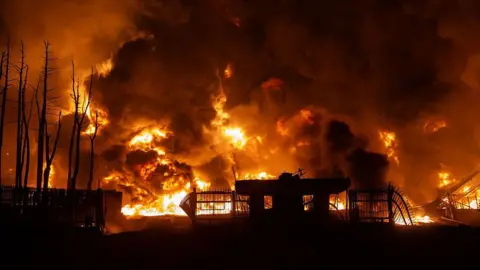
As Iran's new Supreme Leader, Mojtaba Khamenei is widely expected to maintain his father's hardline foreign and domestic policies. His personal history, marked by the loss of his father, mother, and wife in what are described as US-Israeli strikes, may further solidify his resolve against Western pressure.
Yet, he inherits a nation grappling with significant political and economic challenges. Ensuring the stability of the Islamic Republic and regaining public trust amidst widespread discontent will be his most immediate and daunting tasks. The perception that Iran is transforming into a hereditary system, rather than a meritocracy, could exacerbate existing societal divisions.
His leadership, largely untested in the public sphere, now faces the ultimate test on the national and international stage. The recent geopolitical tensions, particularly with Israel, underscore the precariousness of Iran's position. For instance, the ongoing global discourse around technological advancements, such as the debates sparked by Sundar Pichai's substantial pay package amidst AI ambitions, highlights how leadership decisions, even in seemingly distant fields, can reflect broader societal concerns about power and influence.
Furthermore, the economic realities faced by ordinary Iranians, much like the challenges in making ultra-budget smartphones accessible to all, underscore the deep-seated issues of economic disparity and access that any leader must confront. Mojtaba Khamenei's administration will be scrutinized for its ability to address these fundamental needs and bridge the gap between the ruling elite and the populace.
Frequently Asked Questions (FAQ)
Who is Mojtaba Khamenei?
Mojtaba Khamenei is the 56-year-old son of Iran's late Supreme Leader, Ayatollah Ali Khamenei. He has been selected as his father's successor and is expected to continue the country's hardline political direction.
What is Mojtaba Khamenei's background?
Born in Mashhad, he received his early education in Tehran and later pursued religious studies in Qom. He has held no formal government office but is believed to have wielded significant influence behind the scenes.
What are the challenges facing Mojtaba Khamenei?
He faces the challenge of legitimizing his rule within a system that theoretically rejects hereditary succession, addressing Iran's severe economic and political crises, and unifying a populace potentially disillusioned by the prospect of a dynastic leadership.
What is the significance of his religious title?
While currently a mid-ranking cleric, his potential elevation to "Ayatollah" before or during his leadership is seen as a move to bolster his religious standing and meet the prerequisites for Supreme Leader, mirroring his father's rapid ascent.
With the mantle of Supreme Leader now passed to Mojtaba Khamenei, Iran stands at a critical juncture, facing both the promise of stability through continuity and the peril of deepening public alienation. Mojtaba Khamenei's quiet influence is now on full display, but his ability to navigate the nation's complex internal and external pressures remains to be seen.
So here's the real question — in an era where global power dynamics are constantly shifting and internal pressures are mounting, can a leader who has operated in the shadows for so long successfully guide Iran through its profound challenges, or will the very nature of his succession sow the seeds of future instability?


This article was independently researched and written by Hussain for 24x7 Breaking News. We adhere to strict journalistic standards and editorial independence.
Comments
Post a Comment