Reporting for 24x7 Breaking News.
- Nepal's Electoral Earthquake: A New Political Dawn
- The Voice of a Generation: Addressing Youth Discontent
- Veteran Politicians Ousted by a New Wave
- Nepal's Political Upheaval and Global Parallels
- Frequently Asked Questions (FAQ)
- Who is Balendra Shah?
- What is the Rastriya Swatantra Party (RSP)?
- What were the main issues in the election?
- How does Nepal's electoral system work?
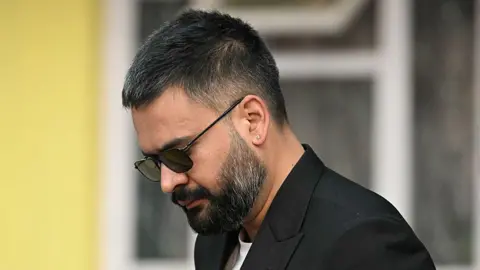
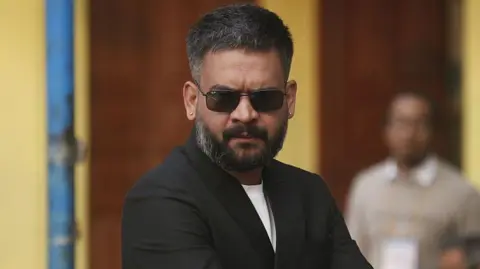
In a seismic political shift, the Rastriya Swatantra Party (RSP), a relatively new political force, has secured a commanding victory in Nepal's general election. The party, led by the charismatic 35-year-old rapper-turned-politician Balendra Shah, has won 182 seats in the lower house of parliament, falling just two seats shy of a two-thirds supermajority. This outcome marks the most significant win for a single party in Nepal in decades and signals a powerful desire for change among the electorate.
Nepal's Electoral Earthquake: A New Political Dawn
The landslide win for the RSP, founded only in 2022, is a stunning turn of fortune. It comes after the party secured fourth place in the previous election. The results, finalized late last night, saw the long-standing Nepali Congress secure 38 seats, with the Communist Party of Nepal (UML) taking third place with 25 seats. Voter turnout stood at approximately 60% of the nearly 19 million eligible voters.
This result positions Balendra Shah, currently the popular mayor of the capital, Kathmandu, to become Nepal's next prime minister. His ascent, alongside the RSP's meteoric rise, is particularly remarkable given Nepal's complex mixed electoral system. This system, a blend of first-past-the-post and proportional representation, is mathematically designed to prevent any single party from achieving such a dominant position, highlighting the strength of the public's mandate.
The Voice of a Generation: Addressing Youth Discontent
The election campaign was largely defined by parties vying for the crucial youth vote. Promises to tackle pressing issues such as high unemployment, economic stagnation, and pervasive inequality resonated deeply with a populace yearning for a new direction. These were the same issues that fueled widespread youth-led protests last year, initially sparked by a social media ban but quickly escalating into broader critiques of the political establishment.

Demonstrators voiced anger over the perceived class inequality and the influence of "nepo babies"—children of established politicians. These protests were met with a harsh response, resulting in 77 deaths. A BBC investigation revealed that the country's police chief had authorized the use of lethal force against unarmed protesters, a stark reminder of the high stakes involved in the nation's political landscape. The protests ultimately led to the ousting of the then-leader, KP Sharma Oli.
Veteran Politicians Ousted by a New Wave
Adding to the dramatic narrative, KP Sharma Oli, who stood again as a prime ministerial candidate, was decisively defeated in his Jhapa 5 constituency by Balendra Shah. This defeat in a former stronghold of the 74-year-old Oli underscores the generational shift at play. Gagan Thapa, the leader of the historic Nepali Congress, also lost his seat to an RSP candidate, further cementing the party's disruptive impact on the established political order.
The RSP's success reflects a deep-seated desire for change that transcends traditional party lines. Shah, much like his party, is largely untested in national politics, with his primary experience being his tenure as mayor of Kathmandu. His victory, therefore, represents a gamble by Nepalis on fresh leadership and a new approach to governance.
Nepal's Political Upheaval and Global Parallels
This election result in Nepal occurs amidst a global trend of voter dissatisfaction with traditional political parties and a growing appetite for outsider candidates. Similar electoral earthquakes have shaken established democracies, challenging the status quo and demanding new solutions to persistent problems. The rise of figures who connect directly with popular grievances, bypassing conventional political structures, is a recurring theme in contemporary elections worldwide. This phenomenon can be seen in the recent electoral shifts in places like France, where new political movements have challenged entrenched parties, as noted in our analysis of the France's Electoral Earthquake: Paris Mayor Race Tests Nation's Deepening Divide.
The youth-driven nature of this movement in Nepal also echoes broader concerns about economic precarity and the future prospects for young people globally. As nations grapple with issues of inequality and political disenfranchisement, the desire for leaders who promise radical change becomes increasingly potent. This resonates with ongoing discussions about regional stability and the impact of political shifts on international relations, similar to the tensions arising from events in the Middle East, as highlighted in our coverage of the UAE Minister Demands Iran Halt Regional Strikes Amidst Escalating Tensions.
Frequently Asked Questions (FAQ)
Who is Balendra Shah?
Balendra Shah is a 35-year-old politician and former rapper who has led the Rastriya Swatantra Party (RSP) to a significant victory in Nepal's recent general election. He currently serves as the mayor of Kathmandu.
What is the Rastriya Swatantra Party (RSP)?
The RSP is a relatively new political party in Nepal, founded in 2022. It champions anti-corruption and reformist policies and has now achieved a dominant position in the country's parliament.
What were the main issues in the election?
Key issues included high youth unemployment, economic stagnation, inequality, and calls for political reform. These were also central to the youth-led protests that preceded the election.
How does Nepal's electoral system work?
Nepal utilizes a mixed electoral system, combining first-past-the-post (FPTP) and proportional representation (PR). This system is generally designed to prevent single-party dominance, making the RSP's landslide victory even more remarkable.
The unprecedented victory of Balendra Shah and the RSP signals a profound shift in Nepal's political landscape, driven by a generation demanding accountability and progress. The coming weeks will be crucial as a new government takes shape, facing the immense task of fulfilling the high expectations set by this historic election.
With a rapper now poised to lead Nepal, what does this seismic electoral shift truly signal about the future of representative democracy in the face of widespread public dissatisfaction?
This article was independently researched and written by Hussain for 24x7 Breaking News. We adhere to strict journalistic standards and editorial independence.
Comments
Post a Comment