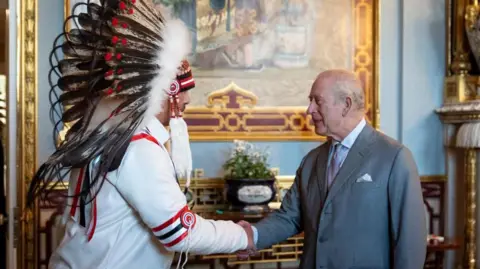
Reporting for 24x7 Breaking News. King Charles III has reportedly expressed "concern" regarding the growing Alberta separatist movement during a recent meeting with First Nations chiefs at Buckingham Palace. The revelation came from the Indigenous leaders themselves, who described the private audience as "significant" and a crucial moment to inform the monarch about the potential ramifications of Western secessionist sentiments on historical treaty agreements.
- Indigenous Leaders Brief Monarch on Separatist Threat
- A Plea for Royal Proclamation and Treaty Affirmation
- Alberta's Separatist Movement and Legal Battles
- First Nations Fight Back: Legal Challenges and Political Pressure
- The Human Cost of Division
- Frequently Asked Questions (FAQ)
- What is the Alberta separatist movement?
- Why are First Nations opposing the movement?
- What is Treaty 8?
- Has the Canadian government responded to the secessionist efforts?
Indigenous Leaders Brief Monarch on Separatist Threat
Grand Chief Joey Pete of the Confederacy of Treaty Six First Nations stated that he and his delegation made the King explicitly aware of the "threat" the Alberta secession movement poses to the foundational treaties signed between First Nations and the Crown over a century ago. According to Chief Pete, His Majesty displayed a keen interest in their perspectives, asking numerous questions and committing to further understanding the complexities of the issue.
"It was a significant meeting, as Treaty partners and equals," Chief Pete emphasized in a statement. He further elaborated that the King was "very interested in what we had to say and asked a lot of questions," underscoring the gravity with which the Indigenous leaders approached the discussion.
This high-level engagement occurs as a grassroots movement in Alberta is actively gathering signatures to trigger a referendum on secession later this year. First Nations in Alberta have been vocal in their opposition to the separatist agenda, with some initiating legal challenges to halt the process.
A Plea for Royal Proclamation and Treaty Affirmation
During their Wednesday meeting, the First Nations chiefs presented a formal request to King Charles III: they asked him to issue a Royal Proclamation. This proclamation, they believe, would serve to unequivocally affirm their existing treaties with the Crown and reinforce the inherent rights and protections guaranteed under those historical agreements.
The chiefs aimed to highlight how the separatist movement could undermine the very foundation of nation-to-nation agreements, potentially disregarding the pre-Confederation rights of Indigenous peoples. Their appeal to the King underscores a deep-seated concern that any move towards Alberta's separation could disenfranchise First Nations and violate their constitutionally protected treaty rights.
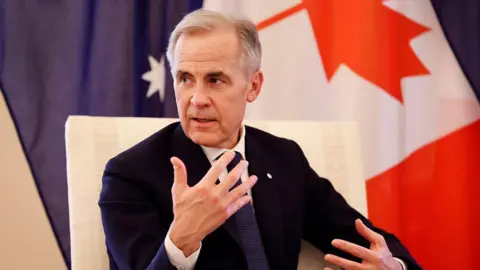
Canadian Prime Minister Mark Carney is slated to meet with King Charles III on Monday during his visit to the United Kingdom. Speaking to reporters on Thursday, Carney confirmed that the monarch had engaged in a "fulsome" discussion with the chiefs, hinting at the broad range of topics that would be on the agenda for his own meeting with the King, stating, "There are many subjects for him and I to raise."
Alberta's Separatist Movement and Legal Battles
The Alberta Prosperity Project, the group spearheading the secessionist effort, argues that Alberta would achieve greater financial prosperity as an independent nation. This sentiment taps into decades-old grievances within the province, rooted in a perception of underrepresentation in federal politics despite Alberta's significant contribution to Canada's oil wealth.
Under Alberta's Referendum Act, organizers must collect at least 177,732 valid signatures by May to have a secession referendum question officially verified and potentially approved for a vote. Members of the Alberta Prosperity Project have expressed confidence in their ability to meet this threshold, signaling a potentially significant political challenge for the province and the nation.
First Nations Fight Back: Legal Challenges and Political Pressure
In response, First Nations leaders in Alberta have mounted a determined opposition. The Sturgeon Lake Cree Nation (SLCN) has filed a lawsuit against the Alberta government, alleging that the province's facilitation of signature collection for a secession referendum violates SLCN's treaty rights. The legal filing asserts that Alberta has treated the SLCN as mere property, sidelining them in crucial negotiations, particularly concerning any potential secession.
The lawsuit explicitly states that "Alberta's secession cannot happen without First Nation consent to change a party to Treaty No. 8," a pivotal treaty governing a large swathe of northern Alberta and surrounding regions. This legal stance highlights the critical role Indigenous consent plays in any fundamental alteration of provincial status or treaty arrangements.
Earlier this week, a coalition of First Nations leaders gathered at the Alberta legislature in Edmonton. They urged Premier Danielle Smith to abandon any possibility of a secession referendum and called upon provincial lawmakers to initiate a no-confidence vote in Smith's government over the issue. However, an attempt to bring forth such a motion was swiftly blocked by members of Smith's party.
Alberta's Indigenous Relations Minister, Rajan Sawhney, acknowledged the allegations, stating her willingness to meet with Chief Pete to discuss the reported treaty violations. However, she added, "At this point, I don't agree with these allegations," indicating a divide within the provincial government on the severity and validity of the First Nations' claims.
The Human Cost of Division
Chief Pete also conveyed to King Charles III the "hardships" and profound "division" he believes the separatist movement has inflicted upon the fabric of Albertan society. The push for separation, while framed in economic terms by its proponents, creates deep rifts and anxieties among communities, affecting the daily lives and sense of belonging for many residents.
The complexities surrounding treaty rights and Indigenous sovereignty in the context of provincial secession efforts echo broader national discussions about reconciliation and self-determination. As these legal and political battles unfold, the fundamental question remains: how will the rights and aspirations of First Nations be honored and protected amidst escalating political tensions?
Frequently Asked Questions (FAQ)
What is the Alberta separatist movement?
The Alberta separatist movement is a political effort advocating for Alberta to secede from Canada and form its own independent country. Proponents argue it would lead to greater economic and political autonomy.
Why are First Nations opposing the movement?
First Nations leaders oppose the movement primarily because they believe secession could invalidate or undermine their treaty rights and historical agreements with the Crown, which are foundational to their sovereignty and land claims.
What is Treaty 8?
Treaty 8 is one of the numbered treaties signed between the Crown and First Nations in Canada, covering a vast area of northern Alberta, northeastern British Columbia, northwestern Saskatchewan, and the southwestern Northwest Territories. It outlines rights and obligations for both parties.
Has the Canadian government responded to the secessionist efforts?
While the federal government has not directly commented on the specific meeting with King Charles III, Prime Minister Mark Carney is scheduled to meet the monarch and indicated he would raise various subjects, potentially including the Alberta situation.
The King's reported concern over Alberta's secessionist stirrings, coupled with First Nations' legal and political challenges, highlights a critical juncture for Indigenous rights and the future of Canadian federalism. The core tension lies in balancing provincial autonomy with constitutionally protected Indigenous sovereignty.
So here's the real question — in an era of escalating political division, can any secession movement truly proceed without the explicit consent and affirmation of the Indigenous peoples whose ancestral lands and rights are intrinsically tied to the territory?



This article was independently researched and written by Hussain for 24x7 Breaking News. We adhere to strict journalistic standards and editorial independence.
Comments
Post a Comment