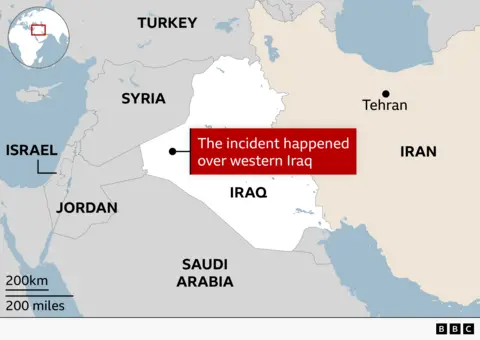
Reporting for 24x7 Breaking News. Four U.S. Air Force airmen were killed when a KC-135 Stratotanker crashed in western Iraq on Thursday, U.S. Central Command (Centcom) confirmed. The aircraft was participating in ongoing operations against Iran when it went down around 2 p.m. Eastern Time. Rescue and recovery efforts are underway, with officials stating that neither hostile nor friendly fire were involved in the incident.
- Tragedy Strikes During Combat Mission Over Iraqi Airspace
- Deepening Shadow of Conflict: Broader Ramifications of the Iran War
- Frequently Asked Questions (FAQ)
- What type of aircraft was involved in the Iraq crash?
- What was the stated cause of the crash?
- How many U.S. military personnel have died in the conflict with Iran?
- What is the significance of the KC-135 Stratotanker?
Tragedy Strikes During Combat Mission Over Iraqi Airspace
The downed aircraft was one of two U.S. military planes involved in the operation; the second landed safely. Centcom stated the crash occurred over what is considered friendly airspace, though the region is known to be active with pro-Iranian militias. The loss of the KC-135 marks a significant blow as the U.S. military continues its engagement in the escalating conflict with Iran, which began two weeks prior.
General Dan Caine, Chairman of the U.S. Joint Chiefs, addressed the incident Friday, noting the crew was on a combat mission. "We're still treating this as an active rescue and recovery operation," he stated during a news conference. U.S. Defense Secretary Pete Hegseth lauded the deceased airmen as "American heroes," emphasizing their sacrifice would strengthen the nation's resolve.
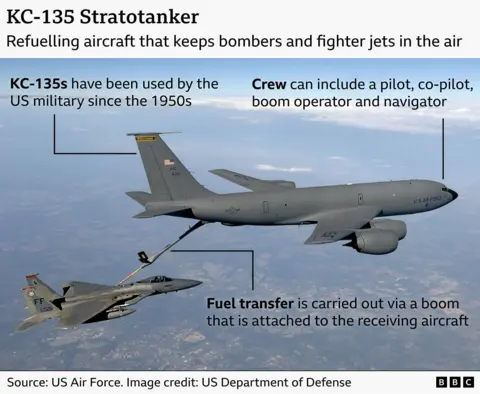
The identities of the four deceased crew members are being withheld for 24 hours to allow for notification of their next of kin, according to Centcom. A KC-135 typically carries a minimum crew of three: a pilot, co-pilot, and a boom operator responsible for the mid-air refueling process. The aircraft are vital for extending the operational range of fighter jets and bombers, playing a crucial role in extended military campaigns.
Deepening Shadow of Conflict: Broader Ramifications of the Iran War
This tragic crash brings the official U.S. military death toll in the conflict with Iran to 11 since hostilities intensified a fortnight ago. The U.S. military has now lost at least four aircraft during this period, including three F-15s that were reportedly downed in an apparent friendly fire incident over Kuwait earlier this month, though all six crew members from those aircraft were able to eject safely. The aging KC-135 Stratotankers, manufactured in the late 1950s and early 1960s, have long been a foundational element of the U.S. air refueling fleet, enabling prolonged combat air operations.
The incident occurs against a backdrop of heightened global tensions and market volatility. Iran's military, via state television, claimed an allied group had targeted the U.S. plane with a missile, a claim Centcom has not corroborated. Meanwhile, Israel's military announced a significant wave of strikes targeting Iranian infrastructure in Tehran on Friday, with explosions reported near the capital. These developments follow the U.S. decision to ease sanctions on countries purchasing Russian oil already in transit, an effort to mitigate the economic fallout of the ongoing war. Oil prices surged past $100 a barrel on Thursday, while stock markets dipped amid continued disruptions in the Gulf shipping lanes, exacerbated by Iran's vows to block the vital Strait of Hormuz.
The economic ripple effects of this conflict are already being felt globally. As the **Gulf oil shockwave** intensifies, the stability of energy markets remains precarious. This situation highlights how regional conflicts can have far-reaching consequences, impacting everything from global trade to the price at the pump for everyday Americans. The intricate web of international relations and economic dependencies means that events unfolding in the Middle East can quickly translate into tangible effects on household budgets and market confidence.
Adding to the grim tally of casualties, France's military reported on Friday that a drone strike at a Kurdish military base in northern Iraq had killed Staff Sgt. Arnaud Fron and wounded six others. The French soldiers were stationed there to train Iraqi units, underscoring the complex and multi-faceted nature of the ongoing instability in the region. The human cost of these conflicts extends beyond direct combatants, affecting those engaged in peacekeeping and training missions.
Frequently Asked Questions (FAQ)
What type of aircraft was involved in the Iraq crash?
The aircraft was a U.S. Air Force Boeing KC-135 Stratotanker, an aerial refueling tanker. These planes are crucial for extending the range of combat aircraft during military operations.
What was the stated cause of the crash?
U.S. Central Command stated that neither hostile nor friendly fire were involved in the downing of the aircraft. The circumstances are currently under investigation.
How many U.S. military personnel have died in the conflict with Iran?
The official U.S. military death toll in the conflict with Iran has reached 11 since hostilities began two weeks prior to the KC-135 crash.
What is the significance of the KC-135 Stratotanker?
The KC-135 Stratotanker has been a backbone of the U.S. military's air refueling capabilities since the late 1950s, enabling longer-duration missions for bombers and fighters and playing a critical role in strategic power projection.
The loss of four American airmen in the skies over Iraq is a stark reminder of the profound human cost of the escalating conflict with Iran. As the geopolitical storm gathers pace, the sacrifices made by these service members underscore the immense pressures and dangers faced by those on the front lines. This incident, alongside broader regional instability and economic repercussions, fuels critical discussions about the long-term implications of U.S. foreign policy and military engagement. The events of this past week, from the crash of the KC-135 to continued Israeli strikes on Iranian infrastructure and disruptions in global energy markets, paint a clear picture of a world grappling with the fallout of prolonged conflict. These developments echo sentiments expressed in past discussions, such as the debate on whether the current situation represents a "forever war" or a path toward resolution, as highlighted in earlier reports.
Amidst this escalating tension, questions about strategic objectives and the sustainability of current military postures in the Middle East are more pertinent than ever. The human toll, both in terms of lives lost and the potential for wider destabilization, demands careful consideration. The intricate connections between military actions, economic stability, and international relations are laid bare, prompting a re-evaluation of the path forward.
As the dust settles on this latest tragedy, and with the conflict showing no signs of immediate de-escalation, a critical question lingers: In an era marked by complex geopolitical rivalries and interconnected global economies, how can the United States effectively balance national security interests with the imperative to prevent further loss of life and promote lasting peace?



This article was independently researched and written by Hussain for 24x7 Breaking News. We adhere to strict journalistic standards and editorial independence.
Comments
Post a Comment