Escalating Terror: Residents Flee as West Bank Settler Attacks Intensify
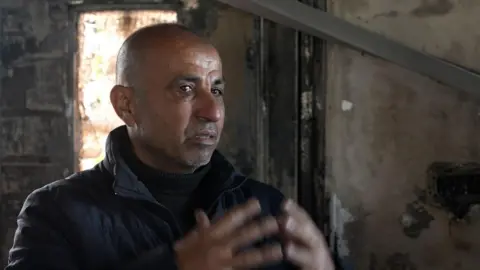
Reporting for 24x7 Breaking News, we are tracking a terrifying surge in violence across the occupied West Bank, where Palestinian families report facing what they describe as organized terrorism from extremist Israeli settlers. Barhan Omar, surveying the blackened shell of his family’s home in the village of Deir al-Hatab outside Nablus, fought back tears while detailing the Sunday assault. "They came in big numbers. This was organised terrorism," Omar stated, describing how he and his children survived only by sheltering on their roof as settlers allegedly shot at the structure.
- Escalating Terror: Residents Flee as West Bank Settler Attacks Intensify
- The Trigger: Mourning and Retaliation in the Nablus Region
- Systemic Displacement: Moving Beyond Area C
- Our Take: The Dangerous Institutionalization of Instability
- Shocking Incidents Illustrate the Brutal Reality
- THE REAL-WORLD IMPACT: Security, Stability, and International Trust
- A HUMANITARIAN PERSPECTIVE: Recognizing Shared Humanity Amidst Conflict
- Frequently Asked Questions (FAQ)
- What is Area C in the West Bank?
- What is the trend in settlement expansion recently?
- Why are international bodies concerned about 'ethnic cleansing'?
This pattern of aggression is not isolated; it represents a dangerous escalation as global attention pivots elsewhere. The UN reports that since the start of the wider regional conflict, six Palestinians have been killed by settlers. This alarming trend suggests that extremist elements view the current geopolitical distraction as a window for aggressive territorial expansion and displacement.
The Trigger: Mourning and Retaliation in the Nablus Region
The specific attack on Deir al-Hatab followed the funeral of 18-year-old Yehuda Sherman, who was killed near the Elon Moreh settlement. Settler groups maintain his death was an attack, while Palestinians contest it was an accident involving an ATV and a pick-up truck. Regardless of the cause, the subsequent settler rampage injured at least 10 people, mostly from thrown stones, according to initial reports.
We came across this story via reports detailing the increasing frequency of these raids, which echo the acceleration seen immediately following the October 2023 Hamas-led attacks. During that initial surge, Israeli government policy aggressively fast-tracked settlement growth, setting records for expansion approvals last year, according to monitoring bodies.
The situation is further complicated by the status of these outposts. While all established settlements are considered illegal under international law, outposts are erected without explicit Israeli government approval, often creating volatile friction points with neighboring Palestinian communities.
Systemic Displacement: Moving Beyond Area C
For years, the primary focus of displacement has been Area C of the West Bank, where Israel retains full security and administrative control following the Oslo Accords. This area, intended for temporary division, has seen massive upheaval for herding and Bedouin communities.
Allegra Pacheco, Chief of Party for the West Bank Protection Consortium, provided sharp analysis on this strategic movement. "In areas where the Palestinian communities have been emptied out in C, the next step is happening, the settlers are going westward towards the B areas to continue the agenda of emptying out this land," Pacheco asserted. This suggests a coordinated, top-down strategy, not just rogue actions by disenfranchised youth.
The UN’s humanitarian office has documented staggering figures: since January 2023, at least 4,765 Palestinians from 97 locations have been displaced due to settler violence. This systematic erosion of presence is now visibly creeping into Area B, where the Palestinian Authority holds civil control, raising serious alarms about the long-term viability of Palestinian life outside of major urban centers.
Yair Dvir, spokesman for the Israeli human rights group B’Tselem, did not mince words when describing the sentiment driving these actions. He suggested that certain elements see the current distraction as "the time of 'a miracle,'" viewing it as an opportunity to continue what he termed Israel's ethnic cleansing campaign. Israel officially rejects such characterizations.
Our Take: The Dangerous Institutionalization of Instability
What concerns us most deeply is the clear link between political encouragement and on-the-ground violence. When officials like Israel’s far-right Finance Minister Bezalel Smotrich, himself a settler and sanctioned by entities like the UK for inciting violence, openly declare intentions to "bury the idea of a Palestinian state," the message sent to extremist factions is unambiguous license.
This isn't just about isolated incidents of vandalism or aggression; it’s about creating an environment so untenable—marked by home burnings, assaults, and constant fear—that residents choose or are forced to leave. We must look past the immediate security incidents and recognize the policy architecture supporting this expansion. It reminds us of other moments where geopolitical crises masked internal shifts that had profound, lasting human costs, much like the economic fallout we've seen impacting global supply chains following events like the recent Iran War Fuel Crisis Sparks Economic Emergency Across Asia.
This strategy directly undermines any pathway toward a stable, negotiated two-state solution. It’s a slow-motion annexation achieved not through legislative declaration, but through sustained, brutal intimidation. The failure to decisively curb and prosecute this violence suggests complicity at the highest levels, prioritizing settlement expansion over the fundamental human right to security and home ownership for Palestinians.
Shocking Incidents Illustrate the Brutal Reality
Two weeks prior to the Deir al-Hatab attack, residents in Khirbet Humsa in the northern Jordan Valley made harrowing accusations of sexual assault and severe beatings by settlers demanding they vacate their land. While Israeli police did make seven arrests in that case, the sheer volume of reported incidents suggests the enforcement mechanism remains profoundly inadequate against the scale of the problem.
THE REAL-WORLD IMPACT: Security, Stability, and International Trust
For the average American observing these events from afar, the immediate impact might seem distant. However, the erosion of international law and basic human security in contested territories has tangible effects on global stability, trade, and diplomatic relations that eventually ripple outward. When governance systems fail to protect vulnerable populations from organized intimidation, it erodes the foundations of international order.
Consider the small business owner or farmer caught in the middle: their ability to work, cultivate land, or simply commute without fear is eliminated. This creates massive internal displacement, burdening local resources and creating a permanent crisis. It’s the kitchen-table reality of instability—the inability to plan beyond the next sunset, a concept most Americans take for granted.
Furthermore, these actions strain the resources and moral standing of allied nations required to navigate these complex geopolitical waters. When basic human dignity is systematically challenged, it forces global partners to re-evaluate their support structures, impacting everything from diplomatic leverage to economic aid distribution.
A HUMANITARIAN PERSPECTIVE: Recognizing Shared Humanity Amidst Conflict
The narratives emerging from families like the Omars are devastating reminders that behind every headline about political maneuvering or territorial dispute are mothers, fathers, and children whose only crime is existing on land others wish to claim. Witnessing the charred ruins of a home, as Barhan Omar did, strips away all political rhetoric. It is raw, existential terror.
Our collective responsibility is to insist upon accountability and respect for human dignity above all else. Peace isn't the absence of conflict; it's the presence of justice, allowing every person, regardless of origin or political claim, to live without the threat of forcible displacement hanging over their heads. We must continue to amplify these voices, ensuring the world doesn't forget the human cost when international norms are eroded.
Frequently Asked Questions (FAQ)
What is Area C in the West Bank?
- Area C is the section of the West Bank where Israel retains full security and administrative control, encompassing over 60% of the territory. International law generally views Israeli settlements established here as illegal.
What is the trend in settlement expansion recently?
- Last year set a record for the most extensive expansion of settlements and planning approvals since UN monitoring began, a trend which accelerated following the October 2023 conflict.
Why are international bodies concerned about 'ethnic cleansing'?
- The UN's human rights office has suggested that widespread forcible transfers and permanent displacement raise serious concerns over ethnic cleansing due to the systematic nature of the removals.
The ongoing, documented expansion of violence and displacement driven by extremist settlers targeting Palestinian communities demonstrates a calculated effort to fundamentally alter the demographic reality on the ground, making the prospect of peace increasingly distant regarding West Bank settler violence.
Given the official rejection of international law regarding settlements and the clear evidence of state-sanctioned administrative support for expansion, what concrete, non-diplomatic levers do global investors and corporations possess to influence policy and protect vulnerable populations in Area B and C?This article was independently researched and written by Hussain for 24x7 Breaking News. We adhere to strict journalistic standards and editorial independence.
Comments
Post a Comment