Reporting for 24x7 Breaking News. A Russian oil tanker, identified as the Anatoly Kolodkin, has entered Cuban waters carrying a significant shipment of crude oil, marking the first such delivery since January. This arrival comes on the heels of a seemingly contradictory statement from U.S. President Donald Trump, who indicated a softening of his administration's stance on foreign nations supplying the island. The tanker's journey and Trump's remarks suggest a potential, albeit uncertain, shift in the de facto oil blockade that has intensified Cuba's severe energy crisis.
- A Humanitarian Shipment Amidst Sanctions Pressure
- Shifting Signals from the White House
- The Broader Geopolitical and Economic Landscape
- The Human Reality on the Ground
- Editorial Perspective: A Fragile Thaw or Temporary Reprieve?
- Frequently Asked Questions (FAQ)
- What is the significance of the Russian oil tanker arriving in Cuba?
- What has been the U.S. policy towards oil shipments to Cuba?
- Why is Cuba experiencing fuel shortages?
A Humanitarian Shipment Amidst Sanctions Pressure
The Russian tanker is reportedly carrying approximately 100,000 tonnes of crude oil, described by Russia's Interfax news agency as a "humanitarian shipment." This delivery arrives at a critical juncture for Cuba, where widespread blackouts have become a daily reality, severely impacting essential services. Last week, the World Health Organization (WHO) issued a stark warning about the dire fuel shortages plaguing Cuban hospitals, jeopardizing emergency and intensive care operations.
The situation in Cuba has been deteriorating rapidly since early January. A key factor was the seizure of Venezuelan leader Nicolás Maduro by U.S. forces; Venezuela has been Cuba's primary oil provider under preferential terms. President Trump had previously threatened tariffs against any nation daring to send oil to the island, further tightening the economic vise.
Shifting Signals from the White House
In a notable development, President Trump stated on Sunday, while aboard Air Force One, that he had "no problem" with countries, including Russia, sending supplies to Cuba. "We have a tanker out there. We don't mind having somebody get a boatload because they need (...) they have to survive," he remarked to journalists. This statement appears to signal a departure from, or at least a temporary relaxation of, the stringent policy his administration had implemented.
Earlier in the year, the U.S. Treasury Department had added Cuba to a list of countries barred from receiving oil deliveries from Russia. Russian Minister of Energy Sergei Tsivilev acknowledged Cuba's difficult position, stating on Wednesday, "Cuba had found itself in a difficult situation as a result of sanctions pressure. That is why we are currently sending humanitarian supplies to Cuba."
The Broader Geopolitical and Economic Landscape
The arrival of the Anatoly Kolodkin is expected to offer a short-term reprieve for Cuba's beleaguered economy. However, the underlying political and economic tensions remain high. The Cuban government, led by President Miguel Díaz Canel, has been engaged in discussions with the Trump administration, but significant political and economic red lines on both sides present formidable obstacles to finding common ground.
Cuba's economic woes predate the recent oil blockade, stemming from a confluence of factors including a decline in tourism due to the COVID-19 pandemic and internal economic mismanagement. These existing challenges have been significantly exacerbated by the de facto fuel blockade. This situation mirrors broader geopolitical tensions where nations are navigating complex sanction regimes, much like the pressures faced by Iran's oil lifeline. Understanding these dynamics is crucial for assessing regional stability and the effectiveness of U.S. foreign policy tools.
The Human Reality on the Ground
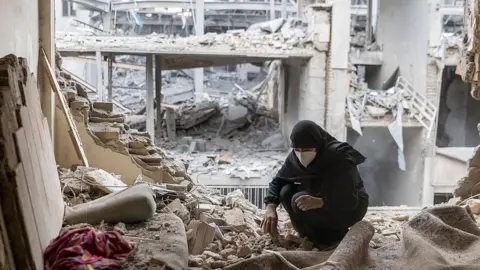
For ordinary Cubans, the constant threat of blackouts means disruptions to daily life, from essential household chores to critical medical care. The strain on hospitals, as highlighted by the WHO, is a stark reminder of how international political maneuvers can have profound and immediate human consequences. Families struggle to keep refrigerators running, cook meals, and maintain basic communication. The lack of reliable power impacts everything from education to small businesses, deepening the economic hardship felt across the island.
This crisis underscores a larger pattern of how economic sanctions, even when ostensibly aimed at governments, disproportionately affect civilian populations. The struggle for basic necessities like fuel and electricity becomes a daily battle, highlighting the need for diplomatic solutions that prioritize human dignity and well-being over political posturing.
Editorial Perspective: A Fragile Thaw or Temporary Reprieve?
In our assessment, President Trump's seemingly sudden willingness to permit Russian oil shipments to Cuba is a complex signal. On one hand, it appears to acknowledge the dire humanitarian situation and the potential for unintended consequences of a total blockade. It suggests a pragmatic realization that allowing some level of humanitarian aid might be politically expedient or strategically necessary to avoid wider regional instability. However, the ambiguity surrounding whether this represents a policy reversal or a temporary tactical adjustment leaves room for concern.
What is clear is that Cuba remains caught in a geopolitical tug-of-war, caught between the U.S. administration's long-standing policy of pressure and the urgent needs of its population. The reliance on external aid, even from traditional adversaries like Russia, highlights the island's vulnerability. We believe that sustainable solutions require more than just oil shipments; they demand a comprehensive diplomatic engagement that addresses Cuba's economic challenges without imposing undue hardship on its people. The international community must continue to advocate for peace and human dignity, ensuring that such crises do not become normalized.
Frequently Asked Questions (FAQ)
What is the significance of the Russian oil tanker arriving in Cuba?
The arrival of the Anatoly Kolodkin is significant as it is the first oil shipment from Russia to Cuba since January, providing much-needed fuel amidst a severe energy crisis and de facto U.S. blockade.
What has been the U.S. policy towards oil shipments to Cuba?
The U.S. administration under President Trump had imposed a de facto oil blockade, threatening tariffs on nations sending oil to Cuba and adding Cuba to a list of countries barred from Russian oil deliveries.
Why is Cuba experiencing fuel shortages?
Cuba's fuel shortages are due to a combination of factors, including the U.S. blockade, the loss of preferential oil supplies from Venezuela, and pre-existing economic challenges exacerbated by the COVID-19 pandemic and government mismanagement.
The arrival of the Russian oil tanker, coupled with President Trump's recent remarks, offers a glimmer of hope for Cuba's immediate energy needs. However, the underlying geopolitical currents remain turbulent, and the long-term implications for Cuba's economy and its relationship with the United States are far from settled. The shifting U.S. policy on Cuba is a critical development to watch.
Given the complex geopolitical landscape and the humanitarian needs in Cuba, should international relations be primarily driven by sanctions and pressure, or by diplomatic engagement focused on human welfare?
This article was independently researched and written by Hussain for 24x7 Breaking News. We adhere to strict journalistic standards and editorial independence.
Comments
Post a Comment