Reporting for 24x7 Breaking News. After a relentless seven-month pursuit that gripped the nation, Australian authorities have brought an end to the manhunt for Dezi Freeman, the double-murderer who evaded capture following the killings of two police officers. Freeman, 56, was shot and killed by police during a standoff at a rural property in northeastern Victoria early Monday morning, concluding a chapter of fear and uncertainty that had gripped the region since last August.
- A Standoff and a Fatal Confrontation
- Unraveling the Network of Support
- A History of Confrontation with Authority
- Our Editorial Perspective on the Long Road to Justice
- Frequently Asked Questions (FAQ)
- Who was Dezi Freeman?
- When and where was Dezi Freeman killed?
- What led to the manhunt for Dezi Freeman?
- What is the significance of the sovereign citizen movement?
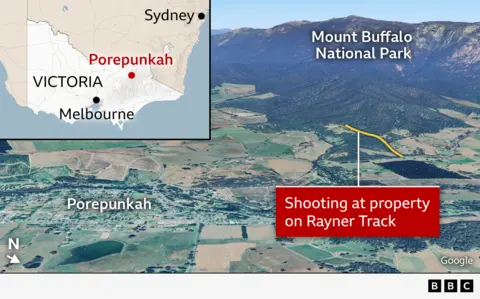
Victorian Premier Jacinta Allan declared, "Today an evil man is dead. It's over," as she confirmed the end of the protracted search. Victoria Police Chief Commissioner Mike Bush stated that while formal identification is pending, authorities are confident the man killed is Freeman. The dramatic conclusion unfolded around 5:30 AM local time when police surrounded a structure described by witnesses as resembling a hybrid shipping container and caravan on a remote property.
A Standoff and a Fatal Confrontation
The hours-long siege saw multiple police appeals for surrender, which were ultimately unsuccessful. According to Commissioner Bush, after three hours, a man believed to be Freeman emerged from the dwelling. Details are still being confirmed, but preliminary reports suggest he was wrapped in a blanket and armed with a firearm, possibly one taken from the officers who were killed on August 26th of the previous year. "Our ultimate goal was to arrest the person," Bush explained to reporters. "There was an opportunity for him to surrender peacefully but he did not." Thankfully, no officers sustained injuries during the operation, which will undergo the standard review process for police shootings.
The initial confrontation that led to Freeman's flight occurred when officers arrived at his Porepunkah property to investigate sex offenses. Senior Constable Neal Thompson and Constable Vadim de Waart, who were part of the responding unit, were fatally shot by Freeman. Their families were the first to be notified of Freeman's death, a grim milestone in a case that has deeply affected the Victorian police force and the wider community. Commissioner Bush indicated that full identification could take 24 to 48 hours, adding, "Should [his identity] be confirmed… this brings closure to what was a tragic and terrible event."
Unraveling the Network of Support
Investigators are now shifting their focus to identifying anyone who may have aided Freeman during his extensive period on the run. "It would be very difficult for him to get to where he was... without assistance," Bush noted, emphasizing that complicity will lead to accountability. The Police Association of Victoria issued a statement acknowledging the development as a "step forward" but cautioned that it does not equate to full "closure." The association highlighted the enduring trauma and the loss of futures for the slain officers, as well as the lingering fear and grief within the police ranks and the public.
Freeman, whose legal name was Desmond Filby, identified with the anti-government "sovereign citizen" movement, a fringe ideology that rejects established laws and authorities. Locals in Porepunkah, a picturesque alpine town, described him as a resident who lived on his property with his wife and two children. The aftermath of the murders saw a massive police response, including a A$1 million reward, as officers scoured the challenging terrain of dense bushland, caves, and disused mineshafts, knowing Freeman possessed considerable bush survival skills. Earlier this year, the search intensified with the deployment of cadaver dogs, and police had increasingly suspected Freeman was deceased, though they maintained an open mind.
A History of Confrontation with Authority
Freeman's anti-establishment views, amplified during the strict COVID-19 lockdowns in Victoria, were well-documented through online posts and court appearances. He had previously referred to police as "terrorist thugs," attempted to arrest a magistrate in court, and famously sought to have former Victorian Premier Daniel Andrews tried for treason in 2021—a case that was swiftly dismissed. The initial police deployment to Freeman's property on August 26th, after a risk assessment, involved ten officers. Among them was Senior Constable Thompson, a local detective nearing retirement, who had reportedly built a rapport with Freeman from previous interactions. Tragically, within minutes of their arrival, both Thompson and Constable de Waart were killed.
The loss of Senior Constable Thompson, remembered by his partner as an avid AFL fan and adventure enthusiast, has left a profound void. Constable de Waart, originally from Belgium, was remembered by family and friends for his consistently cheerful disposition and his efforts to uplift those around him. The lengthy investigation and the eventual confrontation underscore the deep divisions and distrust that can fester, particularly when fueled by extremist ideologies and amplified by periods of social isolation and stringent government measures. For the families of the fallen officers, the news offers a somber conclusion to an agonizing wait, though the pain of their loss remains immeasurable.
Our Editorial Perspective on the Long Road to Justice
In our assessment of this deeply tragic event, the death of Dezi Freeman marks the end of a dangerous chapter, but it does not erase the profound pain inflicted upon the families of Senior Constable Neal Thompson and Constable Vadim de Waart. The seven-month ordeal has tested the resilience of the Victorian community and its law enforcement. We believe it is crucial to not only focus on the immediate cessation of violence but also to critically examine the societal factors that can lead individuals down paths of radicalization, particularly within movements like the sovereign citizen ideology. The fact that Freeman allegedly received assistance while on the run points to a broader network of support that law enforcement must meticulously dismantle to prevent future tragedies. We must also consider the significant resources, both financial and emotional, expended during such extensive manhunts, resources that could be allocated elsewhere if such extremist elements were effectively countered at their root.
The echo of this event reaches far beyond Australia's borders, reminding us of the persistent threats posed by anti-government extremism, a phenomenon that has seen various manifestations globally. We've seen how escalating regional tensions, for instance, can divert critical resources and attention, potentially creating openings for internal extremist threats to fester, as seen in situations like the destruction of a US E-3 Sentry in Saudi Arabia. The human cost of such ideologies is always devastating, impacting not just the direct victims and their families, but the collective sense of security and peace for entire communities.
Frequently Asked Questions (FAQ)
Who was Dezi Freeman?
Dezi Freeman, also known as Desmond Filby, was a 56-year-old fugitive identified as a proponent of the sovereign citizen movement. He was sought by authorities for the alleged murder of two police officers.
When and where was Dezi Freeman killed?
Dezi Freeman was shot and killed by police on a rural property in northeastern Victoria, Australia, on a Monday morning, concluding a seven-month manhunt.
What led to the manhunt for Dezi Freeman?
The manhunt began on August 26th of the previous year when Freeman allegedly shot and killed Senior Constable Neal Thompson and Constable Vadim de Waart on his property while police were investigating sex offenses.
What is the significance of the sovereign citizen movement?
The sovereign citizen movement is an anti-government ideology whose adherents reject the legitimacy of government authority and laws, often leading to confrontations with law enforcement and legal systems.
The violent end to this manhunt brings a grim resolution to a period of intense fear and grief. The investigation into potential accomplices will undoubtedly continue, seeking to ensure full accountability for those who aided a fugitive responsible for such heinous crimes. The question remains: how do we, as a society, better identify and intervene with individuals radicalized by extremist ideologies before they become a threat to public safety?
This article was independently researched and written by Hussain for 24x7 Breaking News. We adhere to strict journalistic standards and editorial independence.
Comments
Post a Comment