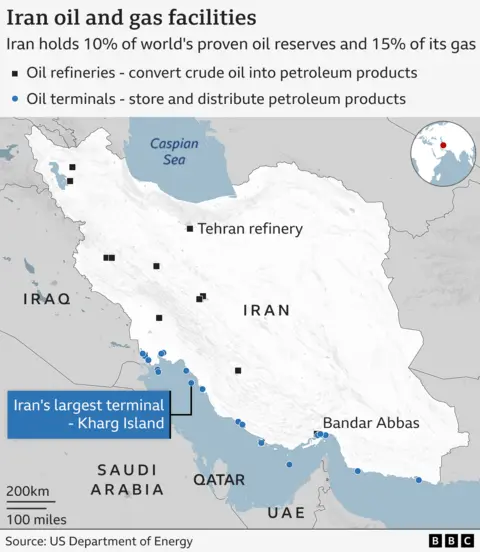
Reporting for 24x7 Breaking News. President Donald Trump has explicitly raised the prospect of seizing Iran's Kharg Island, a critical hub for the nation's oil exports, signaling a potentially dramatic escalation in U.S.-Iran tensions. In a recent interview with the Financial Times, Trump stated his desire to "take" Iran's oil and openly considered an operation to occupy the strategically vital island, acknowledging that such a move would require a sustained U.S. military presence. This statement follows earlier remarks on March 13th, where he claimed U.S. forces had "totally obliterated" military targets on the island, while deliberately avoiding its oil infrastructure.
- The Strategic Importance of Kharg Island
- Leverage in the Strait of Hormuz
- Iran's Defenses and Retaliatory Threats
- The Economic Lifeline and Potential Fallout
- Editor's Perspective: A Dangerous Game of Leverage
- Frequently Asked Questions (FAQ)
- What is Kharg Island's significance?
- Why is the U.S. considering action against Kharg Island?
- What are Iran's defenses on Kharg Island?
- What are the potential global economic impacts?
The Strategic Importance of Kharg Island
Kharg Island, a small, rocky outcrop situated just 15 nautical miles off the Iranian coast, plays an outsized role in Iran's economy. It is the primary terminal for approximately 90% of Iran's crude oil, with pipelines channeling oil from the mainland to be loaded onto supertankers at the island's extensive jetties. This makes Kharg Island the economic jugular vein of the Islamic Republic, directly funding the operations of the Islamic Revolutionary Guard Corps (IRGC). Its seizure by the U.S. would not only choke off Iran's oil revenue but could also serve as a forward operating base for further actions against the mainland, according to security analyst Mikey Kay of the BBC's Security Brief.
Leverage in the Strait of Hormuz
The administration's contemplation of seizing or blockading Kharg Island appears to be a calculated strategy to pressure Iran into reopening the Strait of Hormuz. This crucial chokepoint, located south of Iran, is one of the world's most vital shipping lanes, and any disruption to its traffic carries significant global economic implications. U.S. news outlet Axios, citing four sources familiar with the matter, reported on these considerations. The thinking, as described by Aaron Maclean, host of the School of War podcast, is to use the island as leverage, compelling Tehran to maintain open passage through the strait.
The U.S. military has been visibly bolstering its presence in the region. On Saturday, U.S. Central Command announced the arrival of an additional 3,500 sailors and Marines in the Middle East aboard the warship USS Tripoli. While both the Pentagon and the White House have declined to comment on specific troop movements or potential operational plans, they have consistently affirmed that such options remain on the table. Pentagon officials have reportedly made detailed preparations for deploying ground forces into Iran, adding further weight to the speculation surrounding Kharg Island.
Iran's Defenses and Retaliatory Threats
Tehran has not been idle in the face of these escalating threats. In recent weeks, Iran has reportedly reinforced its defenses on Kharg Island, deploying additional military personnel and air defense systems, according to CNN, citing multiple sources familiar with U.S. intelligence. The island has received further shoulder-fired, surface-to-air missiles, and the waters surrounding it have been reportedly booby-trapped with anti-personnel and anti-armor mines. This defensive posture is a direct response to the perceived threat, underscoring the seriousness with which Iran views potential U.S. action.
Iranian officials have issued stern warnings against any U.S. incursion. Parliament speaker Mohammad Bagher Ghalibaf declared that Iranian forces are "waiting for American soldiers" and vowed to retaliate with overwhelming force. An earlier statement from an Iranian military official threatened to target shipping in the Red Sea in the event of a ground invasion, highlighting the potential for a wider regional conflict.
The Economic Lifeline and Potential Fallout
The potential U.S. action against Kharg Island is not merely a military maneuver; it's a direct strike at Iran's economic lifeline. The island's proximity to deep waters allows large tankers, capable of carrying up to 85 million gallons of oil, to dock and load their cargo for export, primarily to China. Trump has specifically alluded to the possibility of targeting the pipelines connecting the mainland to the island, stating on March 16th, "We can do that on five minutes' notice. It'll be over." However, he also expressed hesitation, noting that destroying the infrastructure would take a long time to rebuild, suggesting a desire to avoid such permanent damage to Iran's economy.
The implications of any conflict in this vital region extend far beyond Iran's borders. Disruptions to oil supplies from Kharg Island would inevitably impact global energy markets, potentially leading to price spikes and increased volatility. This could have a ripple effect on consumers worldwide, increasing the cost of fuel, transportation, and ultimately, a wide range of goods and services. The global economy, still navigating post-pandemic recovery and other geopolitical uncertainties, could face significant headwinds. We've seen how even regional instability can have far-reaching consequences, as evidenced by ongoing concerns in other parts of the world, such as the aftermath of the government shutdown that caused widespread travel disruptions. The potential for escalation also raises humanitarian concerns, echoing the deep empathy we feel for those affected by tragedies like the building collapse in Accra.
Editor's Perspective: A Dangerous Game of Leverage
In our view, the notion of seizing Kharg Island represents a high-stakes gamble with potentially catastrophic consequences. While the strategic objective of controlling oil flow and reopening the Strait of Hormuz is clear, the risks associated with occupying Iranian territory are immense. Such an operation, even if deemed "easy" by President Trump, would undoubtedly involve significant military engagement and could provoke severe retaliation, potentially drawing regional allies into a wider conflict. The human cost of such a confrontation, both for the Iranian population and any deployed U.S. service members, is a deeply concerning prospect. We must question whether the pursuit of leverage through direct military occupation is a sustainable or ethical path, especially when alternative diplomatic avenues, however challenging, should always be prioritized to prevent further bloodshed and protect human dignity.
Frequently Asked Questions (FAQ)
What is Kharg Island's significance?
Kharg Island is Iran's principal oil export terminal, handling about 90% of the country's crude oil exports and serving as a crucial source of revenue.
Why is the U.S. considering action against Kharg Island?
The U.S. is reportedly considering action to pressure Iran to keep the Strait of Hormuz open and to cut off funding for the IRGC.
What are Iran's defenses on Kharg Island?
Iran has reportedly reinforced defenses with additional military personnel, air defense systems, surface-to-air missiles, and deployed mines in surrounding waters.
What are the potential global economic impacts?
Seizing or disrupting oil flow from Kharg Island could lead to global oil price spikes and increased economic instability.
The threat to Iran's Kharg Island highlights the volatile geopolitical landscape and the potential for severe economic repercussions. The question remains: Is occupying Kharg Island a strategic masterstroke that will force de-escalation, or a dangerous overreach that could ignite a wider regional conflict?
This article was independently researched and written by Hussain for 24x7 Breaking News. We adhere to strict journalistic standards and editorial independence.
Comments
Post a Comment