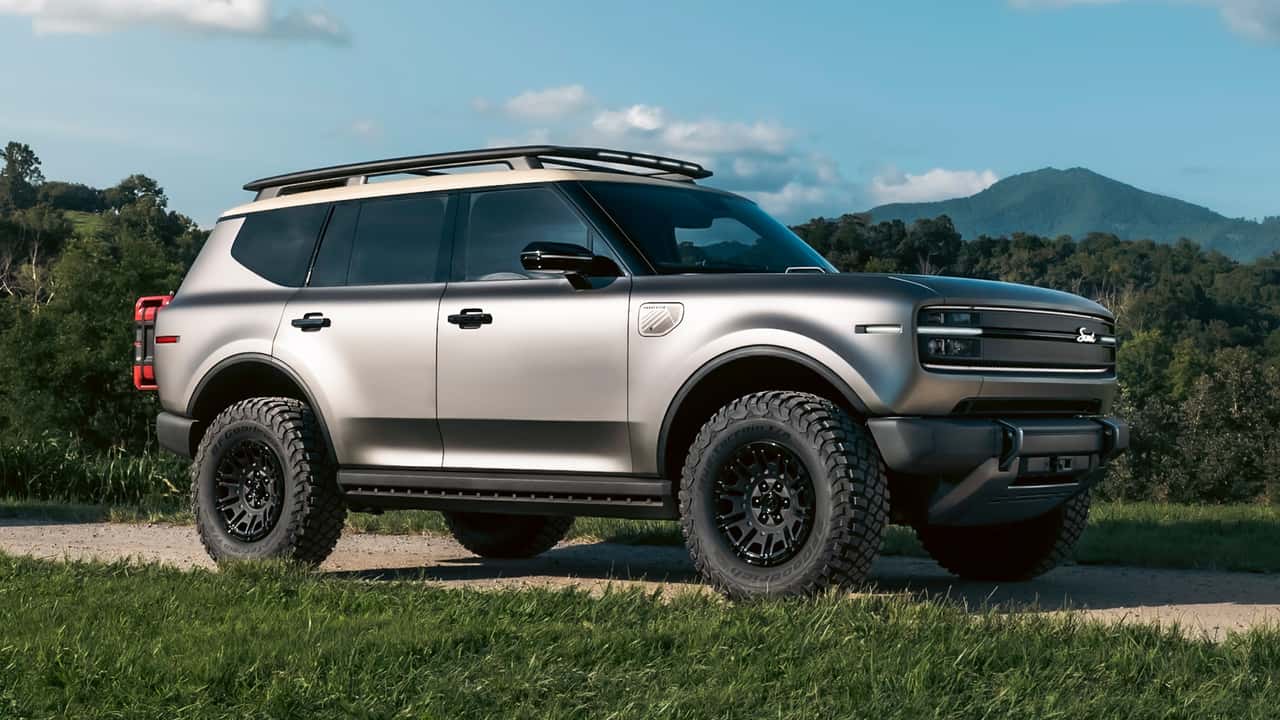
The Revival of a Legend: Scout Traveler Makes Its Debut
Reporting for 24x7 Breaking News, our team has been tracking the highly anticipated return of the Scout Traveler, a nameplate that carries decades of off-road heritage into the electric era. As the automotive industry pivots toward sustainable mobility, Scout—now under the Volkswagen Group umbrella—is betting that the American public is ready for an SUV that balances raw, trail-ready capability with high-end, digital-first luxury. We initially encountered this development cycle via reports from various industry journals, and it is clear that the brand aims to challenge the dominance of established players like Rivian and the electric offerings from Ford and GM.
- The Revival of a Legend: Scout Traveler Makes Its Debut
- Engineering the Future: Technical Specs and Design Philosophy
- The Market Landscape: Can Scout Compete?
- Our Take: A Bold Bet on Electric Heritage
- Frequently Asked Questions (FAQ)
- What is the expected range of the Scout Traveler?
- When will the Scout Traveler be available for purchase?
- Does the Scout Traveler support bidirectional charging?
The Scout Traveler isn't just another battery-electric vehicle (BEV) entering an already crowded market; it’s a deliberate attempt to capture the nostalgia of the original International Harvester Scout while integrating cutting-edge technology. Whether this approach resonates with modern consumers who are also wary of increasingly intrusive in-car surveillance remains the primary question for potential buyers who value both privacy and performance.
Engineering the Future: Technical Specs and Design Philosophy
From an engineering perspective, the Scout Traveler represents a sophisticated take on the body-on-frame SUV architecture. By utilizing a dedicated electric platform, the designers have maximized the interior volume, allowing for a flat floor and significant storage space in both the front trunk and the rear cargo area. The suspension geometry is tuned for both articulated rock crawling and highway stability, a difficult balance that many manufacturers fail to master. Off-road enthusiasts will be pleased to see impressive approach and departure angles, complemented by high-torque electric motors that offer instantaneous power delivery.
We’ve observed that the interior design language shifts away from the "gimmicky" screens found in many modern EVs. Instead, the Traveler features a driver-centric cockpit that prioritizes tactile controls—a welcome change for those of us who find touch-only interfaces frustrating while navigating bumpy terrain. The materials appear to be a blend of durable, weather-resistant surfaces and premium recycled textiles, signaling a move toward the sustainable luxury that the modern premium buyer expects.
The Market Landscape: Can Scout Compete?
The entry of the Scout Traveler into the North American market comes at a precarious time. With the broader economy facing headwinds—much like the instability reflected in recent Nasdaq performances—automakers are under immense pressure to deliver vehicles that justify their premium price tags. The Traveler is positioned squarely against the Rivian R1S and the upcoming electric SUVs from legacy brands. Its success will depend largely on real-world range, the reliability of the charging network, and whether the brand can avoid the software pitfalls that have plagued other manufacturers during their initial rollouts.
We believe the electric off-road SUV segment is reaching a saturation point, meaning Scout must offer something truly differentiated. Their focus on "rugged-luxe" is a strong start, but the execution of their over-the-air (OTA) update strategy and build quality will determine if this vehicle becomes a staple of the American trail or merely a niche collector's item.
Our Take: A Bold Bet on Electric Heritage
In our editorial view, the Scout Traveler is one of the most significant automotive launches of the year. It represents a rare instance where a brand is leveraging a deep, authentic history to ground its futuristic ambitions. We find the design language refreshing; it avoids the overly smoothed, aerodynamic "jellybean" shapes that characterize many EVs, opting instead for a strong, vertical presence that pays homage to the original 4x4s of the 1960s and 70s.
However, we remain cautious regarding the integration of complex software systems. As we have seen across the industry, the race to implement advanced AI and connectivity often comes at the expense of simplicity and longevity. If Scout can provide a vehicle that is repairable and respects the user's data while maintaining its off-road prowess, they will have a winner. If they succumb to the trend of locking features behind subscription paywalls or relying too heavily on unproven autonomous tech, they risk alienating the very demographic that loves the Scout brand for its rugged simplicity.
Frequently Asked Questions (FAQ)
What is the expected range of the Scout Traveler?
While official EPA figures are still pending, the company has indicated they are targeting a competitive range that exceeds 350 miles on a single charge, depending on the battery configuration and tire package.
When will the Scout Traveler be available for purchase?
Production is slated to begin in the coming year, with initial deliveries expected to reach customers by late 2027, provided that supply chain and manufacturing milestones are met.
Does the Scout Traveler support bidirectional charging?
Yes, the platform is designed to support vehicle-to-load (V2L) and vehicle-to-home (V2H) capabilities, allowing the vehicle to act as a mobile power source for campsites or emergency home backup.
Ultimately, the Scout Traveler represents a critical test for the future of the American SUV, blending legacy design with the inevitable transition to battery-electric power. We are eager to see if this concept can translate into a reliable, high-performance reality on the trails of the American West. Do you think the move toward electric off-roaders will successfully replace the V8-powered heritage of the original Scout, or are we sacrificing soul for sustainability?
This article was independently researched and written by Hussain for 24x7 Breaking News. We adhere to strict journalistic standards and editorial independence.
Comments
Post a Comment