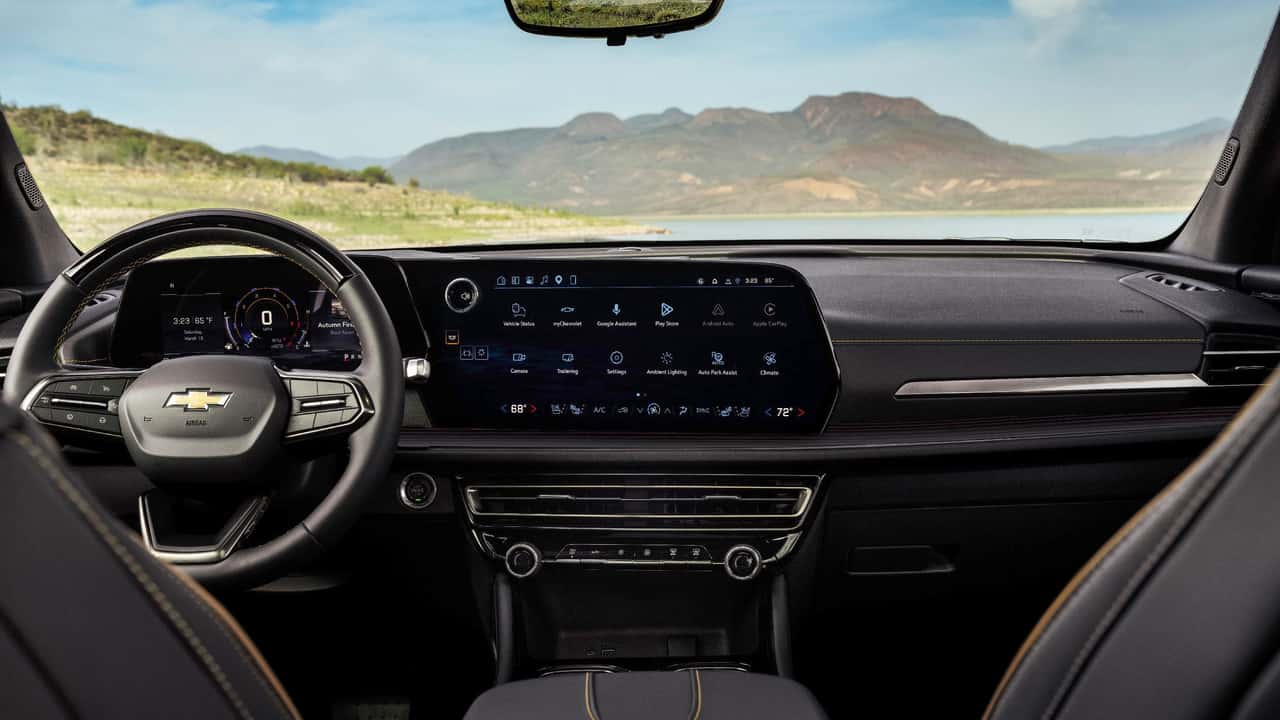
Reporting for 24x7 Breaking News, a seismic shift in automotive privacy has just unfolded. General Motors, a titan of American manufacturing, has reportedly activated new in-car passenger recording capabilities across many of its vehicles via a recent over-the-air (OTA) software update. This move, which appears to quietly extend beyond traditional driver-monitoring systems, raises immediate and profound questions about consent, data ownership, and the sanctity of personal space within our own vehicles.
- The Expanding Eye: GM's New Digital Frontier
- Behind the Lens: The Technical & Ethical Crossroads
- The Cabin as a Crucible: Real-World Passenger Surveillance
- Our Take: The Slippery Slope of Automotive Surveillance
- The Road Ahead: Navigating Data Ethics and Connected Cars
- Frequently Asked Questions (FAQ)
- What data do GM in-car cameras collect after this OTA update?
- Can I opt out of GM's passenger recording feature?
- What are the privacy implications of in-car cameras recording passengers?
- How do OTA updates affect vehicle privacy settings?
For years, manufacturers have integrated cameras for advanced driver-assistance systems (ADAS) and even driver-monitoring to ensure attentiveness. However, the expansion to actively record passengers marks a significant escalation in the scope of vehicle data collection, transforming our cars into potential mobile surveillance hubs without explicit, transparent consent from everyone inside.
The Expanding Eye: GM's New Digital Frontier
The core of this development lies in the power of Over-The-Air (OTA) updates, a technology that allows car manufacturers to remotely modify or add features to vehicles already on the road. What was once heralded as a convenience—patching software bugs, enhancing infotainment, or even boosting performance—now proves to be a double-edged sword, capable of fundamentally altering the privacy landscape of our personal conveyances.
Industry analysts suggest these cameras, typically integrated into the rearview mirror assembly or headliner, leverage sophisticated AI algorithms. Initially, these systems were designed to detect driver drowsiness or distraction, ensuring safety by monitoring eye gaze and head position. Now, their capabilities appear to have been expanded to encompass a broader cabin view, potentially capturing everyone present.
While GM has not yet issued a comprehensive public statement detailing the specifics of this new functionality—such as what data is collected, how long it's stored, or with whom it might be shared—the implications are clear. Our vehicles are becoming increasingly sophisticated data-gathering platforms, moving beyond simple telemetry to capture visual and potentially audio data of occupants.
Behind the Lens: The Technical & Ethical Crossroads
The hardware for these advanced camera systems has likely been present in many newer GM models for some time, awaiting activation. This is a common strategy in the automotive world, where manufacturers future-proof vehicles by installing sensors and processors that can be enabled or enhanced later through software. The recent OTA update simply flipped the switch, extending the cameras' purview to include the entire passenger compartment.
Technically, these systems employ high-resolution cameras paired with on-board processing units. They can analyze facial expressions, body language, and even identify individuals through biometric data if sufficiently advanced. This vehicle data collection could be justified by GM as a means to improve safety features, like deploying airbags more intelligently, or even to personalize in-car experiences through adaptive infotainment.
However, the ethical quandary is stark. Passengers, particularly those who are not the vehicle owner or primary driver, may have no idea they are being recorded. This lack of informed consent from every individual within the vehicle raises serious concerns for civil liberties advocates and privacy watchdog organizations. We've seen similar debates in the past regarding the ethics of AI development and data collection, as highlighted by Zuckerberg's recent admission about unforeseen roadblocks in AI agent development.
The Cabin as a Crucible: Real-World Passenger Surveillance
Imagine carpooling with colleagues, taking an Uber, or simply driving your family on vacation. Every conversation, every interaction, every private moment within the perceived sanctuary of your car could now potentially be captured. For the everyday driver, this means a chilling new layer of scrutiny, not just on their driving habits but on the very essence of their private lives on the road.
This expansion of automotive privacy intrusion extends beyond individual rights. It touches on broader societal norms about surveillance and trust. As vehicles become more connected and autonomous, the data they collect will become increasingly valuable—not just to automakers, but potentially to insurance companies, law enforcement, or even marketing firms. The potential for misuse or data breaches grows exponentially with the volume and intimacy of the data collected.
Furthermore, the legal landscape for such extensive in-car recording is still nascent and highly fragmented. Different states and countries have varying laws regarding consent for recording. This patchwork of regulations leaves both consumers and manufacturers in a confusing space, opening the door to future legal challenges and questions of liability, much like the complex issues surrounding Tesla driver manslaughter charges reframing autonomous liability.
Our Take: The Slippery Slope of Automotive Surveillance
In our view, this latest move by General Motors represents a disturbing escalation in the ongoing battle for digital privacy. While we understand the purported safety benefits and the desire for enhanced in-car experiences, the activation of passenger surveillance without robust, transparent, and easily accessible opt-out mechanisms for all occupants is simply unacceptable. It undermines the fundamental right to privacy that we expect in our personal spaces, especially within our own vehicles.
What concerns us most is the precedent this sets. Today, it’s about passenger recording; tomorrow, what other intimate data will our vehicles be silently collecting? We believe that automakers, particularly those with the reach and influence of GM, have a moral obligation to prioritize user consent and data ethics above all else. The convenience of an OTA update should never override the fundamental human right to privacy. This isn't just about technology; it's about trust and the future of our relationship with the machines that transport us daily. Without clear guidelines and consumer-friendly controls, the automotive industry risks alienating a public already wary of pervasive digital tracking.
The Road Ahead: Navigating Data Ethics and Connected Cars
The industry's push towards more connected cars and advanced driver monitoring systems (DMS) is undeniable. From detecting fatigue to ensuring proper use of semi-autonomous features, cameras are becoming integral. However, the distinction between monitoring the driver for safety and broadly recording all passengers for unspecified purposes is a crucial one that demands immediate clarity and public debate.
Consumer advocacy groups are already sounding alarms, calling for stricter regulations on vehicle data collection and more transparent privacy policies from automakers. They argue that default-on recording, particularly of non-drivers, constitutes a significant overreach and a potential violation of privacy rights. As vehicles become extensions of our digital lives, the need for stringent data governance becomes paramount.
This situation highlights the urgent need for a comprehensive framework—perhaps federal legislation—that addresses data ethics in the automotive sector. Such a framework would need to define what data can be collected, how it can be used, and, most importantly, how individuals can grant or revoke consent, ensuring that technology serves humanity, not the other way around.
Frequently Asked Questions (FAQ)
What data do GM in-car cameras collect after this OTA update?
- While GM has not released full details, reports suggest the cameras can now record visual data of passengers, potentially including facial expressions and interactions within the cabin. The extent of audio recording or biometric data collection remains unclear.
Can I opt out of GM's passenger recording feature?
- Information regarding a clear, easily accessible opt-out mechanism for GM's passenger recording feature is currently scarce. Consumer advocates are pressing automakers to provide transparent and user-friendly options for disabling such functions.
What are the privacy implications of in-car cameras recording passengers?
- The privacy implications are significant, ranging from potential unauthorized surveillance of private conversations and activities to the risk of sensitive personal data being accessed, shared, or exploited by third parties without explicit consent.
How do OTA updates affect vehicle privacy settings?
- OTA updates can fundamentally alter a vehicle's functionality, including its data collection capabilities. This means features that were once inactive or had limited scope can be enabled or expanded remotely, potentially changing privacy settings without direct user intervention or clear notification.
The activation of **GM in-car passenger recording** through an OTA update marks a watershed moment for automotive privacy, forcing a critical reevaluation of what we consider private within our personal vehicles. So here's the real question — as our cars become increasingly smart, where exactly do we draw the line between convenience, safety, and pervasive surveillance?
This article was independently researched and written by Hussain for 24x7 Breaking News. We adhere to strict journalistic standards and editorial independence.
Comments
Post a Comment