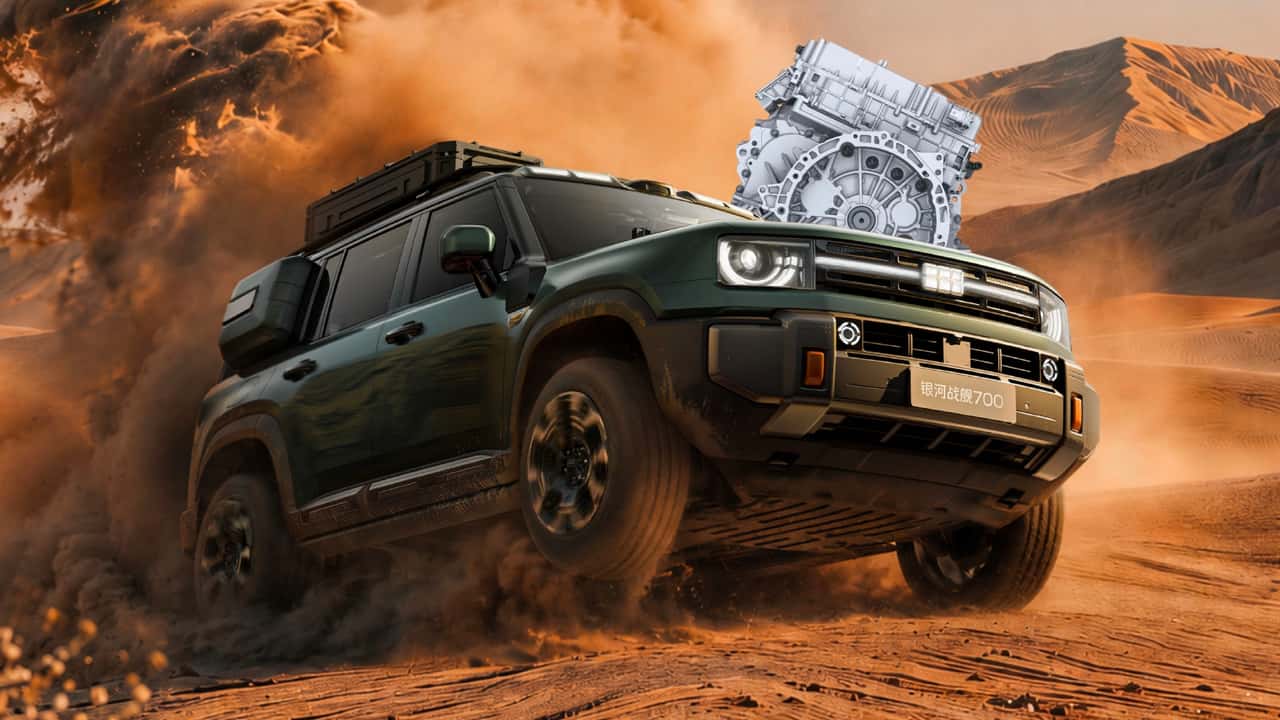
Reporting for 24x7 Breaking News. The roar of a highly modified V8 echoing off canyon walls has long been the undisputed soundtrack of extreme trail riding, but a quiet revolution is underway in the backcountry. The future of conquering the wilderness isn't loud, oily, or purely mechanical—it is electric, silent, and incredibly precise. We've spent years testing traditional lockers and solid axles in the world's harshest environments, but the latest developments in plug-in hybrid off-roading systems are about to make mechanical transfer cases look like ancient history.
- Torque at Zero RPM: The Physics of Electric Rock Crawling
- Ditching the Driveshaft: How Dual-Motor Hybrid Architecture Simplifies the Trail
- The Reality of Trail Range Anxiety and Onboard Power Generation
- Our Take: Why Pure EVs Aren't Ready for the Wilderness—and Why PHEVs Are the Sweet Spot
- Frequently Asked Questions (FAQ)
- Does water crossing damage the battery in a plug-in hybrid off-roader?
- What happens if the hybrid battery dies while I am deep in the backcountry?
- Are plug-in hybrid off-roaders more expensive to maintain than traditional 4x4s?
We came across this story via reports from various automotive design forums and industry insiders, analyzing patents and engineering leaks that highlight how a dual-motor hybrid architecture solves the ultimate weaknesses of traditional off-grid exploration. While some purists remain skeptical of adding batteries to trail rigs, the physics of electric propulsion on dirt tell a completely different story. Automakers are realizing that combining a high-voltage battery pack with a traditional internal combustion engine offers the perfect bridge for overlanders who want extreme capability without the range anxiety of a pure EV.
Torque at Zero RPM: The Physics of Electric Rock Crawling
To understand why this technology is a massive leap forward, we have to look under the hood and down at the axles. Traditional internal combustion engines (ICE) are inherently inefficient at slow speeds. To climb over a massive boulder, a gas or diesel engine must rev up to its powerband, relying on a torque converter or a slipping clutch, a low-range transfer case, and low gear ratios to multiply that force. This process generates massive amounts of heat, subjects mechanical components to extreme stress, and requires delicate throttle modulation from the driver.
Electric motors, by contrast, deliver maximum torque at zero RPM. When you approach a vertical ledge in a vehicle equipped with a modern plug-in hybrid off-roading setup, you do not need to build momentum or rev the engine. You simply press the accelerator, and the electric motor applies instant, millimeter-precise torque directly to the wheels. This eliminates wheel spin, preserves traction, and prevents the sudden weight transfers that often lead to broken axles or rollovers on the trail.
Furthermore, because these systems use advanced software to manage power distribution, they can simulate the behavior of traditional mechanical locking differentials at a rate of thousands of calculations per second. If one wheel loses contact with the ground, the system instantly routes power to the wheels with traction. This level of control is virtually impossible to replicate with traditional mechanical setups, which require physical gears to lock together and often suffer from lag before engaging.
Ditching the Driveshaft: How Dual-Motor Hybrid Architecture Simplifies the Trail
One of the most exciting aspects of upcoming plug-in hybrid architectures is the elimination of physical driveshafts connecting the front and rear axles. By utilizing an independent electric motor on the rear axle (often called an e-axle) and a traditional engine-assisted hybrid setup up front, manufacturers can completely eliminate the heavy, vulnerable mechanical link running down the center of the vehicle. This design dramatically increases ground clearance and removes one of the most common failure points in off-roading: a dented or snapped driveshaft.
This shift represents a massive structural pivot for the auto industry. As legacy automotive giants shift their investments away from dying internal combustion segments—much like the corporate restructuring we saw with Volkswagen's Seat Brand being placed on the chopping block—the industry's focus has turned decisively toward high-margin, electrified adventure vehicles. Engineering teams are no longer trying to package bulky exhaust systems and driveshafts around complex multi-link suspensions; instead, they are designing flat skateboard-style battery enclosures that double as structural chassis members.
However, putting heavy battery packs into vehicles designed to slam against rocks presents its own set of engineering challenges. Automakers are responding with ultra-thick, military-grade steel and titanium skid plates to protect the battery cells from punctures. Additionally, placing these heavy battery packs low in the chassis dramatically lowers the vehicle's center of gravity. On off-camber trails where a traditional top-heavy SUV would feel incredibly unstable and prone to tipping, an electrified rig hugs the ground with remarkable composure.
The Reality of Trail Range Anxiety and Onboard Power Generation
While pure battery-electric vehicles (BEVs) like the Rivian R1T or the GMC Hummer EV offer incredible performance, they suffer from a major Achilles' heel when it comes to remote exploration: the complete lack of charging infrastructure in the deep wilderness. If you run out of battery power fifty miles into a remote desert trail, you cannot simply pour a gallon of gas into the tank to get home. This is where the plug-in hybrid shines as the ultimate overlanding tool.
With a robust PHEV system, you can drive to the trailhead using the gasoline engine, tackle the technical rock crawling sections in pure electric mode, and use regenerative braking on downhill descents to pump energy back into the battery. If the battery pack does run dry, the onboard gasoline engine seamlessly fires up to act as a generator, supplying electricity to the motors or directly driving the wheels. This dual-source redundancy provides a psychological safety net that pure EVs simply cannot match.
Additionally, these vehicles function as massive rolling generators. Thanks to high-voltage battery packs, modern PHEV off-roaders feature built-in 120-volt and 240-volt outlets in the cargo area. Overlanders can run high-draw equipment like portable refrigerators, induction cooktops, power tools, and medical equipment for days at a time without ever needing to idle a noisy, polluting gasoline engine. It transforms the camping experience, allowing adventurers to enjoy the sounds of nature rather than the constant drone of a portable generator.
However, as we rely more on complex off-road driver-assistance algorithms, the legal and safety implications of automated driving systems are becoming a major flashpoint. The recent Tesla driver manslaughter charges in Texas highlight how autonomous liability is shifting, reminding us that no matter how smart your off-road trail-assist software is, the human behind the wheel remains legally and practically responsible. When navigating treacherous terrain, relying too heavily on automated crawling modes without active driver engagement can lead to disaster.
Our Take: Why Pure EVs Aren't Ready for the Wilderness—and Why PHEVs Are the Sweet Spot
In our view, the rush to transition every adventure vehicle to a pure battery-electric platform is a fundamental miscalculation of what off-roaders actually need. Our editorial team has analyzed trail data, charging maps, and consumer feedback, and the conclusion is clear: the wilderness is not ready for pure EVs, and pure EVs are not ready for the wilderness. The sheer weight of massive 100+ kWh battery packs ruins suspension dynamics, increases the likelihood of sinking in mud or sand, and puts immense strain on steering components.
What concerns us most is the environmental hypocrisy of driving a 9,000-pound electric super-truck into fragile ecosystems, tearing up trails due to excessive weight, and claiming it is eco-friendly. We believe the plug-in hybrid represents the most responsible, practical, and high-performance solution available today. By using a smaller, lighter battery pack of around 15 to 30 kWh, a PHEV keeps vehicle weight manageable while still providing enough pure-electric range for a full day of silent trail riding.
Furthermore, the ability to crawl through pristine national forests without emitting toxic exhaust fumes or disturbing wildlife with engine noise is a game-changer for conservation-minded outdoor enthusiasts. It allows us to tread lightly in the truest sense of the phrase. Automakers must continue to refine these hybrid systems, ensuring they remain mechanical enough to be field-repaired while embracing the undeniable software advantages of electric torque delivery.
Frequently Asked Questions (FAQ)
Does water crossing damage the battery in a plug-in hybrid off-roader?
No, manufacturers seal the high-voltage battery packs and electrical connectors to meet strict IP67 or IP69 waterproof standards. Most modern PHEV off-roaders have water-fording depths that match or exceed their traditional gasoline counterparts, often allowing them to submerge in up to 30 inches of water safely.
What happens if the hybrid battery dies while I am deep in the backcountry?
If the hybrid battery pack is depleted, the vehicle's internal combustion engine will automatically start to power the vehicle and recharge the battery. You will never be stranded due to a dead hybrid battery as long as you have gasoline in the fuel tank.
Are plug-in hybrid off-roaders more expensive to maintain than traditional 4x4s?
While the dual-powertrain setup is highly complex, regenerative braking significantly reduces wear on brake pads and rotors. Additionally, because the electric motor handles low-speed crawling, the gasoline engine experiences less strain, potentially extending the lifespan of internal engine components.
Ultimately, the transition toward a highly advanced plug-in hybrid off-roading setup represents the most logical and exciting evolution the off-road community has seen in decades. By blending the instant control of electric motors with the endless range of gasoline, these rigs are proving that you do not have to sacrifice capability to embrace an electrified future. So here's the real question—would you trust an electrified hybrid rig deep in the backcountry, or will you stick to your analog, gas-guzzling 4x4 until the grid is fully built out?
This article was independently researched and written by Hussain for 24x7 Breaking News. We adhere to strict journalistic standards and editorial independence.
Comments
Post a Comment