The Escalating Danger for Press Freedom in Lebanon
Reporting for 24x7 Breaking News, we confirm that three journalists were killed in a targeted strike in southern Lebanon this Saturday. The loss of life includes Ali Shoeib, a reporter for the Hezbollah-affiliated Al Manar TV, and Fatima and Mohamed Ftouni, a reporting team for Al Mayadeen. This tragic event, which we first tracked via reports from across the region, marks a devastating inflection point in the ongoing border conflict.
- The Escalating Danger for Press Freedom in Lebanon
- The Growing Human Toll of Regional Instability
- The Erosion of Neutrality in Information Warfare
- Frequently Asked Questions (FAQ)
- Why is the status of journalists protected under international law?
- What does the IDF claim regarding the journalists killed?
- How does this strike affect the humanitarian situation in Lebanon?
- Our Editorial Stance
The strike occurred just before noon local time, effectively silencing voices that provide critical, real-time coverage from the front lines. The Israel Defense Forces (IDF) have publicly alleged that Ali Shoeib was a member of the Radwan Force, characterizing his journalistic work as a cover for military operations. However, the IDF has not provided verifiable evidence to substantiate these claims, nor have they offered any explanation for the deaths of the two Al Mayadeen journalists.
The Growing Human Toll of Regional Instability
As the conflict intensifies, the humanitarian situation in Lebanon continues to deteriorate at an alarming rate. According to the Lebanese Ministry of Health, the death toll has now surpassed 1,100 civilians, a staggering figure that includes 120 children and 42 paramedics. This is not merely a geopolitical statistic; it is a profound failure of international humanitarian law to protect those tasked with saving lives and documenting history.
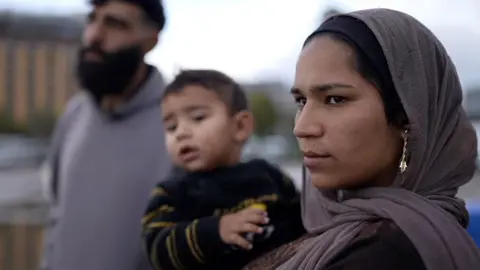
We are witnessing a mass displacement crisis that has forced over a million people from their homes, leaving families to navigate an uncertain and perilous future. For those interested in the broader context of this tragedy, our previous reporting on the displacement crisis in Lebanon offers a deeper look at the systemic pressures causing this migration. The loss of infrastructure and the constant threat of bombardment are tearing at the social fabric of the nation, making it increasingly difficult for civilians to find safety.
The Erosion of Neutrality in Information Warfare
The accusations leveled by the IDF against journalists raise dangerous questions regarding the protection of press members during active combat. When news agencies are labeled as combatants without transparent proof, it creates an environment where any observer—civilian or professional—is at risk of becoming a target. This trend mirrors the broader concerns we've seen in other conflict zones, where the line between combatant and civilian is intentionally blurred to justify military force.
In our view, the targeting of journalists is never a strategic necessity; it is a direct assault on the truth. We believe that the international community has a moral obligation to hold all parties accountable for the protection of non-combatants, regardless of the political affiliations of their employers. You can read our previous analysis on the resilience of journalists and the history of censorship in our coverage of the BBC Russian's struggle against state intervention, which highlights why independent reporting is the bedrock of democracy.
Frequently Asked Questions (FAQ)
Why is the status of journalists protected under international law?
- Journalists are classified as civilians under the Geneva Conventions, meaning they are entitled to protection from military attack unless they take a direct part in hostilities.
What does the IDF claim regarding the journalists killed?
- The IDF alleges that Ali Shoeib was a member of Hezbollah's elite Radwan Force and used his position to gather intelligence, though no evidence has been publicly shared to support this charge.
How does this strike affect the humanitarian situation in Lebanon?
- The strike underscores the pervasive danger facing all non-combatants, including medical workers and media, further destabilizing an already fragile region facing mass displacement.
Our Editorial Stance
The recurring loss of civilian life in this conflict is a tragedy that demands more than just diplomatic condemnation. We see a cycle of violence that is becoming increasingly indiscriminate, where the rules of engagement are discarded in favor of total dominance. It is our editorial belief that the international community must demand an immediate, independent investigation into these killings to ensure that the targeting of journalists does not become the new normal. If we allow the voices of the press to be silenced through violence, we forfeit our right to understand the true cost of these wars. We stand in solidarity with the families of the victims and with all journalists operating in high-risk zones, reminding our readers that the pursuit of truth is the most powerful tool for peace we have remaining.
The death of three journalists in southern Lebanon represents a critical failure in the protection of those who report the reality of war. As the border conflict continues to escalate, the question remains: In an age where information is weaponized, is there any room left for the objective observer, or has the very concept of a 'neutral journalist' been permanently dismantled?
This article was independently researched and written by Hussain for 24x7 Breaking News. We adhere to strict journalistic standards and editorial independence.
Comments
Post a Comment