Reporting for 24x7 Breaking News.
- A Legacy Forged in the Shadow of the Iron Curtain
- Outmaneuvering the Jammers: Innovation in the Face of Suppression
- A Thaw in the Airwaves and a Digital Future
- The Human Cost of Information Control
- Our Take: A Constant Struggle for Truth in the Digital Age
- Frequently Asked Questions (FAQ)
- What was the original purpose of BBC Russian?
- How did the Soviet Union try to stop BBC Russian broadcasts?
- When did the jamming of BBC Russian broadcasts stop?
- Why is the BBC Russian website blocked?
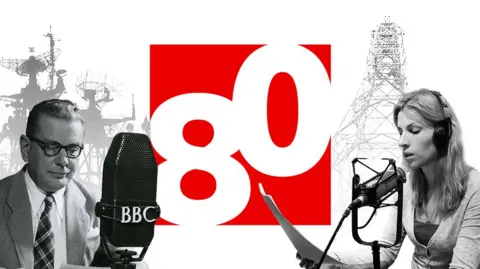
For eight decades, BBC Russian has waged a relentless campaign to deliver uncensored news to audiences within Russia, a mission that has evolved from circumventing the static-laced airwaves of the Soviet era to battling the sophisticated digital firewalls of today. The Kremlin's tightening grip on online information has escalated to a point where the BBC's website is now blocked, marking the latest chapter in a long, arduous struggle for informational freedom that began with the dawn of the Iron Curtain.
A Legacy Forged in the Shadow of the Iron Curtain
The story of BBC Russian began on March 24, 1946, with a clear objective: to provide a vital alternative to the pervasive state propaganda that defined life in the Soviet Union. From its inception, the service aimed to offer a window into a world beyond Moscow's tightly controlled narrative, broadcasting news, culture, and even Western music to an audience hungry for information. However, the Soviet regime quickly recognized the threat posed by these 'enemy voices,' and by 1949, the systematic jamming of BBC radio signals had become the norm.
Natalia Rubinstein, a former BBC presenter and a resident of Leningrad (now St. Petersburg), vividly recalls the ingenious methods listeners employed. "We really wanted to know what was being hidden from us," she shared, describing how dedicated listeners would venture to remote, snowy landscapes, skiing far from urban centers where jamming was less effective. It was a "sport" for some, a testament to the deep-seated desire for truth.
"I still have this picture before my eyes: a person leaning on a tree, with ski poles next to him, listening to the radio somehow nestled on their chest," Rubinstein reminisced, painting a poignant image of resilience in the face of deliberate obstruction. This dedication underscores a fundamental human drive for connection and understanding, even when faced with formidable technological and political barriers.
Outmaneuvering the Jammers: Innovation in the Face of Suppression
The practice of signal jamming, pioneered by Nazi Germany, became a Cold War staple. The BBC Russian service, undeterred, adapted its strategy. Its 90-minute Russian-language bulletin was repeated three times weekly, increasing the chances of listeners catching a clear broadcast. Beyond news, the service offered a curated glimpse into Western life, including popular music, excerpts from banned literature, and even interactive quizzes, enriching the cultural landscape for those behind the Iron Curtain.
One listener, sharing on a forum dedicated to foreign broadcast enthusiasts, recounted how his father would "sit on a three-legged stool, press his forehead against the radio, and patiently, through the crackling and the wail of the jammers, tune in to the right frequency... it seemed as if those were the sounds of outer space reaching us." This evocative description captures the almost mystical quality of accessing forbidden information.
Historical documents reveal the selective nature of Soviet censorship. A 1960 CIA memo indicated that reports on life in Britain or the US often passed through unhindered. However, any discussion of global conflicts or critical analysis of the economic and political realities within the socialist bloc was invariably met with jamming. Yet, the BBC Russian team occasionally found ways to outwit the censors. Peter Udell, who managed the BBC's East European service, recalled a remarkable instance in 1982 following the death of Leonid Brezhnev. The service went off air as usual, only to reappear minutes later with a special report on the Soviet leader's demise. Udell believes the jamming teams, having assumed their shift was over, were caught off guard, allowing the report to air largely unhindered for a crucial period.
A Thaw in the Airwaves and a Digital Future
The Soviet Union's secrecy and the often-delayed official announcements from state media provided foreign broadcasters with a significant advantage. In 1964, the BBC reported Nikita Khrushchev's removal from power well before it was officially announced domestically. The era of Mikhail Gorbachev and his liberal reforms brought about a dramatic shift. By 1987, jamming ceased, a monumental moment that Rubinstein experienced firsthand in London.
"We've just got a call from BBC Monitoring," a studio manager relayed to her. "Ten minutes ago the Russians stopped the jamming. It's official. We're broadcasting without interference. You should tell our listeners that." This marked a turning point, allowing for direct feedback and a clearer understanding of their audience. The service began receiving "sacks of wonderful letters from the [Russian] provinces," and Russian radio stations started rebroadcasting BBC Russian programs. In 1988, listeners from across the USSR engaged directly with UK Prime Minister Margaret Thatcher in a live Q&A session, with over 800 calls received and 15 making it to air.
The move into its first Moscow office followed, and by 2022, the BBC Russian service had expanded to over 100 journalists, a formidable force competing with Russia's independent media landscape. While radio had given way to websites and social media, the invasion of Ukraine in February 2022 saw BBC Russian's audience surge, more than tripling to reach 10 million people in the final week of the month. This surge in readership, however, occurred just as the digital crackdown intensified, culminating in the blocking of their website on March 4, 2022.
The Human Cost of Information Control
The continued efforts to suppress independent news outlets like BBC Russian highlight a disturbing trend. The widespread internet outages and reported plans to block platforms like Telegram demonstrate a clear intent to further isolate Russian citizens from external information sources. This mirrors concerns seen in other geopolitical flashpoints, where control over information can be a critical tool in shaping narratives and influencing public opinion. For instance, the ongoing conflict in Gaza has seen information warfare become a significant component of the wider geopolitical struggle, impacting global perceptions and humanitarian efforts.
The silencing of voices like BBC Russian has profound implications for the pursuit of truth and accountability. It creates an environment where state-controlled narratives can flourish unchecked, making it harder for citizens to form informed opinions or engage in critical discourse. This mirrors historical patterns where authoritarian regimes have sought to control the flow of information to maintain power, as seen with the very jamming techniques the BBC fought for decades. The digital age has simply provided new, more sophisticated tools for censorship, making the fight for open access to information more critical than ever.
Our Take: A Constant Struggle for Truth in the Digital Age
In our assessment, the blocking of the BBC Russian website is more than just a technical hurdle; it's a symbolic victory for those who seek to control narratives and stifle dissent. For 80 years, BBC Russian has been a beacon of independent journalism, providing a crucial counter-narrative to state-sponsored propaganda. The transition from radio jamming to website blocking signifies the evolving nature of censorship, adapting to the digital landscape. It’s a stark reminder that the fight for free press and access to information is a perpetual one, requiring constant vigilance and adaptation from both journalists and audiences.
What is truly heartbreaking is the thought of countless individuals in Russia, who relied on BBC Russian for a balanced perspective, now being cut off. This action by the Kremlin not only restricts access to news but also erodes the very foundation of an informed citizenry. It underscores the vital importance of international media's role in holding power accountable, especially in regions where independent domestic outlets face immense pressure. The resilience shown by BBC Russian and its listeners over the decades is a testament to the enduring human need for truth, a need that no firewall can permanently extinguish.
Frequently Asked Questions (FAQ)
What was the original purpose of BBC Russian?
BBC Russian was launched in 1946 to provide listeners in the Soviet Union with an alternative to state propaganda and a controlled cultural scene.
How did the Soviet Union try to stop BBC Russian broadcasts?
The Soviet Union systematically jammed BBC Russian's short-wave radio signals, using noise and interference from more powerful transmitters to make broadcasts inaudible.
When did the jamming of BBC Russian broadcasts stop?
The jamming of BBC Russian broadcasts officially stopped in 1987, coinciding with the liberal reforms under Mikhail Gorbachev.
Why is the BBC Russian website blocked?
The BBC Russian website was blocked by Russian authorities in March 2022, amidst a broader crackdown on independent media following the full-scale invasion of Ukraine.
The 80-year journey of BBC Russian, from overcoming radio static to facing website blocks, illustrates the persistent battle for informational integrity. Access to independent news remains a fundamental right, constantly tested by authoritarian regimes. So here's the real question – in an era of escalating digital censorship, how can international news organizations continue to effectively reach audiences behind impenetrable information walls?
This article was independently researched and written by Hussain for 24x7 Breaking News. We adhere to strict journalistic standards and editorial independence.
Comments
Post a Comment