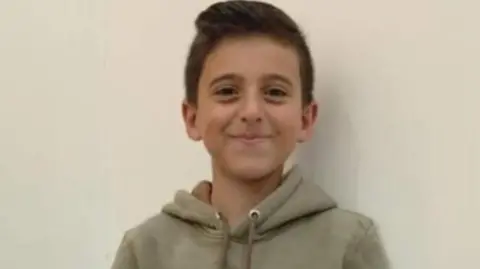
Saksakiyeh, Southern Lebanon – The quiet village of Saksakiyeh was shattered Saturday by the raw grief of a family laying to rest an 11-year-old boy and his uncle, innocent casualties in the intensifying crossfire between Israel and Hezbollah. Jawad Younes and his 41-year-old uncle, Ragheb Younes, were killed when an Israeli airstrike obliterated their family compound, marking another devastating blow to Lebanon's civilian population caught in the widening regional conflict. This tragedy underscores the escalating human cost of hostilities that have raged since early March, with Lebanese health officials reporting over 1,100 fatalities.
- A Family Devastated, A Village in Mourning
- Echoes of War Amidst the Funeral Rites
- The Human Cost of Escalation: Injuries and Displacement
- Targeting Journalists and Aid Workers: A Disturbing Pattern
- Editorial Perspective: The Unbearable Weight of Civilian Suffering
- Frequently Asked Questions (FAQ)
- Who was killed in the Israeli strike in Saksakiyeh?
- What is the current casualty count in Lebanon?
- Has Israel commented on the strike that killed the Younes family?
- What other recent casualties have been reported?
A Family Devastated, A Village in Mourning
Hundreds gathered under a sky heavy with unspoken sorrow for the funeral of Jawad and Ragheb. Women, cloaked in black, wept openly, their cries a heart-wrenching soundtrack to the profound loss. The body of young Jawad was draped in the familiar yellow flag of Hezbollah, a poignant symbol of the group's strong presence in this predominantly Shia region, though family members insist the Younes household had no military ties to the organization. Jawad's mother, Malak Meslmani, sat beside her son's casket, her face a mask of anguish. "My son is gentle and pure," she told BBC reporters, her voice thick with tears. "He loved the idea of martyrdom, and when he grew up, he wanted to be with the resistance. He wanted to resist the enemy Israel who killed him."
Echoes of War Amidst the Funeral Rites
As the funeral procession made its way to the burial site, the distant thud of Israeli airstrikes served as a grim reminder of the ever-present danger. Plumes of smoke billowed above nearby hilltops, a stark visual counterpoint to the solemn rites. The strike that claimed Jawad and Ragheb's lives occurred shortly after 1 p.m. on Friday. Jawad's father, Hussein Younes, recounted the horrifying moment his son was playing football with his nine cousins when the attack struck. Standing amidst the rubble of his home, he gestured in despair when asked for an explanation: "I don't know! I don't know!" he cried. "If this was a military base, no kids would be here," he added, his voice laced with disbelief and pain. Family members and local councilors uniformly stated the family had no affiliation with Hezbollah's military wing.
The Human Cost of Escalation: Injuries and Displacement
The attack left five survivors, including Jawad's aunt, Zeinab. Speaking from her hospital bed, her voice trembling, she described the sudden chaos. "Before it happened, me and my husband were inside. We didn't see anything, and we didn't hear anything... Then I found myself under a pile of rubble." Zeinab is undergoing treatment for a broken spine and fractured leg, with doctors expressing optimism for her recovery following extensive surgery. She echoed the sentiment of many in the region, stating there was no warning, and the family would have evacuated had they known. This incident follows closely on the heels of another tragedy in the same neighborhood, where a different family buried two children and their mother, also victims of Israeli bombardment. The sheer scale of displacement is staggering, with reports indicating that Over a Million Displaced in Lebanon as Regional War Escalates, a situation that threatens to destabilize the nation further.
Targeting Journalists and Aid Workers: A Disturbing Pattern
The violence has not spared those documenting it or those providing aid. On Saturday, three Lebanese journalists—Ali Shoeib of Al Manar TV, and Fatima and Mohamed Ftouni of Al Mayadeen—were killed in what appears to have been a targeted Israeli strike on their media vehicle. The Israel Defense Forces (IDF) confirmed killing Shoeib, labeling him a "terrorist" and a member of Hezbollah's Radwan Force who operated "under the guise of a journalist." While the IDF did not comment on the Ftounis' deaths, Lebanese President Joseph Aoun condemned the strike as a "brazen crime." This incident echoes concerns raised by the Committee to Protect Journalists, which has accused Israel of repeatedly killing media professionals without providing credible evidence. The pattern of violence extends to humanitarian workers as well; five paramedics were killed in an Israeli airstrike in Zoutar on the same day. Human rights groups suggest these repeated attacks on healthcare workers could constitute war crimes, highlighting a disturbing disregard for international humanitarian law amidst the conflict.
Editorial Perspective: The Unbearable Weight of Civilian Suffering
In our assessment of this deeply tragic situation, what stands out most starkly is the unbearable toll on innocent civilians. The death of Jawad Younes, an 11-year-old boy killed while playing football, is not merely a statistic; it is a profound loss that reverberates through his family and community. The targeting of family compounds, journalists, and medical personnel raises serious questions about proportionality and adherence to the laws of armed conflict. We've seen similar devastating outcomes in other conflicts, such as the recent migrant dinghy tragedy off the Greek coast, where human lives were tragically lost due to circumstances beyond their control. It is crucial to remember that behind every number reported by health officials is a human story, a family shattered, and a future extinguished. The international community must redouble efforts to de-escalate this conflict and ensure accountability for actions that result in such immense civilian suffering. The cycle of violence, often fueled by geopolitical interests, inflicts the deepest wounds on those least equipped to bear them, demanding a stronger global commitment to peace and the protection of human dignity.
Frequently Asked Questions (FAQ)
Who was killed in the Israeli strike in Saksakiyeh?
An 11-year-old boy, Jawad Younes, and his 41-year-old uncle, Ragheb Younes, were killed when their family compound was hit by an Israeli airstrike.
What is the current casualty count in Lebanon?
Lebanese health officials report that more than 1,100 people have been killed since the escalation of conflict began.
Has Israel commented on the strike that killed the Younes family?
The Israeli military did not respond to a request for comment regarding the specific target of the strike on the Younes family compound.
What other recent casualties have been reported?
In addition to the Younes family, three Lebanese journalists were killed in a separate Israeli strike on their vehicle, and five paramedics died in another airstrike.
The heartbreaking loss of Jawad and Ragheb Younes is a stark reminder of the devastating impact this conflict is having on Lebanese families. As airstrikes continue to echo across southern Lebanon, the question remains: When will the cycle of violence end and innocent lives be truly protected?
This article was independently researched and written by Hussain for 24x7 Breaking News. We adhere to strict journalistic standards and editorial independence.
Comments
Post a Comment