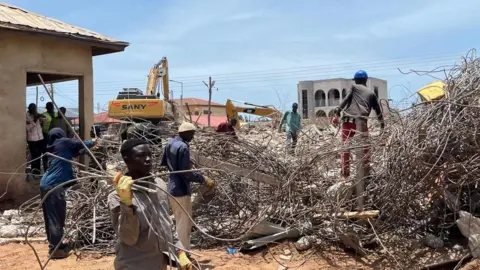
Reporting for 24x7 Breaking News. A swift 48-hour curfew has been imposed on parts of Jos, Nigeria, following a brutal attack on an open-air bar that ignited a wave of deadly retaliatory violence. The initial assault, which saw gunmen open fire on patrons, resulted in the deaths of at least twelve people. This horrific act triggered an immediate and violent backlash from a mob, which local reports indicate led to the deaths of an additional ten individuals. The escalating violence has plunged the city into a state of emergency, underscoring the persistent fragility of security in Nigeria's central region.
- Jos Under Siege: The Immediate Aftermath and Official Response
- A Volatile Landscape: Understanding the Roots of Conflict in Plateau State
- The Human Cost of Instability: Echoes of Conflict Across Communities
- Our Editorial Take: A Systemic Failure Demanding More Than Just Curfews
- Frequently Asked Questions (FAQ)
- What is the current security situation in Jos?
- What caused the violence in Jos?
- What is Plateau state doing to address the violence?
- Are there similar security issues in other parts of Nigeria?
Jos Under Siege: The Immediate Aftermath and Official Response
Plateau state governor, Caleb Manasseh Mutfwang, announced the curfew, which commenced at midnight local time and is slated to last until April 1st. In his statement, Governor Mutfwang assured the public that a thorough investigation into the killings has been initiated and vowed that those responsible would be brought to justice. Security agencies have been directed to pursue and apprehend the perpetrators of what he described as "barbaric and unprovoked" acts. Residents have been ordered to remain indoors as security personnel have intensified patrols, establishing a visible presence across the affected areas in an effort to restore order and prevent further bloodshed.
The gravity of the situation was further highlighted by Paul Mancha, chairperson of the youth council in Plateau state, who suggested that the reported casualty figures might be an understatement. "People were here in the evening and unfortunately, wicked terrorists came and attacked our people," Mancha told Reuters news agency. "We have counted scores of people who are now dead and then so many others are also in the hospital receiving treatment." This indicates that the full extent of the human cost may not yet be known, adding another layer of tragedy to an already devastating event.
A Volatile Landscape: Understanding the Roots of Conflict in Plateau State
Jos, the capital of Plateau state, has long been recognized as one of the most volatile regions in Nigeria. The state is situated in Nigeria's Middle Belt, an area historically characterized by complex inter-communal tensions. These conflicts often manifest between predominantly Muslim herder communities and largely Christian farming populations, frequently revolving around access to vital land and water resources. This underlying friction creates a fertile ground for violence, where localized incidents can quickly escalate into widespread unrest.
The recent attack is not an isolated incident but rather a stark illustration of the broader security challenges plaguing Nigeria. The nation grapples with a multi-faceted security crisis, ranging from the protracted Islamist insurgency in the northeast to rampant banditry and kidnappings in the northwest and central parts of the country. Security analysts observe that these overlapping threats have significantly strained national security resources, complicating response efforts and leaving many communities vulnerable. The ease with which violence can disrupt daily life, as seen in Jos, underscores the persistent fragility of existing security arrangements.
The Human Cost of Instability: Echoes of Conflict Across Communities
The imposition of a curfew, while a necessary measure to restore order, directly impacts the lives of ordinary citizens. It curtails freedom of movement, disrupts economic activity, and instills a palpable sense of fear and uncertainty. For the residents of Jos, this sudden lockdown means disrupted livelihoods, strained access to essential services, and the constant anxiety of potential further violence. It serves as a grim reminder of how quickly peace can shatter, leaving communities to bear the brunt of instability. This echoes the concerns we've seen in other contexts where geopolitical tensions or internal conflicts disrupt daily life, such as the disruptions faced by India's middle class due to broader economic instability, or the widespread impact of global events on local communities.
Local residents have also reported that threats had been circulating on social media prior to the attack, suggesting a potential premeditation that authorities may not have fully intercepted. This raises questions about intelligence gathering and the effectiveness of preventive measures. The speed with which the mob retaliated further points to a deep-seated anger and a sense of being unprotected, leading to a cycle of violence that is incredibly difficult to break. It's a tragic testament to how quickly fear and anger can override established systems when trust erodes.
Our Editorial Take: A Systemic Failure Demanding More Than Just Curfews
In our assessment, the events in Jos are a deeply concerning symptom of a larger, systemic issue within Nigeria. While Governor Mutfwang's swift imposition of a curfew and promise of justice are understandable responses to immediate chaos, they do not address the underlying causes of the persistent inter-communal violence. The conflict over land and resources, exacerbated by demographic pressures and potentially influenced by external factors, requires more than just a temporary lockdown. We believe that a sustainable solution necessitates a multi-pronged approach focusing on inclusive governance, equitable resource distribution, and genuine dialogue between communities. Without addressing the root grievances, these cycles of violence will inevitably continue, devastating lives and hindering the nation's development. The ease with which social media threats can precede such devastating attacks also points to a critical need for enhanced digital security monitoring and community engagement, ensuring that early warnings are not ignored.
Frequently Asked Questions (FAQ)
What is the current security situation in Jos?
A 48-hour curfew is in effect in parts of Jos following deadly attacks and subsequent retaliatory violence. Security forces have intensified patrols to restore calm.
What caused the violence in Jos?
The immediate cause was an attack on an open-air bar, which led to a mob retaliating. Underlying tensions between farming and herding communities over land and water resources are a long-standing factor in the region's volatility.
What is Plateau state doing to address the violence?
Governor Caleb Manasseh Mutfwang has imposed a 48-hour curfew, ordered an investigation into the killings, and directed security agencies to apprehend those responsible.
Are there similar security issues in other parts of Nigeria?
Yes, Nigeria faces multiple security challenges, including an Islamist insurgency in the northeast and banditry in the northwest and central areas, stretching security resources across the country.
The tragic events in Jos highlight the urgent need for sustained peace-building efforts and a deeper understanding of the complex socio-economic factors fueling conflict. Nigeria's central region remains a flashpoint, and the efficacy of current security measures in preventing future escalations is a critical question. The escalating death toll in Jos is a stark reminder of the human cost of unresolved tensions.
So, beyond curfews and investigations, what concrete, long-term strategies can effectively break the cycle of violence in Nigeria's Middle Belt and ensure lasting peace for its communities?
This article was independently researched and written by Hussain for 24x7 Breaking News. We adhere to strict journalistic standards and editorial independence.
Comments
Post a Comment