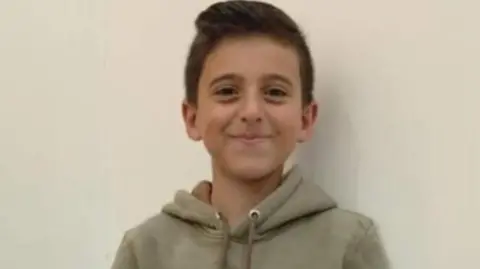
Reporting for 24x7 Breaking News, in Saksakiyeh, southern Lebanon – The quiet village of Saksakiyeh became a scene of profound grief and defiance Saturday as the community laid to rest 11-year-old Jawad Younes and his uncle, Ragheb Younes, victims of an Israeli airstrike that tore through their family compound. Their deaths mark another tragic chapter in the escalating conflict between Israel and Hezbollah, a conflict that is increasingly engulfing innocent civilians in its devastating crossfire. The strike occurred Friday afternoon, reducing the family home to rubble and shattering the lives of those who survived.
- A Town United in Sorrow
- A Mother's Heartbreak, A Child's Dream
- Echoes of War Amidst Mourning
- Unanswered Questions and Devastation
- A Nation Bearing the Brunt
- A Pattern of Civilian Loss
- Targeting Journalists and Aid Workers
- The Strategic Calculus and Human Cost
- Our Editorial Perspective: The Unacceptable Price of Conflict
- Frequently Asked Questions (FAQ)
- Who was killed in the Israeli strike in Saksakiyeh?
- What has been the broader impact of the recent escalation on civilians in Lebanon?
- What is the IDF's stance on strikes in southern Lebanon?
A Town United in Sorrow
Hundreds gathered in the village center, their collective sorrow palpable. Women, clad in traditional black, wailed over the bodies, a raw expression of the anguish gripping southern Lebanon. Jawad's casket was adorned with the yellow flag of Hezbollah, a stark reminder of the group's significant presence and support in this predominantly Shia region. For many here, support for the resistance is deeply intertwined with a desire to protect their homeland against perceived aggression.
A Mother's Heartbreak, A Child's Dream
Jawad's mother, Malak Meslmani, sat beside her son's body, tears streaming down her face as she spoke to the BBC. "My son is gentle and pure," she recounted, her voice choked with emotion. "He loved the idea of martyrdom, and when he grew up, he wanted to be with the resistance. He wanted to resist the enemy Israel who killed him." Her words, a poignant mix of maternal love and defiant pride, echoed the sentiments of many in a region long accustomed to conflict.
Echoes of War Amidst Mourning
As the funeral procession made its solemn journey to the burial site, the distant thunder of Israeli airstrikes served as a grim soundtrack to the community's grief. Plumes of smoke rose ominously above nearby hilltops, a constant reminder of the ongoing hostilities. The strike on the Younes family home, which eyewitnesses say occurred around 1:00 PM local time on Friday, shattered what was reportedly a normal afternoon. Jawad's father, Hussein Younes, recounted that his son had been playing football with nine of his cousins at the time of the attack.
Unanswered Questions and Devastation
Standing amidst the ruins of his home, Hussein Younes, visibly distraught, questioned the rationale behind the strike. "I don't know! I don't know!" he exclaimed when asked why his family home was targeted. "If this was a military base, no kids would be here," he told the BBC. Family members and local council representatives vehemently stated that the Younes family had no military affiliation with Hezbollah. Five individuals survived the attack, with the wounded being transported to a nearby hospital.
A Nation Bearing the Brunt
Among the injured was Jawad's aunt, Zeinab, who recounted the terrifying moments from her hospital bed. "Before it happened, me and my husband were inside. We didn't see anything, and we didn't hear anything... Then I found myself under a pile of rubble," she said, her voice trembling. Zeinab is being treated for a broken spine and a fractured leg, with doctors hopeful for her recovery, though extensive surgery is anticipated. She confirmed there was no warning before the strike, emphasizing that the family would have evacuated had they been alerted.
A Pattern of Civilian Loss
The deaths of Jawad and Ragheb Younes are not isolated incidents. Just a day prior, another family in the same neighborhood buried their mother and two children, also killed in Israeli bombardment. This wave of deadly strikes across southern Lebanon underscores the dire humanitarian situation. The United Nations refugee agency has warned of a worsening humanitarian crisis, with over a million displaced in Lebanon as the regional war escalates.
Targeting Journalists and Aid Workers
The conflict has also claimed the lives of journalists and first responders. On Saturday, three Lebanese journalists were killed in what Israel described as a targeted strike on their media vehicle. Ali Shoeib, a correspondent for Hezbollah-affiliated Al Manar TV, was identified by the Israel Defense Forces (IDF) as a "terrorist" from Hezbollah's elite Radwan Force. The IDF did not comment on the deaths of the other two journalists. Lebanese President Joseph Aoun condemned the strike as a "brazen crime." Additionally, five paramedics were killed in an Israeli airstrike in Zoutar, prompting human rights groups to investigate potential war crimes due to repeated attacks on healthcare workers.
The Strategic Calculus and Human Cost
Israel states its operations are aimed at Hezbollah targets, but the consistent civilian casualties raise profound questions about proportionality and adherence to international humanitarian law. The military offensive, which has seen ground forces advance in the south, continues to batter towns and villages. The targeting of civilian infrastructure and the increasing toll on non-combatants highlight the devastating human reality of this prolonged conflict. The cycle of rocket fire from Lebanon and retaliatory strikes from Israel seems to be trapping civilians in a relentless loop of violence.
Our Editorial Perspective: The Unacceptable Price of Conflict
In our assessment, the relentless cycle of violence in southern Lebanon is a tragedy that demands urgent international attention. The targeting of civilian homes, the deaths of children like Jawad Younes, and the attacks on journalists and medical personnel represent a profound failure of de-escalation and a disregard for human dignity. While states have a right to self-defense, the scale of civilian casualties suggests that the principle of distinction between combatants and non-combatants is being alarmingly eroded. The international community must redouble its efforts to broker a lasting ceasefire and provide robust humanitarian aid, ensuring that such devastating losses are not repeated. We must ask ourselves: at what point does the pursuit of security by one nation inflict such unbearable suffering on another that it becomes morally untenable?
Frequently Asked Questions (FAQ)
Who was killed in the Israeli strike in Saksakiyeh?
An 11-year-old boy, Jawad Younes, and his 41-year-old uncle, Ragheb Younes, were killed when their family compound was hit by an Israeli airstrike on Friday.
What has been the broader impact of the recent escalation on civilians in Lebanon?
Lebanese health officials report over 1,100 deaths since the escalation began, with civilians increasingly caught in the crossfire and the UN warning of a worsening humanitarian crisis and over a million displaced individuals.
What is the IDF's stance on strikes in southern Lebanon?
The Israel Defense Forces state their operations are aimed at Hezbollah targets, but they did not respond to a request for comment regarding the specific strike on the Younes family compound.
The heart-wrenching loss of young Jawad Younes and his uncle underscores the devastating human toll of the escalating conflict in southern Lebanon. As the region grapples with intensified hostilities, the question remains: When will the innocent lives caught in this brutal crossfire be truly protected?
This article was independently researched and written by Hussain for 24x7 Breaking News. We adhere to strict journalistic standards and editorial independence.
Comments
Post a Comment