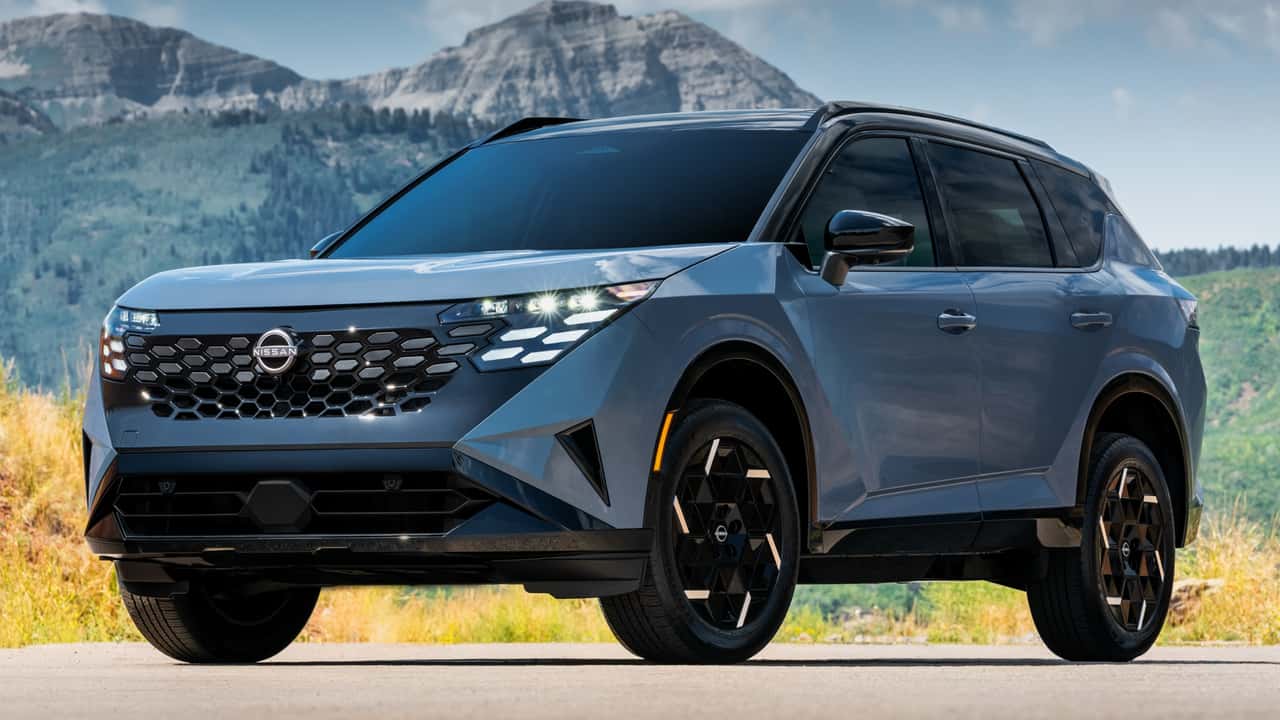
The waiting game for American buyers interested in truly efficient hybrids is finally nearing its end as the Nissan Rogue e-Power prepares to make its official debut on U.S. shores in November 2026. Reporting for 24x7 Breaking News, our editorial team has spent considerable time tracking how automakers are navigating the delicate transition between internal combustion engines and full electrification. This upcoming launch represents a massive gamble for the Japanese manufacturer, bringing a wildly popular crossover nameplate paired with a radically different approach to hybrid propulsion.
- Breaking Down the Revolutionary E-Power Drivetrain Technology
- Real-World Driving Dynamics and Cabin Experience
- Market Positioning and Competitive Landscape in North America
- Editorial Perspective: A Clever Stopgap or a Missed Pure-EV Opportunity?
- Frequently Asked Questions (FAQ)
- Does the Nissan Rogue e-Power need to be plugged in to charge?
- What is the primary difference between a traditional hybrid and Nissan's e-Power?
- When will the Rogue e-Power be available to purchase in the United States?
Breaking Down the Revolutionary E-Power Drivetrain Technology
To understand why gearheads and efficiency advocates are buzzing about this release, we need to look beneath the sheet metal at how the system actually works. Unlike traditional parallel hybrids from brands like Toyota or Honda, Nissan’s e-Power setup relies exclusively on an electric motor to drive the wheels while a gasoline engine functions purely as an onboard generator. Based on recent technical breakdowns from Reuters and industry disclosures, the internal combustion engine never physically connects to the drivetrain.
Instead, a high-output battery pack and a responsive 1.5-liter variable compression turbo engine work in harmony to generate electricity on the demand of the driver. This means American consumers will experience instant EV-like torque and linear acceleration without ever needing to plug the vehicle into a wall outlet or hunt for public charging stations. Our team of automotive analysts notes that this setup bypasses the single biggest hurdle for hesitant buyers: range anxiety. It is a clever engineering bridge designed for drivers who want the smooth, silent thrust of an electric vehicle paired with the familiar convenience of pulling up to a standard gas pump.
Real-World Driving Dynamics and Cabin Experience
Behind the steering wheel, the driving character of the Rogue e-Power promises to break away from the traditionally numb and disconnected feel of standard compact crossovers. Because the electric motor handles all propulsion duties, throttle response is instantaneous, eliminating the sluggish transmission lag often found in conventional continuously variable transmissions. Handling is expected to remain planted and predictable, benefiting from the lower center of gravity provided by the floor-mounted battery pack.
Inside the cabin, Nissan leans heavily into ergonomic comfort and modern digital architecture, mirroring the layout found in recent battery-electric models. We've seen similar cabin layouts praised for their Zero Gravity seating and intuitive infotainment integration, which keeps driver distraction to a minimum during heavy highway commutes. However, questions remain regarding how intrusive the generator engine's noise will become under heavy throttle or steep mountain climbs when it revs up to supply juice to the battery. Industry observers point out that sound-deadening materials will need to work overtime to keep the cabin whisper-quiet during hard acceleration.
Market Positioning and Competitive Landscape in North America
When the Rogue e-Power lands at dealerships this coming November, it will step into an intensely crowded and fiercely contested arena dominated by established hybrid giants. Vehicles like the Toyota RAV4 Hybrid and the Hyundai Tucson Hybrid currently command massive market share, meaning Nissan cannot afford any early quality control hiccups or miscalculated pricing strategies. According to data provided by Bloomberg and recent automotive filings, American buyers are increasingly prioritizing fuel economy amid fluctuating energy costs, a reality highlighted by broader economic trends such as when oil prices rise as U.S.-Iran talks remain uncertain and markets brace for further volatility.
Pricing will ultimately dictate whether this innovative powertrain captures the mainstream imagination or remains a niche curiosity for tech-forward early adopters. If Nissan prices the e-Power variant competitively against standard gas-powered trims while highlighting its superior urban fuel economy, it could easily shake up the sales charts. Yet, convincing mainstream consumers to embrace a serial hybrid system that behaves like an EV without a plug will require a massive, crystal-clear marketing and educational campaign from corporate headquarters.
Editorial Perspective: A Clever Stopgap or a Missed Pure-EV Opportunity?
In our view, the arrival of the Nissan Rogue e-Power in the United States highlights a fascinating ideological split within the modern automotive industry. As a publication that frequently examines sustainable transit and environmental policy, we recognize that series hybrids offer an accessible stepping stone for drivers who lack home charging infrastructure. It reduces tailpipe emissions significantly compared to traditional gasoline models without demanding changes in daily refueling habits. We believe this appeals directly to working-class families and apartment dwellers who want greener transit options today.
At the same time, we must question whether legacy automakers are leaning too heavily on transitional technologies instead of accelerating the rollout of affordable, long-range battery-electric vehicles. While e-Power is undoubtedly an engineering marvel, it still burns fossil fuels and relies on an internal combustion engine that requires maintenance, oil changes, and exhaust systems. We hope this vehicle acts as a genuine gateway to full electrification rather than a comfortable excuse for manufacturers to delay the necessary overhaul of charging infrastructure. The climate crisis demands bold, uncompromising action, and while hybrids buy us time, they are ultimately just a chapter in a much longer book.
Frequently Asked Questions (FAQ)
Does the Nissan Rogue e-Power need to be plugged in to charge?
No, the e-Power system is a self-charging hybrid where an onboard gasoline generator supplies electricity to the battery, meaning you never plug it into an external power source.
What is the primary difference between a traditional hybrid and Nissan's e-Power?
In a traditional hybrid, both the gas engine and electric motor can drive the wheels. In the e-Power setup, the wheels are driven exclusively by an electric motor at all times.
When will the Rogue e-Power be available to purchase in the United States?
Nissan has scheduled the official U.S. market arrival and dealership rollout for November 2026, as originally noted in reports from unknown industry sources.
As the automotive world braces for this high-stakes launch, the success of this unique powertrain will tell us a lot about consumer appetite for unconventional efficiency. So here's the real question — would you buy a hybrid that drives like an EV even if you still have to visit the gas station?
This article was independently researched and written by Hussain for 24x7 Breaking News. We adhere to strict journalistic standards and editorial independence.
Comments
Post a Comment