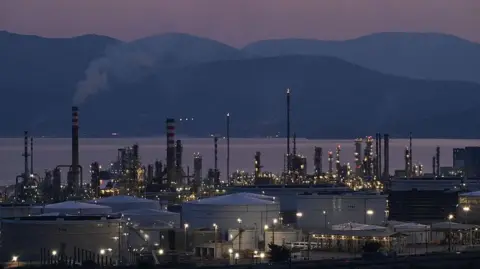
Reporting for 24x7 Breaking News. Defense Secretary Pete Hegseth has issued a stark appeal to America's allies, urging them to take a more active role in securing the vital Strait of Hormuz, a sentiment directly echoing recent pronouncements from President Donald Trump. The call comes as the international community grapples with Iran's control over the critical maritime passage, a situation that has significantly disrupted global oil and liquefied natural gas (LNG) flows.
- A Shifting Alliance Dynamic in the Persian Gulf
- Strategic Realignments and Economic Ramifications
- A Humanitarian Lens on Global Security
- Our Editorial Perspective
- Frequently Asked Questions (FAQ)
- What is the Strait of Hormuz?
- Why is the Strait of Hormuz important?
- What actions has Iran taken in the Strait?
- What is the U.S. asking allies to do?
A Shifting Alliance Dynamic in the Persian Gulf
In a pointed statement on Tuesday, Secretary Hegseth emphasized that the responsibility for maintaining the safety of this "critical waterway" does not rest solely on the shoulders of the United States. His remarks follow a series of public statements from President Trump, who has increasingly framed the security of the Strait as a shared burden, not an exclusively American one. This stance represents a notable departure from traditional U.S. foreign policy, which has often positioned American naval power as the primary guarantor of global maritime freedom.
The administration's approach has appeared to evolve rapidly in recent weeks. Initially, there were overtures to NATO and European partners seeking assistance in addressing the challenges posed by Iran's actions. However, this was followed by declarations of self-sufficiency, accusations of allied disloyalty, and a framing of previous requests as mere "tests." The current demand for allies to independently secure the Strait suggests a potential reassessment of long-standing alliance commitments, a move that could have profound geopolitical implications.
President Trump, speaking via his social media platform, directly called on nations like the United Kingdom to "go get your own oil" and "TAKE IT" from the Strait, criticizing those who have not joined the military campaign against Iran. He suggested that the U.S. would no longer be the sole provider of security for oil transit, directly linking this to what he perceives as a lack of reciprocal support from allies in the past. This aggressive rhetoric underscores a growing impatience within the administration regarding the perceived lack of burden-sharing among its partners.
In an interview with CBS News, President Trump reiterated his position, stating, "Countries have to come in and take care of it. Iran has been decimated, but they're going to have to come in and do their own work." He further downplayed the threat, asserting that "there's no real threat" in the Strait, a claim that contrasts sharply with the observable disruptions to shipping and the subsequent surge in global fuel prices.
Strategic Realignments and Economic Ramifications
The conflict, which began with U.S. and Israeli actions against Iran on February 28th, has effectively turned the Strait of Hormuz into a focal point of international concern. Approximately 20% of the world's oil and LNG supply transits this narrow waterway, making its closure a significant economic shock. The ensuing volatility has already sent global fuel prices soaring, impacting economies worldwide. We've seen similar ripple effects in markets before, such as in Myanmar's fuel crisis deepening amidst global oil shock, underscoring the interconnectedness of geopolitical events and energy security.
Reports from The Wall Street Journal suggest that President Trump is considering ending the military campaign against Iran, even if the Strait remains partially closed. The strategy, as described, involves severely degrading Iran's naval and missile capabilities and then shifting to diplomatic pressure to compel the reopening of trade routes. This approach hints at a willingness to prioritize achieving specific military objectives over ensuring unimpeded maritime traffic in the immediate term.
During his press conference, Secretary Hegseth elaborated on the administration's perspective, stating that the U.S. had "set the conditions of success" and that the Strait's security was a "not just an American problem set." He explicitly called out the United Kingdom's Royal Navy, urging its "big bad Royal Navy" to step up. This direct appeal highlights the administration's expectation that key allies should contribute more substantively to collective security efforts, particularly in regions critical to global commerce.
The UK, however, has indicated its reluctance to be "dragged into" the conflict, signaling a potential divergence in strategic priorities between the U.S. and its European allies. Secretary Hegseth's commentary on allied willingness to support the U.S. during times of need suggests a broader concern about the cohesion and reliability of existing alliances, particularly if partners are unwilling to share the burdens of maintaining international stability.
A Humanitarian Lens on Global Security
The escalating tensions around the Strait of Hormuz have tangible consequences for everyday people far beyond the immediate geopolitical theater. Soaring fuel prices directly impact household budgets, increasing the cost of transportation, heating, and consumer goods. For many families, these economic pressures can lead to difficult choices and a reduced standard of living. The reliance of the global economy on such critical chokepoints, and the potential for conflict to disrupt these flows, underscores the fragility of our interconnected world.
Moreover, the specter of military conflict raises profound humanitarian concerns. Beyond the immediate risks to military personnel and any civilian populations caught in the crossfire, prolonged instability in vital shipping lanes can exacerbate existing global challenges, from food insecurity to economic hardship in vulnerable nations. The pursuit of peace and stability through diplomacy, rather than solely through military might, remains paramount for ensuring human dignity and mutual understanding across borders. We must always consider the human cost of geopolitical brinkmanship, remembering that behind every policy decision are individuals and communities whose lives are profoundly affected. The recent events in Haiti's Artibonite Valley, engulfed by terror, serve as a stark reminder of how quickly regional instability can spiral into widespread human suffering.
Our Editorial Perspective
In our view, Secretary Hegseth's and President Trump's pronouncements signal a potentially seismic shift in U.S. foreign policy. While the principle of shared responsibility among allies is valid, the manner and timing of this demand raise concerns. The administration's fluctuating stance—from seeking help to demanding unilateral action from allies—risks undermining the very alliances it claims to value. True partnership requires consistent communication and a shared strategic vision, not a series of ultimatums. The Strait of Hormuz is not just an American concern; it is a global economic artery, and its security is a collective endeavor. Abandoning allies or pressuring them into costly military engagements without a clear, unified strategy could destabilize the region further and weaken the international order, ultimately serving the interests of those who seek to sow discord. We must ask ourselves if the current approach truly enhances global security or merely exacerbates existing tensions.
Frequently Asked Questions (FAQ)
What is the Strait of Hormuz?
The Strait of Hormuz is a narrow waterway connecting the Persian Gulf and the Gulf of Oman. It is a critical chokepoint for global oil and LNG shipments, with approximately 20% of the world's total oil consumption passing through it annually.
Why is the Strait of Hormuz important?
Its strategic location makes it vital for international trade and energy security. Any disruption to traffic in the Strait can lead to significant increases in global oil prices and economic instability.
What actions has Iran taken in the Strait?
Iran has, at times, threatened to close the Strait or disrupt shipping, particularly in response to international sanctions or military actions. The current situation involves Iran effectively controlling access, leading to significant shipping disruptions.
What is the U.S. asking allies to do?
The U.S. is urging allies, particularly naval powers like the United Kingdom, to take a more active role in securing the Strait of Hormuz, suggesting they should independently ensure the passage of oil and other goods.
The escalating rhetoric and demands for allies to step up in the Strait of Hormuz highlight a critical juncture in international relations and global energy security. The administration's push for increased allied burden-sharing, while a recurring theme in foreign policy discussions, carries significant implications for the future of alliances and regional stability. The core question remains: Can the U.S. truly expect its allies to shoulder greater security responsibilities without a more consistent and unified strategic partnership?
This article was independently researched and written by Hussain for 24x7 Breaking News. We adhere to strict journalistic standards and editorial independence.
Comments
Post a Comment