The Planet is Pushed Past Its Thermal Limits
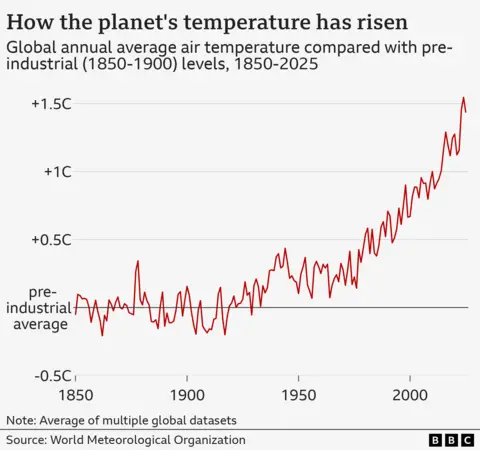
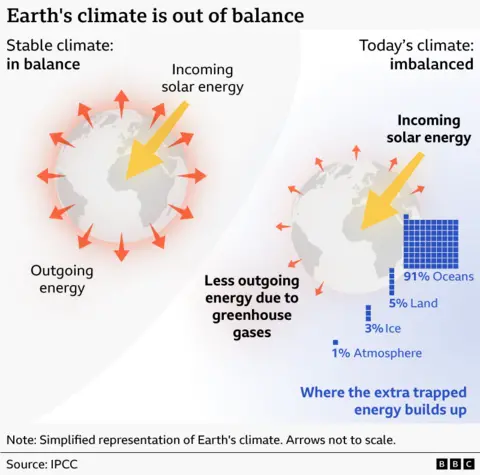
Reporting for 24x7 Breaking News, we are tracking a sobering update from the World Meteorological Organization (WMO). The Earth’s climate is now further out of balance than at any point in recorded history, as the planet absorbs significantly more heat energy than it can release. This persistent 'energy imbalance' is the primary engine driving global temperature spikes, ocean warming, and the rapid melting of polar ice caps.
- The Planet is Pushed Past Its Thermal Limits
- The Mechanics of a Warming World
- The Real-World Impact on Our Communities
- A Humanitarian Perspective
- Frequently Asked Questions (FAQ)
- What is the 'energy imbalance' mentioned by the WMO?
- How does El Niño affect global temperatures?
- Why is the 1.5C threshold so important?
- Join the Conversation
The findings, shared via the WMO, underscore a crisis that is no longer theoretical. With the last 11 years marking the warmest on record since 1850, the data suggests that we are currently navigating an era of accelerated warming. Even with the moderating influence of the La Niña weather pattern throughout 2025, global average temperatures remained 1.43C above pre-industrial baselines. As we brace for the potential onset of a warming El Niño phase later in 2026, the scientific community warns that we may soon shatter existing heat records.
The Mechanics of a Warming World
The core of this crisis lies in the chemical composition of our atmosphere. Greenhouse gas levels, particularly carbon dioxide (CO2), have reached concentrations not seen in at least two million years. As noted by the WMO, this influx of human-generated emissions is trapping heat that would otherwise escape into space. While the atmosphere and land surface feel the immediate effects, the oceans—which absorb over 90% of this excess energy—are experiencing unprecedented thermal stress.
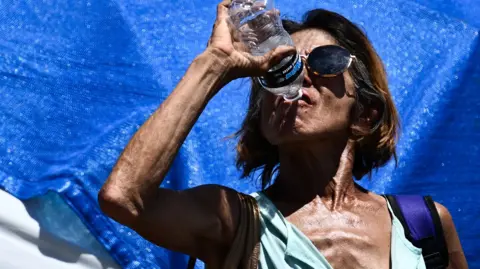
According to the WMO, the upper 2km of the global ocean reached a record temperature high last year. This heating is not just a localized problem; it is a fundamental disruption of the planet's equilibrium. This volatility contributes directly to the intensification of extreme weather events, from hyper-charged storms to the early-season heatwaves currently blistering the U.S. Southwest. As researchers at the World Weather Attribution group noted, the intensity of these recent heatwaves would be 'virtually impossible' without the influence of anthropogenic climate change.
The Real-World Impact on Our Communities
For the average family, these figures are not just abstract statistics in a journal; they represent a tangible decline in climate security. We are seeing the consequences in rising insurance premiums, the spread of tropical diseases like dengue reaching new latitudes, and the undeniable strain on agricultural yields due to erratic weather patterns. When the planet's 'key indicators' flash red, it means more frequent disruptions to the infrastructure that keeps our modern society running.
We have seen this instability manifest in various sectors of our economy. Much like how global markets reel as US and Iran standoff escalates, the climate crisis acts as a massive 'threat multiplier' that destabilizes supply chains and food security. The transition away from fossil fuels is no longer just an environmental goal; it is a matter of national and economic survival. Protecting our future requires an urgent, coordinated shift toward renewable energy that prioritizes the health of the public over the short-term profits of legacy energy conglomerates.
A Humanitarian Perspective
In our view, the most profound tragedy of this crisis is the disproportionate impact it has on the most vulnerable. While the wealthy can often shield themselves from extreme heat with air conditioning or climate-controlled environments, billions of people across the Global South—and even the marginalized in our own backyard—are forced to live on the front lines of this environmental collapse.
We believe that acknowledging the humanity of those displaced by rising seas or destroyed harvests is the first step toward meaningful policy reform. True security—the kind UN Secretary General António Guterres advocates for—is not found in military might or border walls. It is found in a commitment to human dignity and a sustainable, shared planet. We must stop treating climate change as an 'environmental' issue and start treating it as a human rights imperative.
Frequently Asked Questions (FAQ)
What is the 'energy imbalance' mentioned by the WMO?
The energy imbalance refers to the difference between the amount of solar energy the Earth absorbs and the amount of heat energy it radiates back into space. Because of greenhouse gases, more heat is trapped than is released, causing the planet to warm rapidly.
How does El Niño affect global temperatures?
El Niño is a natural climate pattern characterized by warmer-than-average sea surface temperatures in the Pacific. When this occurs, it typically releases significant heat into the atmosphere, often pushing global average temperatures to record-breaking levels.
Why is the 1.5C threshold so important?
The 1.5C threshold is a critical target set by international agreements to prevent the most catastrophic effects of climate change. Staying below this level is essential to preserving vital ecosystems and preventing irreversible environmental damage.
Join the Conversation
As the WMO report highlights, the data is clear: we are pushing our only home to its absolute limits, and the window for meaningful mitigation is closing rapidly. The transition to a sustainable energy future is the defining challenge of our generation. So here is the real question—if we already have the technology to stop this, are we failing because of a lack of political will, or because we are fundamentally addicted to a model of infinite growth on a finite planet?





This article was independently researched and written by Hussain for 24x7 Breaking News. We adhere to strict journalistic standards and editorial independence.
Comments
Post a Comment