Reporting for 24x7 Breaking News, Budapest – Hungary's upcoming parliamentary elections, scheduled for April 12th, have become inextricably entangled with the ongoing war in Ukraine, as Prime Minister Viktor Orbán's government has leveled extraordinary accusations against Kyiv. Budapest claims Ukraine is actively seeking to disrupt Prime Minister Orbán's re-election bid through sabotage and the potential for physical violence, a charge Ukraine vehemently denies, counter-accusing Budapest of a smear campaign to secure a fifth consecutive term for the ruling Fidesz party.
- Orbán's Government Alleges Ukrainian Interference
- Ukraine Denies Sabotage, Cites Technical Obstacles
- Disinformation Campaign Allegations Surface
- The Human Cost of Political Rhetoric
- Geopolitical Echoes and Economic Fallout
- Frequently Asked Questions (FAQ)
- What is the main point of contention regarding the Druzhba pipeline?
- What accusations has the Hungarian government made against Ukraine?
- How is the opposition party responding to these claims?
- Is there any evidence of foreign interference in the election?
Orbán's Government Alleges Ukrainian Interference
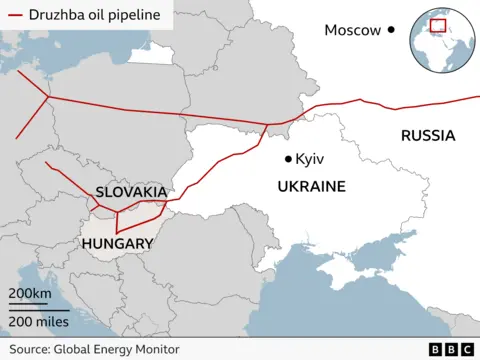
In a dramatic escalation, Hungarian ministers have alleged that Ukraine is preparing for actions ranging from direct physical threats against the Prime Minister and his family to the sabotage of critical energy infrastructure. These claims emerged as relations between the two nations have severely deteriorated, largely stemming from disruptions to the vital Druzhba (Friendship) oil pipeline. Hungary, along with Slovakian refineries it operates, relies heavily on this pipeline for its energy needs.
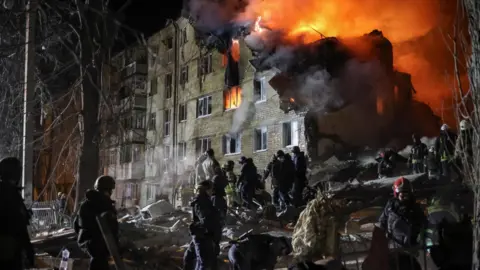
Deliveries through the Druzhba pipeline were halted on January 27th following a Russian drone strike that ignited a fire at the Brody oil hub in western Ukraine. Since then, Hungary has received no oil. Prime Minister Orbán presented satellite images he claims demonstrate the pipeline remains intact, asserting that Ukraine is deliberately delaying repairs to engineer a fuel shortage, thereby influencing Hungarian voters against him. This narrative is amplified across state-aligned media, creating an atmosphere of external threat.
Ukraine Denies Sabotage, Cites Technical Obstacles
Ukraine, however, has dismissed these allegations as baseless propaganda. Kyiv contends that significant technical damage from the Russian attack, including a damaged oil tank holding 75 million liters of crude oil at Brody, necessitates extensive repairs. According to András Rácz, a security analyst at the German Council on Foreign Relations, the oil was pumped into the pipeline for emergency storage, and its presence, alongside other damage, prevents an immediate restart of supplies. Ukraine estimates repairs could take up to six weeks.
The Ukrainian government's counter-narrative suggests that Hungary is manufacturing an anti-Ukraine hysteria to manipulate its electorate. This dispute has had tangible consequences; on February 21st, Orbán vetoed the delivery of an EU loan, linking its release to the restoration of oil flow through the Druzhba pipeline. Ukraine has consequently turned to a €1.5 billion loan from the International Monetary Fund to manage its finances during this standoff.
Disinformation Campaign Allegations Surface
Adding another layer to the complex political landscape, the Financial Times reported that the Social Design Agency, a firm reportedly linked to the Kremlin, is preparing a large-scale disinformation campaign in Hungary. The objective, according to the report, is to bolster Orbán's Fidesz party and undermine the opposition, particularly the Tisza Party and its charismatic leader, Peter Magyar. This alleged Russian interference highlights the broader geopolitical currents influencing Hungary's internal politics, echoing concerns seen in other regions regarding foreign influence in elections, much like the patterns discussed in analyses of foreign actors influencing sensitive markets, such as those concerning JPMorgan Chase's strategies.
With the election just weeks away, the political temperature is soaring. Latest polls indicate Fidesz trailing the Tisza Party by a significant margin, with Tisza leading 50% to 39%. Some analysts interpret the government's aggressive anti-Ukraine rhetoric as a sign of panic, a desperate attempt to rally support by invoking a sense of national crisis. Conversely, others believe Orbán is skillfully playing on his electorate's anxieties, believing that a convincingly portrayed threat can secure him a remarkable fifth consecutive victory.
The Human Cost of Political Rhetoric
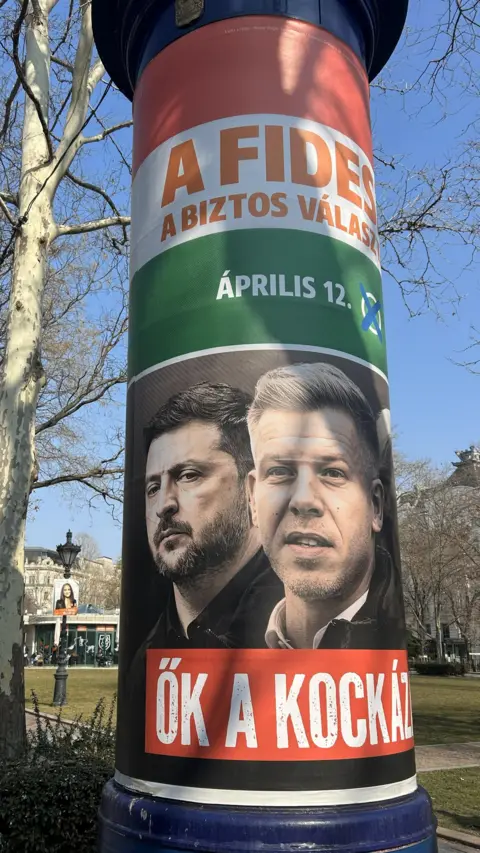
The political messaging has taken a deeply disturbing turn. Giant billboards and posters across Hungary depict Ukrainian President Volodymyr Zelensky in unflattering ways, sometimes shown begging EU leaders for money, or juxtaposed with Peter Magyar. The Tisza Party is accused of planning to drag Hungary into the Ukraine war by aligning with a supposed "pro-war lobby" in Brussels, a claim Magyar vehemently denies, positioning his party as the true advocate for peace.
Fidesz supporters, meanwhile, attend "anti-war" rallies led by Orbán and his ministers. Perhaps the most chilling piece of campaign material is an AI-generated video produced by Fidesz. It depicts a young girl asking her weeping mother when her father will return, transitioning to a scene of a blindfolded man about to face a firing squad, implying this grim fate awaits Hungarians if they vote for Tisza. Facebook’s decision to allow this advertisement, despite numerous complaints about its violation of rules on political content and violence, has drawn significant criticism.
In an unusual move during peacetime, the Hungarian army has been deployed to patrol key energy installations. The government frames this as a measure to "reassure" the public, while the opposition views it as an attempt to instill fear. In Debrecen, Defence Minister Kristof Szalay-Bobrovniczky warned the city could be a target for "hybrid operations" such as sabotage, further stoking public apprehension. Independent journalists have noted that many citizens are asking why, if the danger is so real, the government isn't providing information about air-raid shelters, underscoring a disconnect between official pronouncements and public concerns.
Geopolitical Echoes and Economic Fallout
The broader implications of this dispute extend beyond Hungary's borders. The disruption of oil supplies, even temporarily, underscores the precariousness of energy security for nations reliant on imports, a vulnerability that has been starkly exposed in recent years, impacting global markets from oil prices to the availability of essential goods like fertilizers. The reliance on Russian energy, in particular, remains a complex and sensitive issue for many European nations, a situation that has also been observed in global financial institutions grappling with their own energy-related loan portfolios, as seen with concerns around software loans at JPMorgan Chase.
As the election approaches, the narrative of external threats and internal stability is being heavily leveraged. The government's strategy appears to be centered on convincing voters that only a strong, decisive hand can navigate Hungary through these perilous times. The campaign’s focus on Ukraine, while ostensibly about foreign policy, is undeniably a central pillar of Fidesz's domestic electoral strategy.
Frequently Asked Questions (FAQ)
What is the main point of contention regarding the Druzhba pipeline?
Hungary claims Ukraine is deliberately delaying repairs to the Druzhba oil pipeline to harm Prime Minister Orbán's re-election chances by creating a fuel shortage. Ukraine insists that significant damage from a Russian drone strike requires extensive repairs and poses technical challenges to immediate restoration.
What accusations has the Hungarian government made against Ukraine?
Budapest alleges that Ukraine is preparing physical violence against Prime Minister Orbán and his family, as well as sabotage of key energy installations, to prevent his party's victory in the upcoming elections.
How is the opposition party responding to these claims?
The opposition Tisza Party, led by Peter Magyar, vehemently denies any plans to involve Hungary in the Ukraine war and positions itself as the true "party of peace." They accuse the Orbán government of whipping up anti-Ukraine sentiment to frighten voters.
Is there any evidence of foreign interference in the election?
The Financial Times has reported that a Kremlin-linked media consultancy firm is preparing a disinformation campaign in Hungary aimed at bolstering Orbán and discrediting the opposition, though specific details and direct links remain under investigation.
Hungary's election campaign has become a stark illustration of how international conflicts can be weaponized in domestic politics, with accusations flying and a palpable sense of tension gripping the nation. The Ukrainian war is not just a distant conflict; it's a powerful electoral tool being wielded in Budapest. But in a democracy, is it ever justifiable to use the specter of foreign war and sabotage to secure political power?




This article was independently researched and written by Hussain for 24x7 Breaking News. We adhere to strict journalistic standards and editorial independence.
Comments
Post a Comment