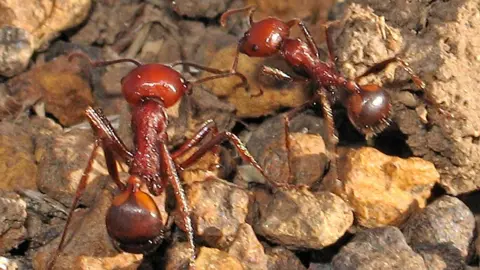
Reporting for 24x7 Breaking News, the equatorial rains are falling in Kenya, and as the landscape greens, a silent, determined exodus is beginning. Not of elephants or rhinos, but of something far smaller and, until recently, largely overlooked: the Giant African harvester ant. This natural mating phenomenon, where winged queens take to the skies, has inadvertently created a lucrative, albeit illegal, new trade, with queen ants fetching prices up to $220 each on the global black market. The quiet agricultural town of Gilgil in Kenya's Rift Valley has unexpectedly become the epicenter of this burgeoning illicit wildlife trade, tapping into a surprisingly robust international hobbyist collector market.
- The Allure of the Colony Builder
- From Broker to Bust: The Anatomy of the Trade
- A Shocking Discovery and Growing Concerns
- The Bottom Line: More Than Just Ants
- Frequently Asked Questions (FAQ)
- What is the Giant African harvester ant?
- Why are these ants valuable on the black market?
- How are these ants trafficked?
- What are the legal consequences of this trade?
The Allure of the Colony Builder
At first glance, the appeal of an ant might seem obscure. Yet, for a growing number of international enthusiasts, keeping ants in meticulously designed formicariums—transparent enclosures that allow for observation of colony construction—is a captivating pastime. The Giant African harvester ant (Messor cephalotes) is particularly prized. These large, red queens are not only visually striking but possess a remarkable ability: a single, fertilized queen can establish an entire colony that can thrive for decades. This longevity, coupled with their distinctive seed-gathering behaviors, makes them the 'dream species' for many collectors, as noted by UK-based retailer Ants R Us, which currently lists the queens as out of stock due to sourcing difficulties.
The ease with which these queens can be shipped further fuels the illicit trade. Their organic nature often allows them to pass undetected through customs, a stark contrast to the high-profile seizures of ivory and rhino horn that typically dominate headlines about Kenyan wildlife crime. "A single fertilized queen is able to create a whole colony and can live for decades—and can be easily posted as scanners do not tend to detect organic material," a report from the BBC highlighted.
From Broker to Bust: The Anatomy of the Trade
The operation is surprisingly organized, relying on local knowledge of ant behavior and supply chains that connect collectors with the source. A former broker, who requested anonymity, described his initial involvement as purely transactional. "A friend told me a foreigner was paying good money for queen ants—the big red ones which are easily seen around here," he told the BBC. The collection process typically occurs in the early mornings, before the day's heat, near ant mounds in open fields. Collectors, often staying in local guest houses or vehicles in Gilgil, would not venture into the fields themselves.
Instead, intermediaries would collect the ants, packing them into small tubes or syringes provided by the buyers. "We would bring the ants to them packed in small tubes or syringes they supplied us with," the former broker explained. His realization of the trade's illegality came only after arrests were reported in the news, prompting him to cease his involvement.
A Shocking Discovery and Growing Concerns
The scale of this clandestine operation became starkly apparent last year when Kenyan authorities intercepted a significant haul. 5,000 Giant African harvester ant queens, primarily gathered near Gilgil, were discovered alive at a guest house in the nearby tourist town of Naivasha. The individuals arrested—from Belgium, Vietnam, and Kenya—had meticulously packed the queens in test tubes with moist cotton wool, a method designed to sustain them for up to two months, according to the Kenya Wildlife Service (KWS). Their intention was to transport the ants to Europe and Asia for sale.
This incident caught many by surprise, including scientists and wildlife officials. Dino Martins, a biologist based in Kenya, expressed his astonishment. "Even I, as an entomologist, have been surprised at the extent of the apparent trade," Martins told the BBC. He acknowledged the inherent fascination with these particular ants, explaining that their colonies are initiated by a 'foundress queen' that can grow up to 25mm (0.98 inches). These queens are known for their longevity, with nests near Nairobi documented to be at least 40 years old, suggesting the queens themselves can live for many decades. The survival of a colony is entirely dependent on the queen; her death signals the collapse of the entire social structure.
The Bottom Line: More Than Just Ants
While the price of a single ant queen might seem trivial in the grand scheme of global wildlife trafficking, this phenomenon highlights a growing trend in the exotic pet trade. The demand for unique and easily transportable species, even invertebrates, is creating new avenues for exploitation. For the local communities involved, the lure of quick cash can be significant, but the legal repercussions are severe. Those arrested in the Naivasha bust faced charges of biopiracy, with the foreign nationals opting to pay a substantial fine of $7,700 to avoid a 12-month jail sentence.
This emerging trade also raises questions about conservation and biopiracy, particularly when it involves species native to a region. While Kenya is more accustomed to combating the illegal trade in high-value items like elephant tusks and rhino horns, the ant trade suggests that the ingenuity of traffickers, and the demand from niche markets, knows no bounds. This situation echoes broader concerns about the exploitation of natural resources for profit, a pattern seen across various sectors, from the illegal wildlife trade to the burgeoning global demand for exotic goods. The intricate web of international desire and local exploitation is a complex issue, demanding more attention than it has historically received. It’s a stark reminder that even the smallest creatures can become pawns in a much larger, often illicit, global game. The ease of shipping these creatures also bears similarities to how various goods can be moved discreetly across borders, impacting economies and supply chains in unexpected ways, much like the disruptions seen in global shipping due to geopolitical tensions.
Frequently Asked Questions (FAQ)
What is the Giant African harvester ant?
The Giant African harvester ant (Messor cephalotes) is a species native to East Africa known for its distinctive seed-gathering behavior and its large, red queen ants. They are popular among ant collectors due to their impressive colony-building capabilities and longevity.
Why are these ants valuable on the black market?
A single fertilized queen ant can live for decades and establish an entire colony. This makes them highly desirable for ant hobbyists who wish to observe the development of a complete ant society, with individual queens fetching up to $220.
How are these ants trafficked?
The ants are collected locally during their mating season when winged queens emerge. They are then typically packed into small tubes or syringes, often with moist cotton wool to ensure their survival during transit, and shipped internationally, sometimes bypassing detection due to their organic nature.
What are the legal consequences of this trade?
The trade is illegal and considered biopiracy. Individuals involved can face charges, fines, and jail time. For instance, those arrested in Kenya faced significant penalties, with foreign nationals opting to pay substantial fines to avoid imprisonment.
The $220 price tag for a single queen ant signals a growing and concerning new frontier in wildlife trafficking, one that preys on natural phenomena and hobbyist demand. Where do we draw the line between a niche hobby and a destructive black market trade?
This article was independently researched and written by Hussain for 24x7 Breaking News. We adhere to strict journalistic standards and editorial independence.
Comments
Post a Comment