A Culinary Legacy Defying the Eras
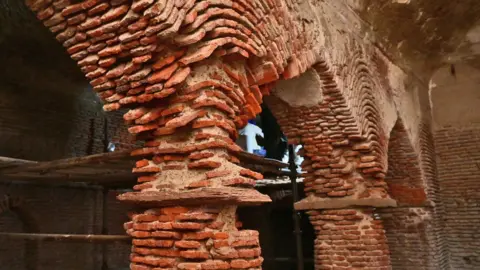
In the heart of Lucknow, a city defined by its storied past, the rhythmic sound of a trowel hitting ancient brick echoes a tradition that has refused to die for nearly two centuries. As reported by BBC Hindi, the royal kitchen of the former Awadh kingdom is undergoing a meticulous restoration, ensuring that a legacy of community service continues to feed the masses. Built in 1837 by the ruler Muhammad Ali Shah, this site remains a rare example of a royal institution that has successfully transitioned into a modern-day lifeline for thousands of citizens.
- A Culinary Legacy Defying the Eras
- The Engineering of Eternal Charity
- Preserving History Through Authentic Craft
- The Real-World Impact: Food Security and Human Dignity
- A Humanitarian Perspective: Why This Matters
- Frequently Asked Questions (FAQ)
- Why is the restoration using traditional materials instead of modern concrete?
- How is the kitchen funded today?
- Can the public still access the food provided here?
- Join the Conversation
While many historical monuments in India exist merely as silent markers of a bygone era, this kitchen is a living, breathing entity. It continues to operate during the holy months of Ramadan and Muharram, serving meals to the poor, widows, and those who struggle to put food on the table. This is not just a building; it is a profound testament to the power of institutional memory and the enduring human obligation to care for one's neighbor.
The Engineering of Eternal Charity
The survival of this kitchen is no accident; it is the result of forward-thinking financial stewardship from the 19th century. In 1839, Muhammad Ali Shah secured the institution’s future by gifting 3.6 million rupees—a staggering fortune at the time—to the East India Company. The agreement stipulated that the interest from this fund would be used exclusively to maintain the monuments and, crucially, to keep the kitchen fires lit.
Today, the Hussainabad Trust, under the oversight of the state government, manages these funds. This model of endowed community service stands in stark contrast to modern, often fleeting charitable initiatives. It serves as a reminder that when infrastructure is built with the intent of social welfare, it can survive political upheavals, changes in governance, and the relentless march of time.
Preserving History Through Authentic Craft
The current restoration project, spearheaded by the Archaeological Survey of India (ASI), is notable for its refusal to take shortcuts. Superintending archaeologist Aftab Hussain notes that the team is eschewing modern cement in favor of traditional indigenous materials. By soaking slaked lime for a month and blending it with wood apple pulp, black gram, natural gum, and red brick dust, the team is replicating the exact mortar used by Mughal-era master builders.
This dedication to authenticity ensures that the structural integrity of the lakhauri bricks—the thin, burnt clay bricks synonymous with Awadhi architecture—is maintained. It is a slow, painstaking process, but it is one that honors the original vision of the nawabs. In a world increasingly dominated by disposable construction, there is a quiet, radical dignity in this commitment to craftsmanship.
The Real-World Impact: Food Security and Human Dignity
For the average resident of Lucknow, the kitchen is far more than an architectural curiosity. It is a critical node in the local food security network. Every Ramadan, approximately 700 coupons are issued daily, and hot, nutritious meals are dispatched to 16 surrounding mosques. For many, this tabarrukh (royal offering) provides a sense of continuity and support that formal government welfare programs often struggle to replicate.
The impact of this kitchen ripples outward, easing the financial burden on low-income families and ensuring that during times of regional or economic volatility—such as those seen in recent global supply chain disruptions mentioned in our coverage of Houthi Red Sea supply chain threats—the most vulnerable are not left behind. It is a model of decentralized aid that proves that community-rooted systems are often more resilient than top-down policies.
A Humanitarian Perspective: Why This Matters
In our view, the restoration of this kitchen is a profound act of defiance against the erasure of history and the commodification of basic needs. It is easy to look at such sites as mere tourist attractions, but to do so is to miss the beating heart of the structure. We believe that societies are judged not by the grandeur of their palaces, but by the consistency of their compassion toward the marginalized.
As we observe the world grappling with a mounting civilian toll in places like South Sudan, the existence of a 200-year-old kitchen that prioritizes feeding the hungry feels like a beacon. It reminds us that we possess the capacity to build structures—both physical and institutional—that outlast our own lifespans to provide for those in need. When we invest in the preservation of these traditions, we are investing in our collective humanity.
Frequently Asked Questions (FAQ)
Why is the restoration using traditional materials instead of modern concrete?
Using cement on historic structures like the Chota Imambara can actually cause more damage due to moisture retention and structural rigidity. Traditional lime-based mortar allows the building to 'breathe,' ensuring the long-term preservation of the delicate lakhauri brickwork.
How is the kitchen funded today?
The kitchen is managed by the Hussainabad Trust, which utilizes the interest from the original endowment fund established by Muhammad Ali Shah in 1839. This perpetual fund ensures that the kitchen remains operational without relying on volatile annual budgets.
Can the public still access the food provided here?
Yes, the kitchen maintains its mission of community service. During Ramadan and Muharram, it provides meals for the poor and those unable to provide for themselves, distributing coupons and delivering food to local mosques.
Join the Conversation
The restoration of this historic site is not just about saving bricks and mortar; it is about keeping a promise made centuries ago to the people of Lucknow. While the world faces unprecedented challenges, from energy instability to geopolitical unrest, this kitchen remains a stubborn, beautiful reminder that charity can be a permanent fixture of our society. If we had more long-term endowments designed for community welfare today, would we still see such extreme levels of food insecurity in our modern cities?
This article was independently researched and written by Hussain for 24x7 Breaking News. We adhere to strict journalistic standards and editorial independence.
Comments
Post a Comment