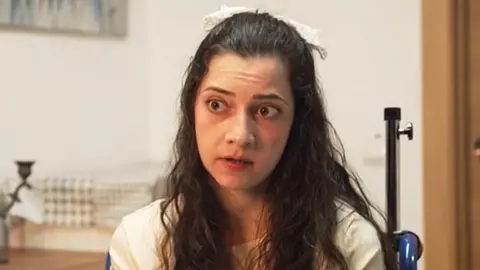
Noelia Castillo, a 25-year-old Spanish woman whose wish to end her life through euthanasia was finally realized after an arduous legal battle, has become a tragic symbol of systemic failures in care, critics contend. Castillo died Thursday evening at a Barcelona hospital, a culmination of an 18-month fight that pitted her against her father and a conservative legal group. Her case, which gained significant national attention, highlights profound questions about the state's role in providing adequate support and the agonizing delays individuals can face when seeking end-of-life autonomy.
- A Protracted Legal and Emotional Ordeal
- Criticism Mounts Over Institutional Shortcomings
- Advocates Decry Legal Obstacles as Sabotage
- The Human Reality: A System Under Scrutiny
- Our Take: Dignity in the Face of Unbearable Suffering
- Frequently Asked Questions (FAQ)
- What is Spain's euthanasia law?
- Why was Noelia Castillo's case controversial?
- What were the main criticisms leveled against the state?
- The Unfolding Debate on Autonomy and Care
A Protracted Legal and Emotional Ordeal
Castillo had been granted the right to assisted dying by the Catalan regional government in early 2024. However, the process was abruptly halted due to legal objections lodged by her father, with support from the campaign group Christian Lawyers (Abogados Cristianos). This intervention added nearly two years of further suffering to Castillo's existence, a period marked by intense legal wrangling that ultimately reached the European Court of Human Rights (ECHR). The ECHR ruled in Castillo's favor this week, paving the way for her death to be confirmed.
The severity of Castillo's injuries stemmed from a suicide attempt in 2022, which left her paraplegic. She had spoken openly about the profound impact of her difficult upbringing, including time spent in care homes, her father's struggles with alcohol, and devastating experiences of sexual assault by an ex-boyfriend and multiple men at a nightclub. In a poignant television interview just days before her death, Castillo expressed a deep desire for peace and an end to her suffering, stating, "I want to go in peace now and stop suffering." She revealed that no family members had supported her decision, and her father, in particular, had not respected her wishes.
Criticism Mounts Over Institutional Shortcomings
The case has drawn sharp criticism from various quarters, focusing on what many perceive as a failure of the state and healthcare system to provide sufficient long-term care and support. José María Fernández of Christian Lawyers, while expressing regret for Castillo's difficult life, argued that the healthcare system's only recourse for her was death. "For a girl who obviously has had a very tough life, which we all regret, the only thing that could be offered to her by the healthcare system is death," Fernández stated, underscoring his group's contention that the system should have offered better alternatives.
This sentiment was echoed by Alberto Núñez Feijóo, leader of the opposition conservative People's Party (PP), which had previously voted against Spain's 2021 euthanasia law. Feijóo wrote on social media, "The institutions that should have protected Noelia failed her." He emphasized his belief that the state possessed the means to offer her more comprehensive care, stating, "I refuse to believe that the state did not have the tools to give her care." The Catholic Church, closely aligned with the PP, issued a statement describing Castillo's story as a reflection of "an accumulation of personal suffering and institutional failures."
Advocates Decry Legal Obstacles as Sabotage
Conversely, other observers and political figures have strongly condemned the legal efforts that obstructed Castillo's wishes for nearly two years. El País, a prominent left-leaning newspaper, editorialized that the "desire to put an end to her suffering by using the right to euthanasia was… sabotaged by a legal crusade that added nearly two years of pain to her existence." Alberto Ibáñez, a member of Congress for the left-wing Sumar platform, highlighted that nineteen doctors had supported Castillo's decision, emphasizing the need for respect towards it, while acknowledging the issue's profound complexity.
Spain's 2021 euthanasia law permits assisted dying for adults over 18 suffering from incurable diseases or serious, chronic, and disabling conditions, provided the decision is made freely and documented twice in writing, with medical certification and evaluation by a commission. While hundreds of requests are granted annually, Castillo's case was the first to proceed to a court for judicial decision, illustrating the legal complexities that can arise.
The Human Reality: A System Under Scrutiny
For ordinary Spaniards, Noelia Castillo's story is a stark reminder of the emotional and psychological toll that profound suffering can take, and the often-arduous journey individuals must undertake to find relief. It raises critical questions about the adequacy of mental health services, social support networks, and the legal framework surrounding end-of-life choices. The prolonged legal battle not only added to Castillo's agony but also highlighted how deeply personal decisions can become entangled in broader societal and political debates. Families facing similar circumstances may now question whether their own wishes will be respected or become subject to lengthy, emotionally draining interventions.
Our Take: Dignity in the Face of Unbearable Suffering
In our view, Noelia Castillo's tragic end serves as a profound indictment of a system that, despite having laws in place to allow for assisted dying, demonstrably failed to provide timely and compassionate care. The intervention of groups like Christian Lawyers, while perhaps stemming from their own deeply held beliefs, appears to have exacerbated Castillo's pain and prolonged her suffering, turning a matter of personal autonomy into a protracted legal battleground. We believe that when individuals are facing unbearable and incurable suffering, the state's primary responsibility should be to ensure their dignity is upheld and their wishes, when legally established and medically supported, are respected without undue delay. The fact that it took a European court ruling to overcome domestic legal objections speaks volumes about the obstacles that vulnerable individuals can face. This case compels us to examine how we, as a society, support those in the deepest of crises and ensure that the right to die with dignity is not a right delayed.
Frequently Asked Questions (FAQ)
What is Spain's euthanasia law?
Spain's 2021 euthanasia law allows adults over 18 to request assisted dying if they suffer from an incurable disease or a serious, chronic, and disabling condition, with their decision made free of external pressure and formally documented.
Why was Noelia Castillo's case controversial?
Castillo's case became controversial due to her father's legal objections and the intervention of Christian Lawyers, which significantly delayed her access to euthanasia after it had been granted by regional authorities.
What were the main criticisms leveled against the state?
Critics argued that the state and healthcare system failed to provide adequate care and support for Castillo throughout her life, leading to her desperate situation and the prolonged legal fight over her end-of-life wishes.
The Unfolding Debate on Autonomy and Care
Noelia Castillo's story, unfortunately, forces a critical conversation about the balance between individual autonomy in end-of-life decisions and the societal obligation to provide comprehensive care and support. The legal obstacles she faced, even after securing official approval for euthanasia, highlight a deeply complex intersection of law, ethics, and deeply personal suffering. This case underscores the urgent need to ensure that legal rights, particularly those concerning a person's final moments, are not subject to protracted and emotionally taxing challenges that can inflict further pain.
So here's the real question — in cases of profound suffering and clear legal intent, where exactly do we draw the line between protecting the vulnerable and respecting their ultimate right to self-determination?
This article was independently researched and written by Hussain for 24x7 Breaking News. We adhere to strict journalistic standards and editorial independence.
Comments
Post a Comment