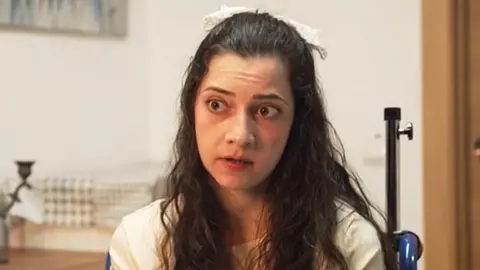
Barcelona, Spain — In a quiet, clinical room in Barcelona on Thursday evening, the long, agonizing journey of 25-year-old Noelia Castillo finally reached its somber conclusion. After an eighteen-month legal odyssey that pitted a daughter’s terminal despair against a father’s desperate hope, Noelia exercised her final right under Spain’s 2021 euthanasia law. Reporting for 24x7 Breaking News, we have followed this case as it wound through the highest courts in Europe, ultimately redefining the boundaries of bodily autonomy and parental authority in the 21st century. The death of the young paraplegic woman marks the first time a request for assisted dying in Spain was forced into the judicial system for a final verdict, setting a precedent that will likely ripple across the continent for decades.
- The Legal Tug-of-War: From Barcelona to Strasbourg
- A Life Defined by Trauma and the Search for Peace
- The Sovereignty of Suffering: Our Editorial Perspective
- Frequently Asked Questions (FAQ)
- What are the legal requirements for euthanasia in Spain?
- Why did Noelia Castillo’s father try to block the procedure?
- How did the European Court of Human Rights (ECHR) influence the case?
- What is the role of 'Abogados Cristianos' in this case?
The tragedy began in 2022, when Noelia, struggling with the weight of past traumas, attempted to take her own life. She survived, but the attempt left her paraplegic, confined to a reality she described as a living nightmare of physical and psychological pain. By the summer of 2024, the Catalan government had reviewed her case and granted her the right to die with dignity. However, the process was halted at the eleventh hour. Her father, supported by the conservative legal group Abogados Cristianos (Christian Lawyers), filed a series of injunctions, arguing that Noelia lacked the mental capacity to make such a permanent decision. They claimed her personality disorder clouded her judgment, asserting a “state obligation” to protect the most vulnerable from themselves.
The Legal Tug-of-War: From Barcelona to Strasbourg
The legal battle that followed was nothing short of a national spectacle in Spain. While her father argued from a place of perceived protection, Noelia viewed his intervention as a final act of betrayal. Our editorial team examined the court filings which revealed a deeply fractured family dynamic. The father’s legal team insisted that mental health struggles should disqualify a person from assisted dying, even under the strict guidelines of the 2021 legislation. This argument resonated with conservative sectors of Spanish society but faced stiff resistance from human rights advocates who argued that suffering is subjective and autonomy is absolute.
As we initially reported via sources like the BBC and local outlets like Y Ahora Sonsoles, the case eventually reached the European Court of Human Rights (ECHR). The Strasbourg-based court was tasked with a harrowing question: Can a parent legally override the documented, repeated wishes of an adult child who meets the medical criteria for euthanasia? The ECHR eventually ruled in Noelia’s favor, clearing the path for the procedure that took place this week. For Noelia, this wasn't just about ending her life; it was about reclaiming the agency that had been stripped from her by trauma and subsequent litigation.
The role of Abogados Cristianos cannot be understated in this narrative. The group has been a vocal opponent of Spain’s progressive shifts, and they used Noelia’s case to highlight what they call “serious flaws” in the system. They argued that the state failed Noelia by not providing adequate psychiatric support that might have changed her mind. Yet, for those who heard Noelia speak in her final days, her mind seemed anything but clouded. She spoke with a chilling, heartbreaking clarity about a life that had become a prison of memory and physical limitation.
A Life Defined by Trauma and the Search for Peace
To understand why a 25-year-old would fight so hard to die, one must look at the scars she carried long before her 2022 accident. Noelia grew up in the shadow of neglect, spending much of her childhood in state care homes. In a series of raw interviews before her death, she recounted a history of sexual assault that shattered her sense of safety. She detailed an assault by an ex-boyfriend of four years and a subsequent horrific incident involving multiple men at a nightclub. These weren't just footnotes in a legal brief; they were the foundation of a life she felt was no longer hers to live.
“I have always felt alone,” Noelia told Spanish television just days before her passing. She expressed a sentiment that many find difficult to process: that the “happiness of a father or mother shouldn’t precede the happiness of a daughter.” Her mother, Yolanda, stood in stark contrast to the father, choosing to support Noelia’s autonomy despite her own personal grief. Much like the families grieving in Tehran where a mother’s voice echoes through the wreckage, as seen in 'My Daughter is Under the Rubble', the pain of a parent losing a child is a universal agony. However, in Noelia’s case, the tragedy was compounded by the fact that the person she needed protection from in court was her own father.
The Spanish euthanasia law requires a patient to have an “incurable and chronic” condition that causes “unbearable suffering.” While Noelia’s paraplegia was physical, the “unbearable” nature of her suffering was a complex tapestry of physical immobility and psychological torment. Critics of the law worry that it opens a “slippery slope” for those with mental health issues, while proponents argue that denying a person relief from such profound misery is a form of state-sanctioned torture. In 2024 alone, 426 requests for assisted dying were granted in Spain, but none were as contentious as Noelia’s.
The Sovereignty of Suffering: Our Editorial Perspective
In our view at 24x7 Breaking News, the case of Noelia Castillo is a devastating reminder that the law is often a blunt instrument for the delicate complexities of the human soul. We believe that while the father’s impulse to “save” his daughter is human, his attempt to use the state to chain her to a life of agony was an overreach of patriarchal control. Why do we, as a society, feel we have the right to dictate the duration of another person’s pain? Noelia was not a child; she was a woman who had survived more horror by age 25 than most experience in a lifetime.
What concerns us most is the intervention of ideological groups like Abogados Cristianos. By turning a private family tragedy into a political battlefield, they prolonged Noelia’s suffering by 18 months. Those months were not spent in healing; they were spent in courtrooms and television studios, defending her right to stop hurting. We must ask ourselves if we are truly protecting the vulnerable when we force them to remain in a state of terminal despair against their explicit will. True compassion involves listening to the sufferer, even when what they are saying is too painful for us to hear.
We believe Spain’s 2021 law, while controversial, represents a necessary evolution in human rights. It acknowledges that dignity is not just about how we live, but how we choose to leave. Noelia’s case proves that the system works—not because it makes death easy, but because it ensures that the individual’s voice remains the loudest in the room, even when powerful institutions try to silence it. Her final wish was to be alone with her doctor, a final act of privacy after a very public struggle. We hope she has finally found the peace that eluded her in life.
Frequently Asked Questions (FAQ)
What are the legal requirements for euthanasia in Spain?
- The patient must be an adult of sound mind, suffering from a serious and incurable disease or a chronic and disabling condition that causes unbearable physical or psychological suffering.
- The request must be made in writing twice, fifteen days apart, and must be approved by two independent doctors and an evaluation committee.
Why did Noelia Castillo’s father try to block the procedure?
- He argued that his daughter’s personality disorder meant she was not in a fit state of mind to make a rational decision about ending her life.
- He claimed the state had a duty to protect her as a vulnerable person with mental health issues, rather than facilitating her death.
How did the European Court of Human Rights (ECHR) influence the case?
- After a long battle in Spanish courts, the ECHR ultimately ruled in Noelia's favor, upholding her right to autonomy and clearing the legal hurdles set by her father and Abogados Cristianos.
What is the role of 'Abogados Cristianos' in this case?
- This conservative legal group provided the legal backing for the father’s appeals, using the case to challenge the ethics and implementation of Spain’s assisted dying laws.
Noelia Castillo’s death marks the end of a historic legal struggle that challenged the very definition of right to die with dignity. It leaves a nation grappling with the balance between the sanctity of life and the sovereignty of the individual over their own suffering. So here's the real question — should a parent ever have the legal right to force a child to endure a life of documented, unbearable suffering against their will?
This article was independently researched and written by Hussain for 24x7 Breaking News. We adhere to strict journalistic standards and editorial independence.
Comments
Post a Comment