Reporting for 24x7 Breaking News. In an unprecedented move that has sent shockwaves through religious and diplomatic circles, Israeli police on Sunday prevented the head of the Catholic Church in Jerusalem, Cardinal Pierbattista Pizzaballa, from entering the Church of the Holy Sepulchre for Palm Sunday mass. The incident, described by the patriarchate as an "extreme departure from basic principles of reasonableness, freedom of worship," marks the first time in centuries a Latin Patriarch has been denied access to the sacred site on this pivotal day of Holy Week.
- Security Concerns Clash with Religious Freedom on Holy Week
- Global Leaders Condemn the Blockade
- The Human Reality: Faith Under Strain
- Our Editorial Perspective: A Sacred Trust Broken
- Frequently Asked Questions (FAQ)
- What is Palm Sunday?
- Why is the Church of the Holy Sepulchre significant?
- What is the "status quo" in Jerusalem's Holy Places?
- What were the stated reasons for the blockade?
Security Concerns Clash with Religious Freedom on Holy Week
Cardinal Pizzaballa, along with Reverend Francesco Ielpo, were stopped by Israeli police at the entrance to the ancient church, believed to be the site of Jesus Christ's crucifixion, burial, and resurrection. The mass was intended to mark the beginning of Holy Week, a solemn period for Christians worldwide. The patriarchate stated that both clergymen were "compelled" to turn back, a decision that has been met with widespread condemnation from international leaders.
Israeli Prime Minister Benjamin Netanyahu asserted that the decision was taken due to "special" safety concerns, citing recent Iranian attacks and stating that worshippers of "all faiths" had been asked to avoid sites in Jerusalem's Old City. He claimed that missile fragments had landed meters from the Church of the Holy Sepulchre in one recent strike, emphasizing that the decision involved "no malicious intent whatsoever." Netanyahu added that a plan was being developed to permit church leaders access in the coming days and that holy sites of all religions had been "repeatedly targeted."
However, this explanation has done little to quell the outrage. The patriarchate’s office released a stern statement highlighting the grave precedent set by the incident. "This hasty and fundamentally flawed decision, tainted by improper considerations, represents an extreme departure from basic principles of reasonableness, freedom of worship, and respect for the status quo," the statement read, emphasizing that they had adhered to all imposed restrictions since the war began.
Global Leaders Condemn the Blockade
The US Ambassador to Israel, Mike Huckabee, characterized the action as an "unfortunate overreach" that was "difficult to understand or justify." He noted that the patriarch and reverend had attempted a private entry, not a procession, and that current rules concerned gatherings over 50 people. While welcoming subsequent Israeli government efforts to rectify the situation, Huckabee’s initial assessment underscores the diplomatic tension the incident has created.
Italian Prime Minister Giorgia Meloni called the move "an offense not only against believers but against every community that recognises religious freedom." Her Foreign Minister, Antonio Tajani, summoned Israel's ambassador to Italy for an explanation. French President Emmanuel Macron echoed these sentiments, condemning the act and linking it to a "worrying increase in violations of the status of the Holy Places in Jerusalem." Macron stressed that "Freedom to hold religious rites in Jerusalem must be ensured for all religions." Pope Leo XIV, speaking in Rome, offered solace to "the Christians of the Middle East, who suffer the consequences of a terrible conflict and in many cases cannot fully live the rites of these holy days."
Israeli President Isaac Herzog contacted Cardinal Pizzaballa directly to express his "great sorrow" over the "unfortunate incident." He reiterated Israel's "unwavering commitment to freedom of religion for all faiths and to upholding the status quo at the holy sites of Jerusalem." Despite these assurances, the palpable frustration from the patriarchate and international community suggests a deep rift has been exposed.
The Human Reality: Faith Under Strain
For billions around the world, Jerusalem's holy sites are not just historical landmarks; they are the very heart of their faith. The inability of religious leaders to perform sacred rites, especially on such a significant day as Palm Sunday, sends a deeply unsettling message. It evokes feelings of vulnerability and marginalization, particularly for Christian communities in the Middle East who already navigate complex and often dangerous geopolitical landscapes. This incident, regardless of intent, chips away at the trust and mutual understanding essential for peace.
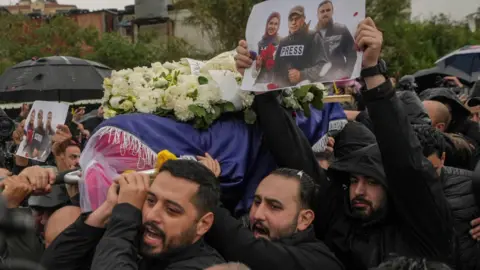
The cancellation of the traditional Palm Sunday procession due to restrictions on public gatherings further compounds the sense of disruption. While security is a legitimate concern, especially in light of escalating regional tensions, the methods employed have severely impacted the spiritual lives of countless individuals. It raises profound questions about how security measures are balanced against fundamental human rights, including the freedom of worship. This mirrors broader concerns about how conflict and geopolitical maneuvering can disproportionately affect vulnerable populations, a theme we've seen explored in contexts like the tragic loss of journalists in conflict zones, as detailed in our reporting on Beirut Burials: Grief and Anger as Journalists Fall Victim to Middle East Conflict.
Our Editorial Perspective: A Sacred Trust Broken
In our assessment, the decision to block Cardinal Pizzaballa from the Church of the Holy Sepulchre on Palm Sunday is profoundly disappointing and, frankly, unacceptable. While we acknowledge the ongoing security challenges and the need for robust safety measures, particularly in light of the escalating conflict and threats, this action represents a significant breach of faith and a disregard for the deeply held spiritual needs of Christians globally. The argument of "safety reasons" feels particularly hollow when it targets the spiritual leaders attempting to offer solace and continuity during a time of immense global anxiety. It’s crucial for authorities to remember that these are not merely tourist sites; they are sacred spaces where billions find meaning and connection. When access to these sites is restricted in such a manner, it doesn't just inconvenience; it inflicts spiritual pain and fuels mistrust. This incident, occurring during the solemn observance of Holy Week, risks exacerbating already fragile interfaith relations and undermining the very peace that the region so desperately needs. We believe that true security lies not in exclusion, but in ensuring that all communities can practice their faith freely and respectfully, even amidst turmoil. This event serves as a stark reminder of how geopolitical tensions can inadvertently, or perhaps intentionally, erode fundamental freedoms.
Frequently Asked Questions (FAQ)
What is Palm Sunday?
Palm Sunday commemorates Jesus Christ's triumphant entry into Jerusalem, a pivotal event marking the beginning of Holy Week, which culminates in Easter.
Why is the Church of the Holy Sepulchre significant?
It is considered one of Christianity's holiest sites, believed to be built over the location of Jesus Christ's crucifixion and burial.
What is the "status quo" in Jerusalem's Holy Places?
The status quo refers to the delicate, long-standing arrangements governing the different Christian denominations' rights and responsibilities within the holy sites.
What were the stated reasons for the blockade?
Israeli Prime Minister Benjamin Netanyahu cited security concerns following recent Iranian attacks, stating a general request for worshippers to avoid Old City sites for safety.
This incident on Palm Sunday has undeniably cast a shadow over the start of Holy Week, raising critical questions about religious freedom and security in Jerusalem. The blockade of the Latin Patriarch serves as a stark reminder of the complex interplay between faith, politics, and safety in a volatile region. So here's the real question — in a world grappling with escalating conflicts and heightened security alerts, where exactly do we draw the line between protecting sacred sites and upholding the fundamental right to worship freely?
This article was independently researched and written by Hussain for 24x7 Breaking News. We adhere to strict journalistic standards and editorial independence.
Comments
Post a Comment