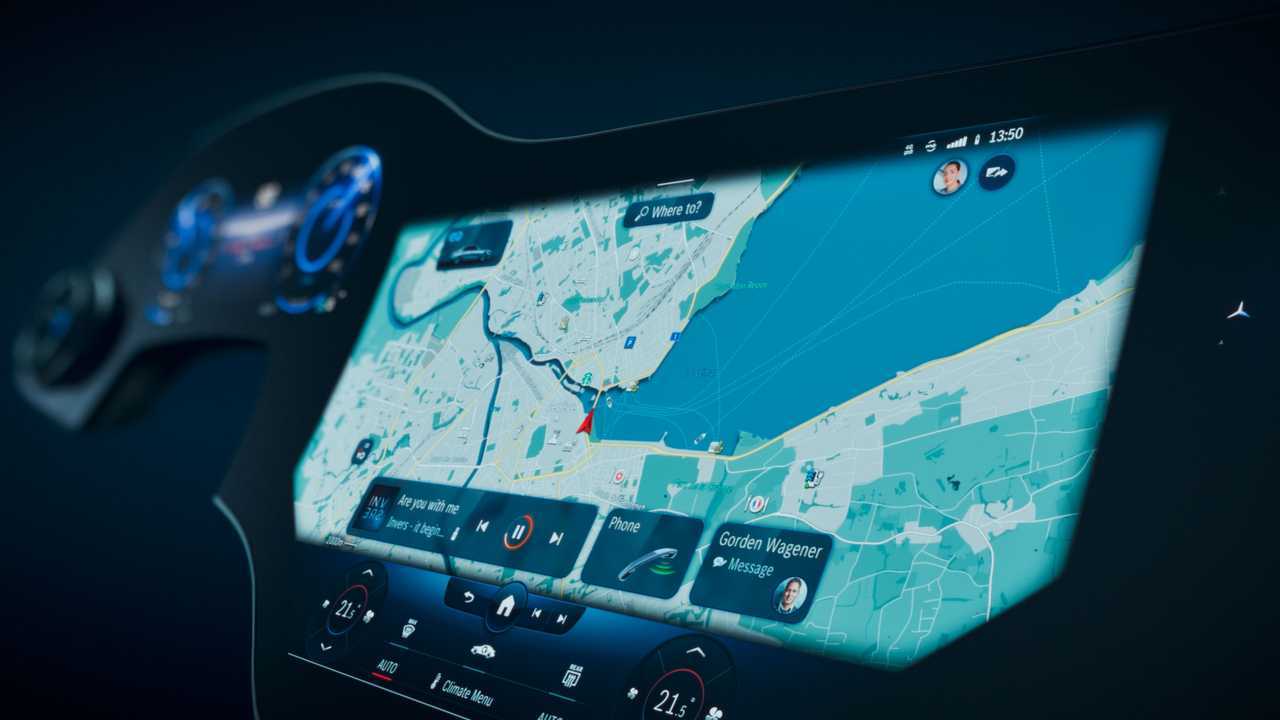
The End of the All-Screen Era?
Reporting for 24x7 Breaking News, we have confirmed that the era of the 'buttonless' car interior may have reached its peak. Mercedes-Benz, a brand long synonymous with cutting-edge automotive luxury, has publicly admitted that its aggressive push toward minimalist digital interfaces went perhaps a step too far in stripping away the tactile feedback drivers crave.
- The End of the All-Screen Era?
- The Psychology of the Tactile Interface
- Design Evolution or Engineering Necessity?
- Our Take: A Return to Common Sense
- Frequently Asked Questions (FAQ)
- Are digital screens being removed from new cars?
- Why did automakers remove buttons in the first place?
- Will this change increase the price of luxury vehicles?
For years, the industry trend has favored massive, floor-to-ceiling glass displays that replace every dial and toggle. While these screens offer a sleek, futuristic aesthetic, they often force drivers to navigate complex sub-menus just to adjust the cabin temperature or fan speed. This shift hasn't just been an aesthetic choice; it has been a significant point of friction between automakers and their core customer base.
We first came across this pivot regarding the company's design philosophy via an industry report, and it signals a broader realization in the automotive sector: convenience should not be sacrificed for the sake of a clean dashboard. While screens are certainly not disappearing from our vehicles, the return of physical controls represents a necessary correction in automotive ergonomics.
The Psychology of the Tactile Interface
Why does a physical button matter so much in an age of artificial intelligence and advanced connectivity? The answer lies in muscle memory. When you are traveling at highway speeds, you shouldn't have to divert your eyes from the road to tap a glass screen that provides no haptic feedback.
Our editorial team has spent countless hours behind the wheel of various luxury sedans and SUVs. We’ve found that the most intuitive cabins are those that blend the best of both worlds. It’s a concept that resonates across many industries; much like the ongoing debate regarding creative control and studio interference in Hollywood, there is a delicate balance between giving the consumer what they want and what the engineers think is 'cool'.
The move back to physical toggles for volume, climate, and drive modes is a direct response to customer feedback. It recognizes that luxury isn't just about how a car looks in a showroom; it is about how it functions during a stressful commute. For those interested in how other sectors are balancing similar shifts, you might find our coverage of the booming tech infrastructure market quite relevant to how companies manage user experience at scale.
Design Evolution or Engineering Necessity?
The engineering challenge here is significant. Integrating physical buttons into a modern, minimalist cockpit requires more space and more complex wiring harnesses than simply mounting a screen. However, the safety implications are clear. According to various road safety studies, digital-only interfaces increase the time a driver's eyes are off the road.
Mercedes-Benz is not abandoning technology; rather, they are refining it. The future of the cockpit is a hybrid. Imagine a high-resolution, crystal-clear infotainment display for your navigation and media, paired with high-quality, weighted tactile switches for the functions you use every single time you start the engine. This is the gold standard of modern user-centric design.
Competitors are watching closely. If a brand as prestigious as Mercedes-Benz decides that the 'all-digital' look is no longer the pinnacle of luxury, others will likely follow suit to avoid alienating buyers who prioritize ease of use over sheer screen real estate.
Our Take: A Return to Common Sense
In our view, this is a victory for the driver. For too long, the industry has prioritized 'wow factor' over functionality. We’ve seen countless vehicles where a beautiful, massive screen became a fingerprint-magnet nightmare that was nearly impossible to use while driving. It felt like tech for the sake of tech, not for the sake of the person behind the wheel.
We believe that true luxury is intuitive. When you pay a premium for a vehicle, you shouldn't have to fight with a software update just to turn on the seat heaters. We welcome this pivot. It shows that automakers are finally listening to the people who actually drive the cars, rather than just the designers who render them. It is a humble, yet essential, admission that human intuition is better than an algorithm when it comes to basic driving tasks.
Frequently Asked Questions (FAQ)
Are digital screens being removed from new cars?
No, screens are still a staple of modern vehicles, but the industry is moving toward a hybrid model that keeps screens for navigation and media while restoring physical buttons for essential functions.
Why did automakers remove buttons in the first place?
The removal of buttons was driven by a desire for minimalist design, reduced manufacturing costs, and the ability to update vehicle functionality through over-the-air software updates.
Will this change increase the price of luxury vehicles?
While adding physical buttons does increase complexity in the dashboard assembly, it is unlikely to significantly impact the MSRP of luxury vehicles, as it is seen as a necessary feature to maintain brand loyalty.
The return of the button is not a step backward; it is a step toward a more usable, safer, and more driver-focused interior. As we move further into the age of electrification and autonomy, the tactile connection between the human and the machine remains essential. Is this shift back to analog controls a sign that we’ve finally hit 'peak screen,' or are we just delaying the inevitable march toward a fully digital cabin?
This article was independently researched and written by Hussain for 24x7 Breaking News. We adhere to strict journalistic standards and editorial independence.
Comments
Post a Comment