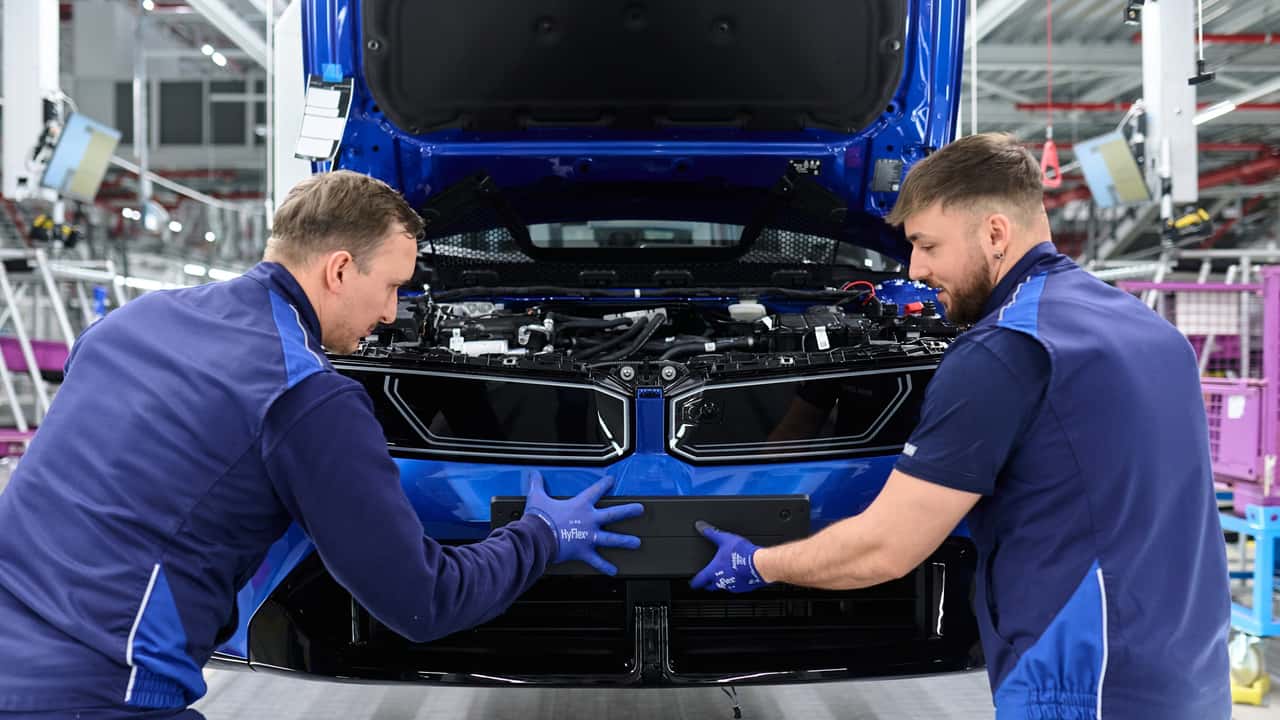
BMW i3 series production Munich has officially begun as the Bavarian automaker transforms its iconic home facility into a purely electric assembly hub. Reporting for 24x7 Breaking News, our automotive team has been monitoring this monumental industrial pivot, which marks the dawn of BMW's ground-up Neue Klasse architecture. The rollout signals a aggressive new chapter in the luxury EV war, setting high benchmarks for range, charging speed, and software integration.
- The Neue Klasse Architecture: Engineering Germany's Electric Flagship
- Behind the Wheel: The 'Heart of Joy' and Software Integration
- Real-World Ownership: Charging Infrastructure and Driving Range Realities
- Transforming Plant Munich: A Sustainable Manufacturing Revolution
- Competing in the Luxury EV Arena: Price and Market Positioning
- Editorial Perspective: Munich's Big Bet on True Driving Engagement
- Frequently Asked Questions (FAQ)
- When will the Munich-built BMW i3 be available in North American dealerships?
- What is the estimated real-world range of the new BMW i3?
- Will the vehicle support Tesla Supercharger stations out of the box?
The shift represents far more than a simple model refresh; it is a complete re-engineering of how traditional European car manufacturers build vehicles. By retooling its 100-year-old Munich plant to exclusively build zero-emission vehicles, BMW is placing a high-stakes bet that its sixth-generation eDrive technology can leapfrog established market rivals. Car enthusiasts and prospective EV buyers alike have been waiting to see if Munich could deliver on its bold battery-electric promises.
The Neue Klasse Architecture: Engineering Germany's Electric Flagship
At the center of the new BMW i3 sedan production is the innovative NCAR (Neue Klasse) modular platform, built specifically around an ultra-efficient 800-volt electrical architecture. Unlike previous electric models that shared underlying structures with internal combustion engines, this platform eliminates legacy design compromises. According to technical data compiled by automotive industry analysts and confirmed via industry wire reports, the transition to gen6 cylindrical battery cells yields a staggering 20 percent increase in volumetric energy density.
In practical terms, this engineering leap translates to up to 30 percent more driving range on a single charge while drastically cutting down charging times. Driver tests and simulation data indicate that plugging into a 350 kW DC fast charger can replenish up to 186 miles (300 km) of range in under ten minutes. The structural battery pack is integrated directly into the body shell, reducing chassis flex, lowering the center of gravity, and enhancing overall structural safety during highway collisions.
BMW has also completely overhauled its electric powertrain drive units. The newly developed electric motors operate without rare-earth magnetic materials in their rotors, reducing supply chain vulnerability and environmental degradation during manufacturing. For drivers who demand authentic Bavarian driving dynamics, the dual-motor rear-biased powertrain setup promises instant torque vectoring and precise power distribution across all four wheels during aggressive cornering.
Behind the Wheel: The 'Heart of Joy' and Software Integration
Stepping inside the cockpit reveals an interior layout that abandons traditional instrument clusters in favor of the futuristic BMW Panoramic Vision display. Projected directly across the lower border of the front windshield, this full-width head-up display presents crucial driving metrics, navigation overlays, and real-time battery analytics directly in the driver's line of sight without obscuring the road ahead.
Controlling the chassis mechanics is a brand-new super-brain computing unit internally designated as the 'Heart of Joy.' This centralized control system processes dynamic driving algorithms ten times faster than previous generations, unifying powertrain control, stability systems, braking performance, and steering feedback into a single electronic architecture. During high-speed highway maneuvers and tight winding backroad pushes, the system instantly calculates torque split to ensure seamless stability and pin-sharp steering feedback.
Yet, hardware is only half the equation in today's high-tech landscape. The vehicle's software stack supports full over-the-air (OTA) update capabilities, ensuring that battery management protocols, thermal pre-conditioning, and automated driving assistance features remain continually optimized throughout the ownership life cycle. High-stakes corporate engineering pushes like this mirror major moves seen across global industries, much like high-profile contract shifts in pro sports detailed in our report on Kawhi Leonard's multi-million dollar sponsorship scandal.
Real-World Ownership: Charging Infrastructure and Driving Range Realities
While factory performance specs look breathtaking on paper, daily EV driving relies heavily on public charging network reliability across North America and Europe. In North America, the native adoption of the NACS (North American Charging Standard) port guarantees that Munich-built vehicles will have immediate access to over 15,000 Tesla Superchargers without needing cumbersome secondary plug adapters.
Real-world highway range estimates for the entry-level single-motor variant are expected to comfortably breach the 400-mile mark under realistic ambient temperatures. Advanced heat-pump systems utilize ambient air and waste heat generated by the electric motors to preserve cabin temperature and battery health during sub-zero winter commutes. This aggressive thermal management prevents the dramatic winter range degradation that has historically plagued electric vehicle owners in colder climates.
Total cost of ownership is another critical factor where the new architecture aims to win over skeptics. With reduced brake pad wear due to regenerative braking systems, zero engine oil maintenance, and extended battery thermal longevity guarantees, routine service costs over a five-year ownership window are projected to drop by nearly 40 percent compared to legacy petrol-powered 3 Series models.
Transforming Plant Munich: A Sustainable Manufacturing Revolution
Manufacturing an eco-friendly vehicle in a carbon-intensive facility nullifies much of the environmental benefit, which is why the assembly line transformation in Munich is so crucial. BMW spent over 400 million euros modernizing its historic facility, integrating AI-driven quality assurance cameras and autonomous logistical tuggers that shuttle components across the shop floor with zero local carbon emissions.
The plant operates entirely on green electricity sourced from regional hydroelectric power facilities, while recycled aluminum components and secondary steel make up over 50 percent of the chassis construction. Furthermore, the battery assembly supply chain sources lithium and cobalt exclusively from certified ethical mining operations, answering growing consumer demands for supply chain transparency and humanitarian accountability.
This factory evolution demonstrates how traditional heavy industry can adapt to strict modern emissions mandates without sacrificing production volume or worker safety. Similar intense organizational pressure and tactical shifts can be observed across competitive environments, such as the intense locker room dynamics seen during the Kirk Cousins and Maxx Crosby practice scuffle.
Competing in the Luxury EV Arena: Price and Market Positioning
The market for mid-size premium electric sedans is fiercely contested. The Munich-built sedan enters a arena dominated by the Tesla Model 3 Performance, Hyundai Ioniq 6, and the upcoming Mercedes-Benz CLA electric series. BMW is strategically positioning the i3 starting price point right in the sweet spot between mainstream accessibility and high-end luxury, targeting an estimated base price of around $52,000 in North American markets.
- Primary Competitor Alignment: Direct rival to Tesla Model 3 Long Range and Mercedes-Benz CLA EV.
- DC Fast Charging Capability: 10% to 80% charge state achieved in approximately 12 minutes on 800V fast chargers.
- Powertrain Options: Single-motor rear-wheel drive and dual-motor xDrive all-wheel drive variants at launch.
- Sustainability Profile: 100% renewable energy utilized during vehicle assembly at Plant Munich.
By pairing high-end material quality inside the cabin with razor-sharp driving dynamics, BMW aims to attract traditional petrol enthusiasts who have previously resisted the electric shift due to boring driving dynamics or poor interior craftsmanship.
Editorial Perspective: Munich's Big Bet on True Driving Engagement
In our assessment at 24x7 Breaking News, BMW's choice to launch full-scale production of the Neue Klasse i3 in Munich is a vital gut-check for the entire European automotive industry. For years, European legacy automakers lagged behind fast-moving American and Chinese EV entrants in software integration and battery cell scaling. This launch proves that traditional German engineering prowess can match tech-first rivals while delivering far superior build quality and driving feel.
We believe that consumer adoption of electric vehicles hinges on delivering an emotional, engaging driving experience rather than simply building silent appliances on wheels. By prioritizing driver feedback, lightning-fast charging response times, and ethical manufacturing practices, BMW is setting an example that the rest of the auto industry must follow if sustainable mobility is ever to win over mainstream motorists. While charging infrastructure gaps still persist in rural regions, this vehicle represents a massive step in the right direction for consumer choice and environmental progress.
Frequently Asked Questions (FAQ)
When will the Munich-built BMW i3 be available in North American dealerships?
Deliveries are scheduled to begin in European markets in late 2025, followed by a full North American dealership rollout in early 2026 with full NACS charging compatibility.
What is the estimated real-world range of the new BMW i3?
Thanks to sixth-generation cylindrical battery cells and optimized aerodynamics, realistic mixed-driving range is targeted between 380 and 420 miles on a full charge depending on wheel setup and powertrain configuration.
Will the vehicle support Tesla Supercharger stations out of the box?
Yes, models exported to North America will come factory-equipped with native NACS charging ports, allowing direct plug-and-charge capability across the Tesla Supercharger network without external adapters.
With production officially rolling off the assembly lines in Germany, the ultimate driving machine has entered its most high-tech electric chapter yet. As the line ramps up toward full capacity, the real battle will be fought on public highways and winding canyon roads. Will the Munich-built BMW i3 finally convince traditional petrolheads to go fully electric, or can legacy driving passion ever truly be duplicated without a gasoline engine?
This article was independently researched and written by Hussain for 24x7 Breaking News. We adhere to strict journalistic standards and editorial independence.
Comments
Post a Comment