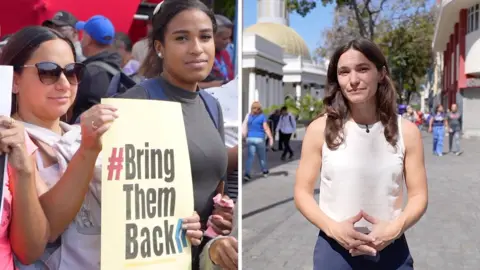
The Persistent Shadow of Human Rights Abuses
Reporting for 24x7 Breaking News, we have received urgent updates from the international community regarding the state of human rights in Venezuela. Despite the recent leadership transition following the exit of President Nicolás Maduro, the United Nations High Commissioner for Human Rights, Volker Türk, has issued a grave warning: systemic torture and arbitrary detention remain entrenched in the nation's penal system.
- The Persistent Shadow of Human Rights Abuses
- The Reality Behind the Amnesty Numbers
- The Real-World Impact: Families Left in the Dark
- A Humanitarian Perspective on Global Stability
- Frequently Asked Questions (FAQ)
- What is the current status of political prisoners in Venezuela?
- Why is the UN demanding access to detention centers?
- How has the Venezuelan government responded to these allegations?
- Joining the Conversation
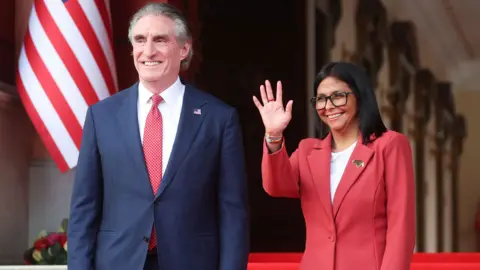
Addressing the UN Human Rights Council this week, Commissioner Türk confirmed that his office has received credible, direct reports of mistreatment within state-run facilities. These allegations persist even as the new administration, led by Delcy Rodríguez, attempts to consolidate power through legislative reforms, including a recent amnesty bill designed to signal a shift in political strategy.
The Reality Behind the Amnesty Numbers
While the Venezuelan parliament claims that over 7,700 individuals have been granted 'full freedom' under the new amnesty law, the data is being met with intense skepticism by humanitarian observers. The prominent prisoners' rights group Foro Penal reports a massive discrepancy, having verified fewer than 700 actual releases. Most individuals categorized as 'freed' by the government were reportedly already living under house arrest or parole, rather than experiencing true liberation from detention.
Commissioner Türk underscored the gravity of this situation by highlighting that his office’s repeated requests for an official list of the released, as well as unfettered access to detention centers such as Rodeo 1 and Fuerte Guaicaipuro, have been ignored by the current government. This lack of transparency is a critical failure in the path toward national reconciliation and democratic stability.
The Real-World Impact: Families Left in the Dark
For the average Venezuelan family, the promise of reform is often indistinguishable from the reality of continued state repression. When loved ones are detained without due process, the economic and psychological toll is devastating. This situation is not merely a political statistic; it is a profound crisis of human dignity that disrupts the lives of thousands who are simply waiting for news of their kin.
This ongoing uncertainty echoes the struggles faced by vulnerable populations across the globe, where conflict and systemic volatility often leave civilians caught in the crossfire. Much like the heartbreaking loss of innocence in regional conflicts, the children and elderly caught in the cycle of arbitrary detention in Venezuela represent a failure of the international community to provide consistent protection for the most vulnerable.
A Humanitarian Perspective on Global Stability
We must advocate for a standard of transparency that transcends partisan politics. The reports of sexual violence and degrading treatment within Venezuelan detention facilities are not just violations of international law; they are a rejection of the basic shared humanity that binds our global community. Peace cannot be legislated through amnesty bills while the machinery of state-sponsored torture remains operational in the shadows.
The international community, including NATO allies and regional stakeholders currently navigating complex geopolitical tensions in the Strait of Hormuz, must maintain a unified front in demanding accountability. If we allow systemic human rights abuses to be dismissed as 'politically motivated' rhetoric, we undermine the integrity of every international institution meant to safeguard the vulnerable.
Frequently Asked Questions (FAQ)
What is the current status of political prisoners in Venezuela?
While the government claims thousands have been released, organizations like Foro Penal estimate that over 500 political prisoners remain behind bars, with many more living under restrictive conditions.
Why is the UN demanding access to detention centers?
The UN High Commissioner for Human Rights is seeking unfettered access to verify reports of continued torture and to ensure that the amnesty law is being applied fairly and transparently.
How has the Venezuelan government responded to these allegations?
Venezuelan officials have consistently dismissed reports from the UN and independent fact-finding missions as politicized efforts driven by external interests, though they have yet to address the specific evidence presented by the Commissioner.
Joining the Conversation
The situation in Venezuela serves as a sobering reminder that the transition of power rarely guarantees the transition of justice. We are witnessing a critical juncture where the international community's persistence in demanding human rights accountability could determine the fate of hundreds of detainees still waiting for their freedom.
If the international community cannot enforce basic human rights standards in states undergoing leadership changes, does the entire framework of the United Nations need a radical restructuring to maintain its relevance in 2026?

This article was independently researched and written by Hussain for 24x7 Breaking News. We adhere to strict journalistic standards and editorial independence.
Comments
Post a Comment