
The Geopolitical Standoff in the Strait of Hormuz
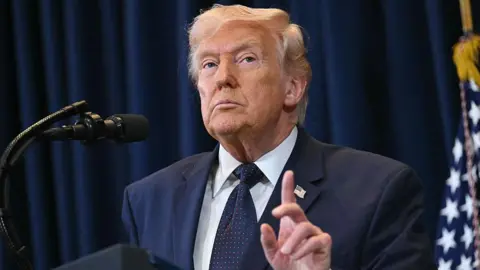
Reporting for 24x7 Breaking News, we are tracking a dangerous escalation in the Middle East as the current administration faces stiff resistance from its own alliance partners. President Donald Trump’s recent declaration that failing to secure the Strait of Hormuz would be 'very bad for the future of NATO' has sent shockwaves through the transatlantic community, prompting blunt rebukes from key European capitals.
- The Geopolitical Standoff in the Strait of Hormuz
- NATO's Defensive Mandate Under Scrutiny
- The Technological Challenges of Modern Maritime Warfare
- THE REAL-WORLD IMPACT
- A HUMANITARIAN PERSPECTIVE
- Frequently Asked Questions (FAQ)
- What is the strategic importance of the Strait of Hormuz?
- Why are NATO allies hesitant to support the U.S. position?
- Are current mine-clearing technologies effective?
- JOIN THE CONVERSATION
The crisis centers on the vital maritime chokepoint, which serves as the primary artery for global energy supplies. While the administration is pushing for a collective military response to Iranian interference, European leaders are increasingly distancing themselves from what they characterize as a 'war of choice' rather than a defensive necessity.
NATO's Defensive Mandate Under Scrutiny
General Sir Nick Carter, the former chief of the UK Defence Staff, offered a sobering assessment of the situation in a recent interview. He emphasized that the alliance was built on a foundation of mutual defense, not as a vehicle for individual member states to project force unilaterally. 'I’m not sure that’s the sort of NATO that any of us wanted to belong to,' Carter noted, highlighting a growing ideological rift between Washington and its traditional partners.
The pushback is not merely diplomatic; it is logistical. German officials have been particularly vocal, with Defense Minister Boris Pistorius questioning the utility of a handful of European frigates in a conflict zone where the U.S. Navy maintains overwhelming superiority. The consensus in Berlin and Paris is clear: the current escalation is a result of regional policy shifts, not an unprovoked attack on NATO soil.
As we examine the broader context, it is clear that this friction is part of a larger trend of isolationism. For deeper insights into how global leaders manage luxury and excess while tensions simmer, read our coverage of the 2026 Academy Awards.
The Technological Challenges of Modern Maritime Warfare
The operational reality of securing the strait is far more complex than a political soundbite suggests. With the British Royal Navy lacking a dedicated mine-clearing vessel in the region for the first time in decades, the reliance on untested autonomous drone technology has become a focal point of concern. Tom Sharpe, a former Royal Navy commander, warned that the effectiveness of these new systems remains an unproven variable in a high-stakes combat environment.
The U.S. Navy is also in a state of transition, phasing out its specialized wooden-hulled Avenger-class minesweepers in favor of littoral combat ships that rely on unmanned systems. This transition is occurring at a time when Iran’s Revolutionary Guard has significantly bolstered its asymmetric capabilities, including underground tunnels stocked with naval drones and anti-ship missiles. For those interested in how sports and media icons navigate similar pressures, see our report on NFL stars eyeing broadcasting deals.
THE REAL-WORLD IMPACT
For everyday Americans, the Strait of Hormuz crisis represents a direct threat to the global economy. A sustained blockade or military conflict in these waters would likely cause an immediate spike in crude oil prices, filtering down to increased costs at the gas pump and higher prices for consumer goods nationwide. Families already struggling with inflation face the prospect of another supply-chain shock, illustrating that international diplomatic failures are not confined to distant shores.
A HUMANITARIAN PERSPECTIVE
Beyond the naval vessels and supply chains, we must consider the human cost of a potential conflict. The rhetoric coming from both Washington and Tehran often overlooks the millions of civilians who would bear the brunt of an escalation. History teaches us that the path to stability is paved with dialogue, not the deployment of seaborne drones or the destruction of coastal infrastructure. Advocating for human dignity and peace is not a sign of weakness; it is the most sophisticated form of statecraft.
Frequently Asked Questions (FAQ)
What is the strategic importance of the Strait of Hormuz?
The strait is the world’s most important oil chokepoint, with approximately 20-30% of the world's total global petroleum consumption passing through it daily.
Why are NATO allies hesitant to support the U.S. position?
Most NATO members view the current tensions as a result of U.S. policy toward Iran and argue that the alliance's charter only mandates support in the event of an unprovoked attack on an ally.
Are current mine-clearing technologies effective?
Many of the newer autonomous systems are untested in combat conditions, leading to significant uncertainty among naval experts regarding their reliability in a real-world conflict.
JOIN THE CONVERSATION
The prospect of a new, unnecessary conflict looms large as the global community struggles to maintain the free flow of commerce through the Strait of Hormuz. We are at a critical juncture where the decisions made by leaders today will define the economic and humanitarian stability of the next decade. If you were in the position of a European leader, would you risk your nation's military resources to support a U.S.-led mission in the Middle East, or would you prioritize diplomatic de-escalation at any cost?


This article was independently researched and written by Hussain for 24x7 Breaking News. We adhere to strict journalistic standards and editorial independence.
Comments
Post a Comment