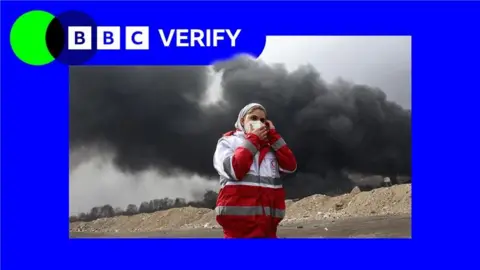
Reporting for 24x7 Breaking News, Tehran is grappling with a severe environmental crisis as air strikes on its oil facilities have unleashed unprecedented levels of pollution, causing residents to report suffocating smog and unsettling "black rain." The World Health Organization (WHO) has issued stark warnings about the grave health risks posed by these attacks on critical infrastructure.
- Unprecedented Chemical Cocktail Blankets Tehran
- The Stark Reality of Black Rain
- Health Risks Escalate for Vulnerable Populations
- Frequently Asked Questions (FAQ)
- What causes black rain?
- What are the health risks associated with air strikes on oil facilities?
- How is the pollution in Tehran being monitored?
- Who is responsible for the strikes on Tehran's oil facilities?
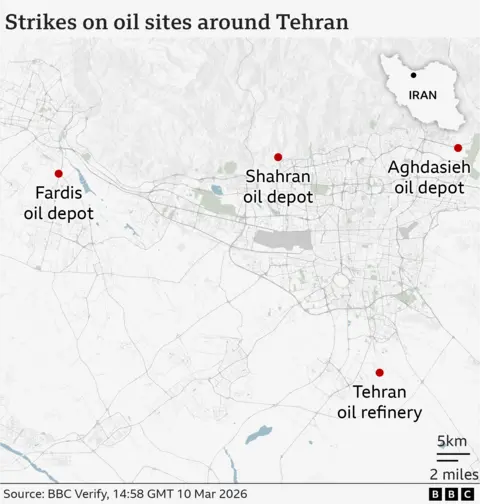
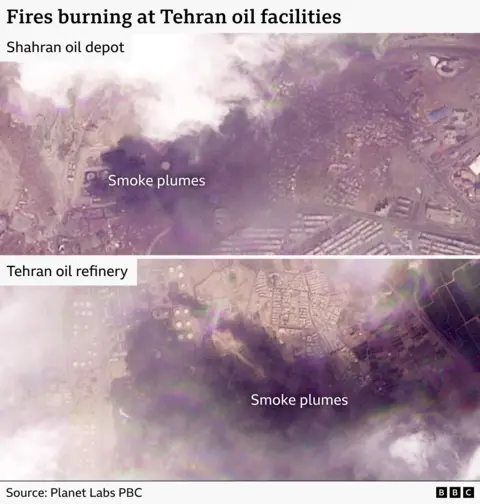
Since February 28, at least four oil facilities near the Iranian capital have been targeted. Satellite imagery captured on March 9 reveals that two major oil sites in Tehran remain ablaze, with smoke also emanating from the Shahran depot and the Tehran oil refinery. Verified footage from the aftermath of a Saturday strike shows colossal fireballs engulfing the refinery, painting a grim picture of the destruction.
Unprecedented Chemical Cocktail Blankets Tehran
Experts warn that the sheer volume and unique combination of pollutants released from the damaged oil sites are unlike anything seen before in urban environments. Dr. Akshay Deoras, a research scientist at the University of Reading, described the situation as "definitely unprecedented," noting that the mix of chemicals is highly unusual.
The incomplete combustion of oil, a likely consequence of the fires, releases harmful byproducts such as carbon monoxide and soot particles. Furthermore, oil fires are notorious for emitting sulfur and nitrogen oxides, which can combine with rainwater to form corrosive acids. The pollution cloud also contains other hazardous hydrocarbons, metallic compounds, and oil droplets, creating a toxic atmospheric soup.
Eloise Marais, a professor of atmospheric chemistry and air quality at University College London, equated the scale of pollution to that of a "very, very severe industrial accident where an entire refinery explodes." This highlights the extreme nature of the environmental hazard now facing the nearly 10 million residents of Tehran and its surrounding metropolitan area.
The Stark Reality of Black Rain
Residents have described the suffocating conditions, with one woman in her twenties telling BBC Persian on Saturday, "I can't see the Sun. There is a horrible smoke. It's still there. I'm very tired." The most alarming phenomenon reported by Tehran residents on Sunday was the occurrence of "black rain." This term describes rainfall contaminated by pollutants, turning the water dark as it falls.
Scientists explain that raindrops can act as natural collectors, absorbing pollutants from the air as they descend. "The raindrops acted like little sponges or magnets, collecting whatever was in the air as they fell, which is why residents observed what's being described as 'black rain,'" explained Dr. Deoras. While pollutants are naturally washed out of the atmosphere by rain, the appearance of black rain signifies exceptionally high concentrations of soot and other toxic airborne particles.
The Israel Defense Forces (IDF) claimed responsibility for striking "fuel depots" near Tehran on March 7, even sharing a photograph of damage to the Tehran oil refinery. However, the IDF has denied any strikes at specific coordinates provided by BBC Verify, leading to a request for clarification. The Pentagon did not respond to inquiries regarding the strikes.
Health Risks Escalate for Vulnerable Populations
The World Health Organization (WHO) has voiced "great concerns" regarding the health implications of the conflict's impact on these oil facilities. Dr. Tedros Adhanom Ghebreyesus, head of the WHO, warned that damage to oil infrastructure "risks contaminating food, water and air – hazards that can have severe health impacts especially on children, older people, and people with pre-existing medical conditions."
The full extent of the damage at the affected facilities is still being assessed, with satellite data being difficult to interpret due to prevailing winds and cloud cover. Images from Sunday morning at the Shahran depot showed emergency crews surveying burned-out oil tankers and blackened structures.
This environmental catastrophe raises profound questions about the long-term consequences of targeting industrial infrastructure in densely populated areas. The potential for widespread health issues, from respiratory problems to contaminated water sources, underscores the devastating human cost of such military actions. The ongoing conflict, and its environmental fallout, could have ripple effects far beyond the immediate region, potentially impacting global commodity prices, as seen in past crises impacting fertilizer supplies. This situation also echoes concerns about the broader implications of conflict, such as the potential for geopolitical instability to affect critical industries, similar to how the war in Ukraine has ignited international tensions. It is imperative to consider the profound environmental and human toll, as we have seen with other conflicts that have led to tragic discoveries and widespread displacement.
Frequently Asked Questions (FAQ)
What causes black rain?
Black rain is caused by rainfall that has become contaminated with high concentrations of pollutants, particularly soot and other airborne particles, which darken the water.
What are the health risks associated with air strikes on oil facilities?
Air strikes on oil facilities can release a wide array of toxic chemicals, leading to severe health risks including respiratory illnesses, skin irritation, and contamination of food and water sources, especially impacting vulnerable groups like children and the elderly.
How is the pollution in Tehran being monitored?
Monitoring is challenging due to a lack of ground-based measurements. Satellite data provides some insights, but interpretation is complicated by atmospheric conditions like wind and clouds.
Who is responsible for the strikes on Tehran's oil facilities?
The Israel Defense Forces (IDF) have claimed responsibility for striking "fuel depots" near Tehran, though they have offered conflicting statements regarding specific locations.
The devastating environmental impact and the resulting "black rain" serve as a stark reminder of the collateral damage that can occur when industrial infrastructure becomes a target in times of conflict. The question remains: how can international bodies effectively hold actors accountable for such widespread environmental destruction and protect civilian populations from its catastrophic health consequences?



This article was independently researched and written by Hussain for 24x7 Breaking News. We adhere to strict journalistic standards and editorial independence.
Comments
Post a Comment