Reporting for 24x7 Breaking News.
- State-Sanctioned Propaganda Under Scrutiny
- Echoes of Repression and a Plea for Peace
- The Wider Crackdown on Dissent
- The Human Cost of Information Control
- Our Editorial Take: Silencing Truth is a Dangerous Game
- Frequently Asked Questions (FAQ)
- What is 'Mr. Nobody Against Putin' about?
- Why did the Russian court ban the film?
- Has the film received international recognition?
In a swift move that underscores the Kremlin's tightening grip on dissent, a Russian court has banned the Oscar-winning documentary 'Mr. Nobody Against Putin' from three major streaming platforms. The ruling, handed down by a court in Chelyabinsk, labels the film as promoting "extremism and terrorism," a designation that critics argue is a thinly veiled attempt to silence uncomfortable truths about Russia's war in Ukraine.
State-Sanctioned Propaganda Under Scrutiny
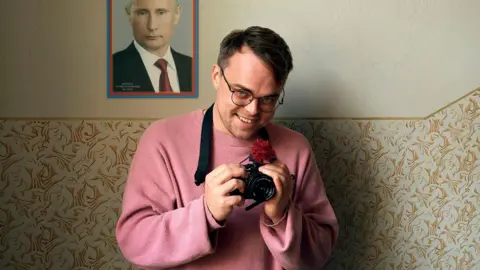
The documentary, a powerful Danish-Czech production that recently clinched an Academy Award for Best Documentary Feature, meticulously chronicles the rise of war propaganda within a Russian school following the full-scale invasion of Ukraine in February 2022. Its unflinching portrayal is built upon clandestine footage gathered by Pavel Talankin, a former school events coordinator who has since fled Russia, fearing reprisal.
Prosecutors, as reported by Russian media outlets, contended that the film expressed a "negative attitude towards the [war in Ukraine] and the current government." The deputy prosecutor further elaborated, claiming the documentary featured the flag of a "terrorist organisation" – a reference to the white-blue-white banner adopted by anti-war activists. The court's decision mandates the immediate removal of the film from the targeted online video services.
Echoes of Repression and a Plea for Peace
This ban follows earlier condemnation from a Russian governmental human rights body, which criticized the documentary for allegedly using footage of children without parental consent and threatened an appeal to the Academy. The film itself offers a stark look at Kremlin-mandated indoctrination, showcasing lectures on "denazification," speeches by war veterans, and practical lessons in mine detection and firearm handling for young students.
Talankin's personal journey, documented within the film, includes accounts of his former students joining the military and perishing in Ukraine, alongside his own quiet acts of resistance. Accepting the Oscar, Talankin delivered a poignant speech, contrasting the falling bombs and drones in his homeland with the shooting stars of childhood wishes, imploring, "For the sake of our future, and for the sake of all our children, let's end all wars." His words resonate with a profound call for peace amidst escalating global tensions, a sentiment increasingly at odds with official narratives.
The Wider Crackdown on Dissent
The ban on 'Mr. Nobody Against Putin' is emblematic of a broader and intensifying crackdown on any voice that deviates from the official Kremlin line regarding the Ukraine conflict. Since the onset of the full-scale invasion, Russia has seen a dramatic increase in repressive measures, with public opposition to the war often leading to severe prison sentences. This climate of fear makes the work of documentarians like Talankin, who risk everything to expose the realities on the ground, all the more vital and courageous.
The Kremlin, through spokesman Dmitry Peskov, has largely sidestepped direct commentary on the documentary's accolades, with Peskov stating, "I did not watch this film." This deflection comes as President Vladimir Putin himself has recently voiced concerns about foreign films dominating Russian cinemas while local producers allegedly receive insufficient support, a statement that critics might view as a subtle nod towards cultural gatekeeping.
The Human Cost of Information Control
The repercussions of such bans extend far beyond the digital realm, impacting the free flow of information and the ability of citizens, both within Russia and globally, to access independent perspectives. For individuals seeking to understand the complex realities of the conflict, the suppression of award-winning documentaries like 'Mr. Nobody Against Putin' creates informational voids, making it harder to foster empathy and critical thinking. This mirrors broader concerns about digital access and information control, a topic of ongoing debate, as seen in discussions around potential social media regulations. We've seen similar patterns emerge globally as governments grapple with the power of information dissemination, whether it's regarding online content or international conflicts that impact global stability, such as the ongoing situation in Iran.
Our Editorial Take: Silencing Truth is a Dangerous Game
In our assessment, the Russian court's decision to ban 'Mr. Nobody Against Putin' is a deeply troubling development that highlights the lengths to which authoritarian regimes will go to control the narrative. By labeling a critically acclaimed documentary that exposes the human cost of war propaganda as 'extremist,' Russian authorities are not only attempting to shield their actions from scrutiny but are also actively undermining the principles of free expression and truth-telling. This kind of censorship is particularly concerning when it involves the psychological impact on young minds, as depicted in the film's focus on indoctrination within schools. It's a stark reminder that when information is suppressed, it is often the most vulnerable populations, like children, who bear the brunt of the ensuing ignorance and manipulation. The international community, including bodies like the Academy that recognized Talankin's work, must continue to stand for journalistic integrity and the right to share stories that shed light on difficult truths, even when those truths are inconvenient for those in power.
Frequently Asked Questions (FAQ)
What is 'Mr. Nobody Against Putin' about?
The documentary, 'Mr. Nobody Against Putin,' is a BBC production that exposes how war propaganda was amplified in a Russian school following the 2022 invasion of Ukraine. It uses footage collected by Pavel Talankin, a school employee who later fled Russia.
Why did the Russian court ban the film?
The court in Chelyabinsk banned the film, stating it "propagates extremism and terrorism." Prosecutors argued it expressed a negative view of the war and the government, and allegedly featured a flag associated with a "terrorist organisation" (referring to the white-blue-white anti-war flag).
Has the film received international recognition?
Yes, 'Mr. Nobody Against Putin' won the Oscar for Best Documentary Feature earlier in March and also received a Bafta award for Best Documentary.
The ban of an Oscar-winning film like 'Mr. Nobody Against Putin' serves as a chilling reminder of the challenges faced by those who seek to document and expose the realities of conflict and state control. Suppressing independent journalism in the name of national security often comes at the expense of transparency and human dignity.
So, in an era where information is a battleground, how can the international community effectively support independent filmmakers and journalists working in repressive environments without inadvertently escalating geopolitical tensions?
This article was independently researched and written by Hussain for 24x7 Breaking News. We adhere to strict journalistic standards and editorial independence.
Comments
Post a Comment