Escalating Drone Attacks Threaten Gulf Stability
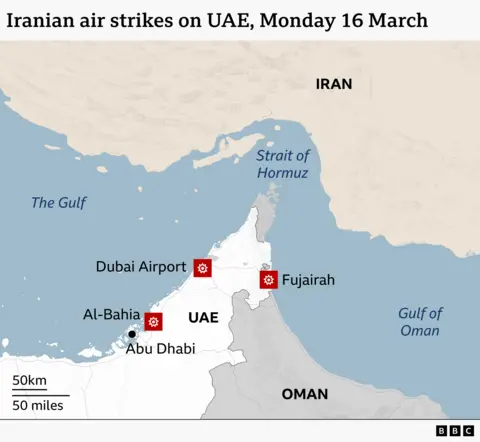
Reporting for 24x7 Breaking News, we are tracking a dangerous expansion of hostilities in the Middle East. On Monday, the United Arab Emirates’ critical infrastructure—including the vital Fujairah oil terminal and the international transit hub of Dubai—sustained direct drone strikes, marking a sharp escalation in regional warfare.
- Escalating Drone Attacks Threaten Gulf Stability
- The Strategic Vulnerability of the Fujairah Energy Hub
- Humanity Caught in the Crossfire
- Frequently Asked Questions (FAQ)
- Why is the Port of Fujairah considered a strategic target?
- How do these attacks impact the average international traveler?
- Is the UAE's economy capable of absorbing these shocks?
- The Path Toward Stability
The UAE Ministry of Defence confirmed that its air defense batteries successfully intercepted six ballistic missiles and 21 drones, though the sheer scale of the coordinated assault has rattled global energy markets. This incident represents the third such threat to Dubai International Airport—the world’s busiest gateway for international travel—since the outbreak of the current conflict.
The Strategic Vulnerability of the Fujairah Energy Hub
The attack on the Fujairah oil storage facility is particularly concerning for the global economy. Located on the Gulf of Oman, the port serves as a critical bypass for the Strait of Hormuz, the narrow waterway through which a significant portion of the world's oil transits. By targeting this location, the conflict threatens to choke off the primary export artery for Abu Dhabi’s crude oil.
As Matt Stanley, a Dubai-based energy analyst for Kpler, noted, the facility acts as a “huge vending machine” for the global maritime industry, providing essential bunkering and fuel services. When the Strait of Hormuz faces potential closure or disruption, Fujairah’s role becomes non-negotiable for keeping global energy supplies moving. The vulnerability of this site exposes just how fragile the current logistical network is during periods of high-intensity regional fighting.
Humanity Caught in the Crossfire
Beyond the geopolitical maneuvering, the human cost of these attacks remains the most pressing concern. A rocket strike in the Al Bahia district on the outskirts of Abu Dhabi resulted in the death of a Palestinian national, a stark reminder that ordinary people are bearing the brunt of these state-level tensions. The psychological toll on the residents of Dubai and Abu Dhabi is palpable, even as businesses attempt to maintain a veneer of normalcy.
Despite the persistent threat, the UAE's Minister of State, Lana Nusseibeh, has maintained a firm stance, insisting that the nation’s economy remains resilient. However, for the average family living in the region, the fear of airport closures and industrial strikes is becoming an uncomfortable new reality. We have previously analyzed the broader strategic tensions in our report on The Iran War Endgame: What Washington, Tehran, and Tel Aviv Really Want.
Frequently Asked Questions (FAQ)
Why is the Port of Fujairah considered a strategic target?
- Fujairah allows the UAE to export oil directly to the Indian Ocean, bypassing the volatile Strait of Hormuz, which is frequently used by Iran as a pressure point.
How do these attacks impact the average international traveler?
- The strikes near Dubai International Airport have caused temporary flight suspensions, cancellations, and significant delays, forcing travelers to reconsider their transit plans through the region.
Is the UAE's economy capable of absorbing these shocks?
- While government officials emphasize national resilience, sustained attacks on energy infrastructure and logistics hubs pose a long-term risk to investor confidence and the UAE's image as a safe harbor in the Middle East.
The Path Toward Stability
The situation in the Gulf remains fluid, and the international community is watching closely to see if diplomacy can supersede military posturing. As world powers continue to grapple with instability, we have been covering similar global disruptions, including the recent developments in Ecuador’s domestic security crisis. The path to regional de-escalation requires a renewed commitment to open communication lines and the protection of civilian infrastructure from the reach of ballistic missile strikes.
Ultimately, the stability of the global energy grid depends on the de-escalation of these high-stakes regional skirmishes. So here is the real question — at what point does the international community move from observation to direct intervention to protect the world's most critical energy infrastructure?




This article was independently researched and written by Hussain for 24x7 Breaking News. We adhere to strict journalistic standards and editorial independence.
Comments
Post a Comment