Viral Disturbances at Delta State Festival Lead to 15 Arrests Amidst Sexual Assault Claims
Reporting for 24x7 Breaking News, we are tracking the immediate fallout from disturbing videos emerging out of Nigeria’s southern Delta state, where police have confirmed the detention of 15 individuals following allegations of severe public sexual assault during a recent community event. These clips, which circulated rapidly across social platforms, depicted young men aggressively accosting and stripping women in public view, igniting immediate, widespread fury and driving the hashtag #StopRapingWomen to the top of trending topics across the continent.
- Viral Disturbances at Delta State Festival Lead to 15 Arrests Amidst Sexual Assault Claims
- Official Statements Clash With Eyewitness Accounts of Organized Harassment
- The Legal Boundary Between Tradition and Criminal Gender-Based Violence
- The High-Level Political Response and Dignity in Public Life
- THE REAL-WORLD IMPACT: Setting Precedents for Public Safety
- A HUMANITARIAN PERSPECTIVE: The Cost of Silence and Complicity
- Frequently Asked Questions (FAQ)
- What festival sparked the arrests in Delta State?
- How many people have been officially detained by police?
- Did the victims report being raped to the authorities?
The incident centers on the Alue-Do fertility festival held in the town of Ozoro. As initially reported by BBC Pidgin, the graphic nature of the footage prompted an urgent response from local authorities who condemned the acts as both “alarming, disgusting and embarrassing.” Our team has confirmed that the Delta state police have transferred the detained suspects to the state Criminal Investigation Department (CID) for formal processing.
Official Statements Clash With Eyewitness Accounts of Organized Harassment
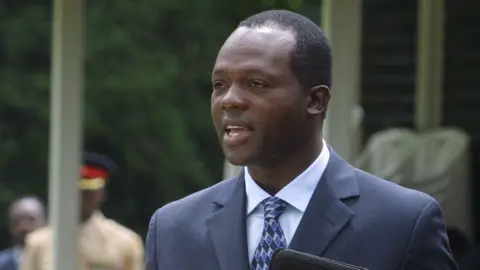
Local police spokesperson Bright Edafe provided statements to Channels TV on Monday, attempting to manage the narrative surrounding the festival, which some online commentators hastily dubbed a “rape festival.” Edafe stressed that, crucially, no formal rape report had yet been filed in connection with the Alue-Do event.
Edafe detailed the initial investigative findings, noting, “We have spoken to four girls and all of them said nobody raped them.” However, this assertion stands in stark contrast to testimony gathered by local activists and residents who spoke anonymously to our network. These sources suggest that women were actively warned against leaving their homes during specific portions of the festival, implying that those targeted were deliberately selected.
This immediately raises critical questions about whether sexual violence was tacitly tolerated or even orchestrated under the guise of cultural practice. We must consider the deep-seated societal issues that allow such public displays of aggression to occur, even if the legal threshold for rape isn't immediately met in every case documented. This situation demands rigorous legal scrutiny, irrespective of formal charges.
The Legal Boundary Between Tradition and Criminal Gender-Based Violence
Gender rights organizations across West Africa have swiftly stepped in to emphasize the gravity of the documented acts, regardless of the police’s current interpretation of the victim statements. Groups argue that forced public stripping, grabbing, and severe humiliation constitute clear violations of Nigerian law pertaining to gender-based violence.
The traditional leadership in Ozoro has been quick to distance itself from the violence, with the King of Ozoro issuing a statement rejecting the notion that the Alue-Do rite inherently condones assault. They characterized the events as a fertility rite that was severely “misinterpreted and abused by some youths.”
The Delta state government publicly backed the traditional rulers’ stance, asserting unequivocally that no recognized festival in the region permits sexual assault and that all violence must be treated strictly as a criminal matter. This distinction is vital for maintaining the integrity of cultural heritage while ensuring public safety and upholding human dignity.
The High-Level Political Response and Dignity in Public Life
The controversy reached the federal level, drawing a sharp condemnation from Nigeria's First Lady, Oluremi Tinubu, who has personal ties to the Delta state region. In a formal statement, she praised the police action in arresting the suspects and issued a strong warning that no cultural justification exists for the violation of women and girls.
Mrs. Tinubu went further, urging security agencies to pursue thorough prosecution of all offenders identified in the viral footage. She also demonstrated a crucial understanding of the victim experience by encouraging those affected to immediately seek both medical care and necessary psychological support services.
We’ve seen similar moments where public outcry forces official action, whether it involves policing social media content or addressing deep-seated institutional failures. For instance, the global scrutiny applied to platform integrity following events like the death of OnlyFans Owner Leonid Radvinsky Dies at 43 Following Cancer Battle shows how quickly public visibility can force accountability from powerful entities, even in unrelated sectors.
THE REAL-WORLD IMPACT: Setting Precedents for Public Safety
For the average citizen in Delta state, and indeed across Nigeria, this incident translates into a stark assessment of personal security, particularly for women attending public gatherings. When community events—meant for celebration or tradition—become arenas for public degradation, it erodes the fundamental trust citizens place in both community leaders and law enforcement.
The immediate impact is a chilling effect: women may decide to avoid cultural festivals entirely, suppressing communal bonding and the transmission of important traditions. Furthermore, the defense citing “misinterpretation” of tradition often serves as a shield for systemic impunity, allowing perpetrators to escape serious consequences. This case will set a critical precedent for how Nigerian authorities balance cultural preservation against the absolute requirement for upholding human rights and safety.
The slow pace of justice in many global regions dealing with gender violence can feel like an insurmountable wall to victims. We see parallels in how complex issues, such as the distribution of new medical treatments, often create uneven access and outcomes, similar to how advancements like GLP-1 Weight Loss Drugs Are Reshaping American Food Consumption may not benefit all populations equally without robust oversight.
A HUMANITARIAN PERSPECTIVE: The Cost of Silence and Complicity
What concerns us most, as editors focused intently on human dignity, is the speed with which official channels tried to downplay the severity based on the lack of a formal rape declaration. Gender-based violence isn't a checklist of legally defined acts; it is a spectrum of dehumanization that attacks the victim’s autonomy and public standing.
When community leaders admit to harassment but deny assault, they actively participate in minimizing trauma. Our shared humanity demands that we recognize the terror inflicted by public humiliation and forced exposure, even if the legal system struggles to catch up to the nuances of cultural abuse. We must advocate fiercely for a culture where women can participate freely in civic life without fear of being targeted by mobs leveraging tradition as a cover for criminality.
The swift reaction on social media, pushing for accountability through the #StopRapingWomen hashtag, demonstrates the power of collective digital advocacy when traditional structures fail. This grassroots pressure is often the only mechanism capable of forcing authorities, like the Delta police, to move with necessary speed and seriousness.
Frequently Asked Questions (FAQ)
What festival sparked the arrests in Delta State?
- The arrests stem from events allegedly occurring during the Alue-Do fertility festival in Ozoro, Delta State, Nigeria, after videos surfaced online.
How many people have been officially detained by police?
- Police have confirmed the arrest and detention of 15 suspects identified from the circulating video evidence, including one local community leader.
Did the victims report being raped to the authorities?
- Police spokesperson Bright Edafe stated that four initial complainants interviewed reported they were not raped, though they confirmed other forms of harassment occurred.
The situation in Ozoro highlights a deeply troubling intersection where cultural rites meet severe breaches of public conduct, forcing a national reckoning on gender-based violence in Nigeria. As these investigations continue, the global community watches to see if the response will prioritize justice over cultural defense.
Will the Delta state authorities prioritize prosecuting the documented acts of public humiliation and assault, or will the official narrative focused solely on the absence of a 'rape' filing allow systemic issues to remain unaddressed?

This article was independently researched and written by Hussain for 24x7 Breaking News. We adhere to strict journalistic standards and editorial independence.
Comments
Post a Comment