Reporting for 24x7 Breaking News. A daring, lightning-fast heist has targeted the prestigious Magnani Rocca Foundation near Parma, Italy, resulting in the theft of three invaluable paintings by Impressionist and Post-Impressionist masters. The audacious raid, which saw masked perpetrators in and out of the Villa dei Capolavori in a mere three minutes, has sent shockwaves through the art world and prompted an intensive investigation by Italian authorities.
- Art World Reeling from Audacious Italian Art Heist
- Masterpieces Lost: A Glimpse at the Stolen Art
- The Broader Context of High-Value Art Theft
- A Humanitarian Perspective on Cultural Loss
- Our Editorial Take: The Enduring Allure and Vulnerability of Masterpieces
- Frequently Asked Questions (FAQ)
- What paintings were stolen from the Magnani Rocca Foundation?
- What is the estimated value of the stolen artworks?
- When did the theft occur?
- Who is investigating the theft?
Art World Reeling from Audacious Italian Art Heist
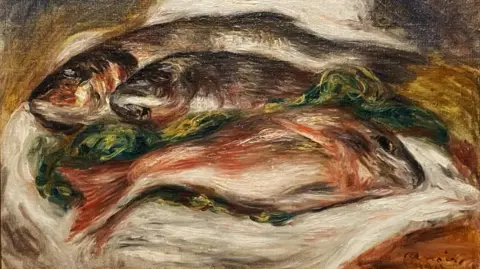
The brazen theft occurred on March 22, with four unidentified individuals forcing their way through the main entrance of the foundation's villa. Their swift actions allowed them to abscond with Pierre-Auguste Renoir's "Les Poissons" (The Fish), Paul Cézanne's "Still Life with Cherries," and Henri Matisse's "Odalisque on the Terrace." The estimated combined value of these stolen masterpieces is a staggering €9 million (approximately £7.8 million), with Renoir's "Les Poissons" alone valued at €6 million, marking it as one of the most significant art thefts in Italy in recent memory.
The speed and organization of the perpetrators were evident. Italian media reports, corroborated by the foundation's statement, suggest the gang was "structured and organised." Their operation was only cut short by the activation of the private collection's alarm systems, which alerted law enforcement and likely prevented further losses. The thieves made their escape by scaling a fence, as reported by regional public broadcaster TGR, which was among the first to break the news.
Masterpieces Lost: A Glimpse at the Stolen Art
The stolen works represent significant contributions to art history. Renoir's "Les Poissons," an oil on canvas completed around 1917, is a hallmark of his later Impressionist style. Cézanne's "Still Life with Cherries," dating to circa 1890, is particularly noteworthy as it utilizes watercolor, a medium he only fully embraced in his final years, according to the Magnani Rocca Foundation. Matisse's "Odalisque on the Terrace," painted in 1922, is a vibrant depiction of figures in a sun-drenched setting, characteristic of his innovative approach to color and form.
The Magnani Rocca Foundation, established in 1984 following the death of its founder, composer and art collector Luigi Magnani, is housed in his former family home. The villa itself, known as the Villa dei Capolavori, is nestled amidst the picturesque Parma countryside, a setting that belies the security breach it suffered. The stolen paintings were taken from the French Room on the building's first floor.
The Broader Context of High-Value Art Theft
This incident is the latest in a series of high-profile art thefts that have plagued cultural institutions globally. Last October, the Louvre in Paris experienced a brazen daylight robbery of priceless jewels. Such sophisticated operations underscore the persistent threat to invaluable cultural heritage. The investigation is now in the hands of Italy's Carabinieri and the Cultural Heritage Protection Unit of Bologna, tasked with recovering the stolen art and apprehending those responsible.
The swiftness of the operation, coupled with the significant value of the stolen pieces, echoes concerns about the security of high-value assets. This event comes at a time when global security concerns are heightened, with geopolitical tensions and conflicts drawing significant international attention. For instance, the escalating situation in Iran has had far-reaching implications, impacting global markets and demanding careful strategic responses from leaders, a situation that has been a persistent concern, as noted in our reporting on Trump's high-stakes dilemma as the Iran war stretches beyond initial projections and its potential impact on energy networks like India's piped gas network.
A Humanitarian Perspective on Cultural Loss
The theft of these masterpieces is more than just a financial loss; it's a profound cultural one. Art enriches our lives, connects us to history, and speaks to our shared humanity. When such treasures are stolen, it diminishes not only the specific institution but also the collective cultural heritage that belongs to us all. It is deeply disheartening to see irreplaceable pieces of artistic expression fall into the wrong hands, potentially disappearing from public view forever. The focus on such criminal acts, while important for recovery, also serves as a stark reminder of the vulnerability of cultural treasures in a world often preoccupied with conflict and political strife, such as the ongoing impact of renewed conflict in South Sudan.
Our Editorial Take: The Enduring Allure and Vulnerability of Masterpieces
In our view, this brazen act highlights a disturbing trend: the increasing sophistication of art thieves and the persistent vulnerability of even well-regarded institutions. The sheer audacity of the three-minute window suggests meticulous planning, which is concerning. While the Magnani Rocca Foundation has robust alarm systems, as evidenced by their effectiveness in thwarting a larger theft, the ease with which entry was gained is a wake-up call. The economic value of these pieces is immense, but their true worth lies in their contribution to human culture and history. The loss of "Les Poissons," "Still Life with Cherries," and "Odalisque on the Terrace" is a blow to Italy's rich artistic legacy and the global appreciation of these masters. We believe that increased international cooperation and advanced security measures, potentially leveraging technology, are crucial to safeguarding such irreplaceable cultural assets. The question isn't just about recovering the art, but about reinforcing the defenses against such sophisticated criminal enterprises that prey on our shared heritage.
Frequently Asked Questions (FAQ)
What paintings were stolen from the Magnani Rocca Foundation?
The stolen paintings are "Les Poissons" by Pierre-Auguste Renoir, "Still Life with Cherries" by Paul Cézanne, and "Odalisque on the Terrace" by Henri Matisse.
What is the estimated value of the stolen artworks?
The combined value of the stolen paintings is estimated at €9 million (approximately £7.8 million), with Renoir's "Les Poissons" alone valued at €6 million.
When did the theft occur?
The heist took place on March 22, with news of the incident only made public on Sunday.
Who is investigating the theft?
The theft is being investigated by Italy's Carabinieri and the Cultural Heritage Protection Unit of Bologna.
The swiftness and sheer audacity of this art heist, targeting masterpieces worth millions, underscore the persistent threat to our global cultural heritage. The quick actions of the thieves and the value of the stolen art leave us pondering the deep-seated issues of security and preservation in the art world.
Given the increasing frequency and sophistication of art thefts worldwide, what more can be done to truly safeguard irreplaceable cultural treasures before they vanish forever?
This article was independently researched and written by Hussain for 24x7 Breaking News. We adhere to strict journalistic standards and editorial independence.
Comments
Post a Comment