
A Nation Submerged: The Human Toll of Kenya's Record Rainfall
Reporting for 24x7 Breaking News, we are tracking a heart-wrenching humanitarian catastrophe unfolding across East Africa. At least 62 people have died in Kenya over the past week as unrelenting, torrential rains have triggered flash floods that have decimated infrastructure and displaced thousands of families.
- A Nation Submerged: The Human Toll of Kenya's Record Rainfall
- Understanding the Drivers of Disaster
- The Global Pattern: Climate Change and Vulnerability
- THE REAL-WORLD IMPACT
- A HUMANITARIAN PERSPECTIVE
- Frequently Asked Questions (FAQ)
- What is the current death toll from the Kenya floods?
- Why are the floods in Nairobi so severe?
- Are other countries affected by these rains?
- Joining the Conversation
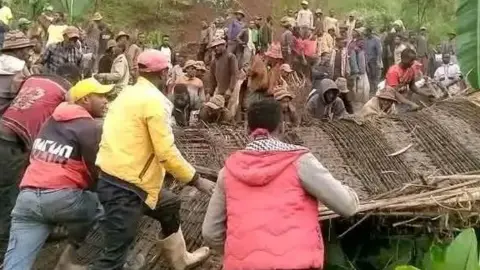
The scale of the disaster is staggering, with authorities noting that 33 of these fatalities occurred within the capital city, Nairobi, alone. The Kenya Red Cross reports that emergency teams are working around the clock to extract survivors from vehicles and homes, including a recent, harrowing operation where 11 people were rescued from a trapped matatu minibus.
Understanding the Drivers of Disaster
While the immediate cause of this tragedy is the extreme weather pattern currently drenching the region, the devastation is compounded by systemic issues. According to official reports from the Interior Ministry, poor drainage systems and the obstruction of rivers due to unregulated urban development have turned standard seasonal rains into life-threatening flash floods.
President William Ruto issued a statement on Sunday, confirming that the government is rushing emergency food supplies and medical assistance to the hardest-hit areas. However, as the rains continue, the challenge for the administration is not just immediate relief, but addressing the long-term vulnerability of low-lying settlements that lack the infrastructure to withstand such intense weather events.
The Global Pattern: Climate Change and Vulnerability
It is impossible to view this disaster in isolation. Scientific data consistently points toward a warming atmosphere, with global temperatures already having risen by approximately 1.1C since the industrial era. This climate instability makes extreme rainfall events significantly more frequent and severe, disproportionately affecting developing nations like Kenya and neighboring Ethiopia, where more than 100 lives have already been lost to floods and landslides.
We must ask ourselves how these global shifts manifest in local tragedies. While international policy debates often focus on carbon metrics, the reality on the ground is measured in lost homes, damaged power lines, and the heartbreaking loss of human life. For context on other global crises, see our recent coverage on the Six US Airmen Killed in Iraq Refueling Plane Crash.
THE REAL-WORLD IMPACT
For the average family in Nairobi, the "flooding crisis" is not a headline—it is the loss of a commute, the destruction of a school, and the fear of a rising riverbank. When roads are closed and bridges fail, the supply chain for basic goods is severed, leading to immediate spikes in the price of food and fuel. This creates a secondary economic shock that can keep vulnerable households in a cycle of poverty for months or years after the water recedes.
In our editorial view, the focus must shift toward resilient urban planning. The recurring nature of these floods suggests that the current drainage systems are fundamentally incompatible with the changing climate reality. We see similar struggles for progress in other sectors, such as the evolution of digital chess, where innovation is also required to move past outdated paradigms.
A HUMANITARIAN PERSPECTIVE
The resilience of the Kenyan people in the face of this tragedy is profound, yet resilience is not a substitute for state protection. As we watch these rescue operations, we are reminded that human dignity is the baseline of any functioning society. The fact that thousands have been forced to leave their homes highlights a massive failure in protective infrastructure that is not unique to East Africa but is exacerbated by global neglect of climate adaptation strategies.
We owe it to the victims and their families to look past the statistics and recognize the lives behind the numbers. Every child saved from a flooded house is a victory, but every life lost is an indictment of our collective inability to prepare for the inevitable consequences of a warming world.
Frequently Asked Questions (FAQ)
What is the current death toll from the Kenya floods?
As of the latest reports from the authorities, the death toll has reached at least 62 people, with over half of the fatalities occurring in the capital, Nairobi.
Why are the floods in Nairobi so severe?
The severity is attributed to a combination of unprecedented rainfall and systemic failures, specifically poor urban drainage and the illegal obstruction of natural river paths by unregulated construction.
Are other countries affected by these rains?
Yes, the extreme weather is regional. Neighboring Ethiopia has reported more than 100 deaths due to flooding and landslides in the southern parts of the country.
Joining the Conversation
The ongoing struggle to manage these floods is a stark reminder that the climate crisis is not a future threat but a present reality. While we hope for the safety of all those in the path of the storm, we must also look at the systemic failures that make such events so deadly. Is it time for the international community to mandate that climate adaptation funds be prioritized for urban infrastructure in developing nations, or is this a problem that local governments must solve entirely on their own?



This article was independently researched and written by Hussain for 24x7 Breaking News. We adhere to strict journalistic standards and editorial independence.
Comments
Post a Comment