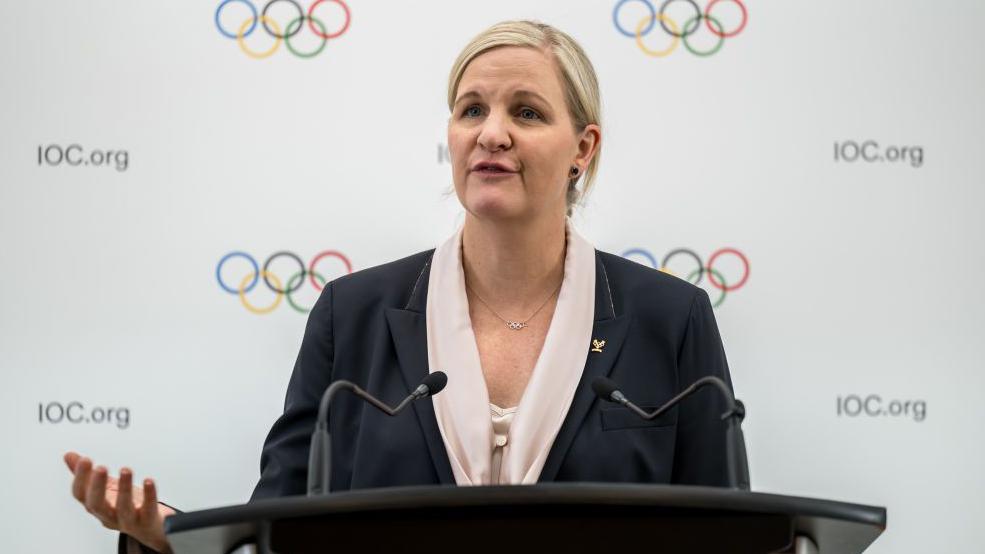
Reporting for 24x7 Breaking News. The International Olympic Committee (IOC) has announced a sweeping change to its eligibility criteria for female athletes, instituting a ban on transgender women and athletes with differences in sex development (DSD) who have undergone male puberty from competing in women's categories. This significant policy shift, set to take effect at the 2028 Los Angeles Olympics, aims to redefine fairness and safety in sports but is already sparking widespread debate about inclusion and scientific definitions of sex.
- IOC Mandates 'Once-in-a-Lifetime' Genetic Test for Female Eligibility
- A Shift From Decentralized Policies to Universal Ban
- Addressing Differences in Sex Development (DSD)
- Our Take: Balancing Fairness, Safety, and Human Dignity
- Frequently Asked Questions (FAQ)
- What is the primary reason for the IOC's new policy?
- What is the 'once-in-a-lifetime' test?
- Will all transgender athletes be banned from the Olympics?
- Are there any exceptions for athletes with DSD?
IOC Mandates 'Once-in-a-Lifetime' Genetic Test for Female Eligibility
The IOC's new regulations will require a "once-in-a-lifetime" sex test, specifically screening for the SRY gene, a key determinant of male biological characteristics. According to the committee, this genetic screening, which can be performed via a simple saliva, cheek swab, or blood sample, is considered "unintrusive" and will permanently determine an athlete's eligibility for female competition. Athletes testing negative for the SRY gene will meet the criteria, while those who do not will be eligible for male, mixed, or open categories, or sports that do not classify by sex.
IOC President Kirsty Coventry, a former Olympic swimming champion, stated that the policy was "led by medical experts." She emphasized the critical importance of competitive integrity, noting, "At the Olympic Games even the smallest margins can be the difference between victory and defeat." Coventry further elaborated that it would be "absolutely clear that it would not be fair for biological males to compete in the female category. In addition, in some sports it would simply not be safe."
A Shift From Decentralized Policies to Universal Ban
This decision marks a stark departure from the IOC's previous approach, which largely left sex eligibility regulations to the individual international sports federations. While sports like athletics, swimming, and cycling had already implemented bans on transgender women, many others permitted their participation if testosterone levels were suppressed below a certain threshold. This patchwork of rules created a complex and often contentious landscape for athletes and governing bodies alike.
The move by the IOC reflects increasing pressure from various sports organizations and a growing public discourse surrounding the inclusion of transgender athletes. The controversy surrounding Algerian boxer Imane Khelif, who won a women's welterweight gold medal at the Paris 2024 Games after being disqualified from the World Championships for failing a gender eligibility test, highlighted the complexities. Reports suggesting Khelif might have XY chromosomes brought DSD conditions into sharp focus, underscoring the challenges in applying consistent eligibility rules.
Laurel Hubbard of New Zealand, who became the first openly transgender woman to compete at an Olympics in weightlifting at Tokyo 2020, represents a past era of IOC policy. However, by Paris 2024, no transgender women were known to be competing in women's events due to the evolving bans across major sports.
Addressing Differences in Sex Development (DSD)
The new IOC policy also significantly impacts athletes with DSD. The Guardian reported that between 50 and 60 athletes with DSD who had gone through male puberty had reached the finals in female track and field events since 2000. These conditions involve a mix of genetic, hormonal, or anatomical characteristics that can be considered male, female, or ambiguous. Two-time Olympic 800m champion Caster Semenya, who has DSD and XY chromosomes, previously competed under testosterone-level regulations.
An exception to the ban is made for DSD athletes with complete androgen insensitivity syndrome (CAIS), a condition where individuals with XY chromosomes do not develop male characteristics because their bodies are insensitive to androgens. These individuals, who have not gone through male puberty, will remain eligible for the female category.
Our Take: Balancing Fairness, Safety, and Human Dignity
The IOC's decision to implement a universal genetic test for female eligibility is a monumental, and predictably divisive, moment in sports history. In our assessment, the committee's stated commitment to fairness and safety is understandable, especially in sports where physical advantages could be significant. The pursuit of a level playing field is a cornerstone of athletic competition. We've seen similar debates play out in various contexts, from discussions around economic policy and worker rights to the complexities of international relations, such as the ongoing tensions impacting global energy markets, which often require difficult balancing acts between competing interests.
However, this policy raises profound questions about how we define sex and gender in the context of sport and society. While the SRY gene test offers a seemingly clear biological marker, it risks oversimplifying the intricate spectrum of human biology and identity. The IOC's assertion that athletes who don't qualify for the female category are "eligible for any male category, including in a designated male slot within any mixed category, and any open category, or in sports and events that do not classify athletes by sex" attempts to provide avenues, but doesn't fully address the lived experiences and identities of transgender individuals.
We believe that true progress lies not just in stringent eligibility rules, but in fostering environments where all athletes, regardless of their background or identity, can pursue their athletic dreams with dignity and respect. This decision, while addressing concerns about fairness in elite competition, may inadvertently create new barriers and feelings of exclusion for a community that has already faced significant challenges. It's a complex issue that demands ongoing dialogue, scientific understanding, and a deep commitment to human rights. The situation echoes the complexities seen in debates surrounding rights and identity, such as those surrounding India’s Transgender Rights Bill, which also grappled with self-identification versus externally imposed criteria.
Frequently Asked Questions (FAQ)
What is the primary reason for the IOC's new policy?
The IOC states the policy is driven by medical experts to ensure fairness and safety in women's sports, particularly concerning athletes who have gone through male puberty.
What is the 'once-in-a-lifetime' test?
It's a genetic screening test designed to detect the SRY gene, which is part of the Y chromosome and associated with the development of male characteristics. Athletes testing negative for this gene will satisfy the eligibility criteria for female competition.
Will all transgender athletes be banned from the Olympics?
Transgender women who have undergone male puberty will not be eligible for female categories. They will, however, be eligible for male, mixed, or open categories, or sports not classified by sex.
Are there any exceptions for athletes with DSD?
Yes, athletes with a rare condition called complete androgen insensitivity syndrome (CAIS), who have XY chromosomes but have not gone through male puberty, will be exempt from the ban.
This landmark decision by the IOC attempts to draw a definitive line in the sand regarding biological sex in elite women's sports, but the ramifications for inclusion and the future of transgender and DSD athletes in the Olympic movement are far-reaching.
So, the crucial question remains: Can the Olympic movement truly balance the demands of competitive fairness with the fundamental human right to participate and be recognized, or does this ruling create a precedent that further marginalizes vulnerable athletes?
This article was independently researched and written by Hussain for 24x7 Breaking News. We adhere to strict journalistic standards and editorial independence.
Comments
Post a Comment