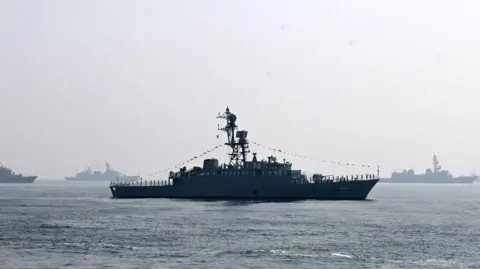
A Diplomatic Tightrope in the Indian Ocean
Reporting for 24x7 Breaking News, we are tracking a high-stakes geopolitical fallout following the sinking of the Iranian warship IRIS Dena by a United States submarine on March 4. In a move that highlights the precarious balancing act of the Indian government, it was revealed that New Delhi had officially granted sanctuary to three Iranian naval vessels just three days prior to the engagement.
- A Diplomatic Tightrope in the Indian Ocean
- The Final Voyage of the IRIS Dena
- The Real-World Impact: How Diplomacy Collides with War
- A Humanitarian Perspective
- Frequently Asked Questions (FAQ)
- Why did India grant docking rights to Iranian ships?
- What is the status of the surviving Iranian crew members?
- How many Iranian vessels have been destroyed to date?
- Conclusion and Community Debate
The timeline of these events suggests a rapidly escalating conflict that has now extended well beyond the Middle East. Foreign Minister S. Jaishankar confirmed to the Indian Parliament that Iran requested docking rights for three ships on February 28—the very same day the US and Israel initiated a broad military campaign against Iranian assets. India authorized these requests on March 1, setting the stage for a tense intersection of international diplomacy and active naval warfare.
The Final Voyage of the IRIS Dena
The IRIS Dena, carrying a crew of approximately 130 sailors, was operating roughly 20 nautical miles off the southern coast of Sri Lanka when it was struck by a torpedo. According to official reports, the sinking resulted in the tragic loss of at least 87 lives. This marks the first time since World War II that an American submarine has destroyed an enemy vessel in such a manner, a feat US Defense Secretary Pete Hegseth has framed as a display of American military prowess.
However, the narrative remains heavily contested. Iranian Foreign Minister Abbas Araghchi has publicly denounced the strike, labeling it an atrocity in international waters occurring over 2,000 miles away from Iranian borders. While the IRIS Lavan eventually reached the safety of the port in Kochi, India, the fate of the IRIS Dena underscores the volatile nature of modern maritime security where search-and-rescue zones offer little protection from submerged threats.
The Real-World Impact: How Diplomacy Collides with War
For the average family, these headlines represent more than just military statistics; they represent a world where the stability of global supply chains and regional peace is increasingly fragile. The presence of international naval vessels in Indian ports serves as a reminder of how interconnected our global economy is, and how quickly regional conflicts can spill into neutral territories. This event forces us to consider the safety of sailors who are caught in the crosshairs of geopolitical grandstanding, often far removed from the political decisions that put them in harm's way. Just as we have seen with the Iranian Women's Football Team Granted Asylum in Australia, individual human lives are often the ultimate collateral of state-level brinkmanship.
A Humanitarian Perspective
As journalists, we must look beyond the rhetoric of military superiority and focus on the human cost of these naval engagements. The loss of nearly 90 sailors is a tragedy that transcends national borders and ideological divides. When we analyze these events, we are reminded of the need for open communication channels, even among adversaries, to prevent the unnecessary loss of life. True security is not found in the destruction of an enemy ship, but in the adherence to international norms that protect human dignity. In an era where even the Oslo US Embassy Targeted in Improvised Bombing shows the reach of global tension, we must advocate for a path toward de-escalation that prioritizes human life over tactical victory.
Frequently Asked Questions (FAQ)
Why did India grant docking rights to Iranian ships?
India cited diplomatic protocols for the request, which was made following a joint military exercise that had concluded in Visakhapatnam on February 25, prior to the escalation of the conflict.
What is the status of the surviving Iranian crew members?
The crew of the IRIS Lavan, which successfully docked in Kochi, is currently being housed within Indian naval facilities as the situation remains under diplomatic review.
How many Iranian vessels have been destroyed to date?
Reports indicate that approximately 20 Iranian navy vessels have been neutralized since the coordinated US-Israel military operations commenced.
Conclusion and Community Debate
The sinking of the IRIS Dena has fundamentally altered the security landscape of the Indian Ocean, leaving both regional powers and global observers questioning the boundaries of the current conflict. As we continue to follow the sinking of the Iranian warship IRIS Dena, the international community remains at a crossroads regarding how to handle maritime warfare in an era of constant surveillance and rapid engagement. Given the volatility of the region, do you believe neutral nations like India have a moral responsibility to intervene when they know a ship is being targeted, or is strict neutrality the only way to avoid a wider global war?




This article was independently researched and written by Hussain for 24x7 Breaking News. We adhere to strict journalistic standards and editorial independence.
Comments
Post a Comment